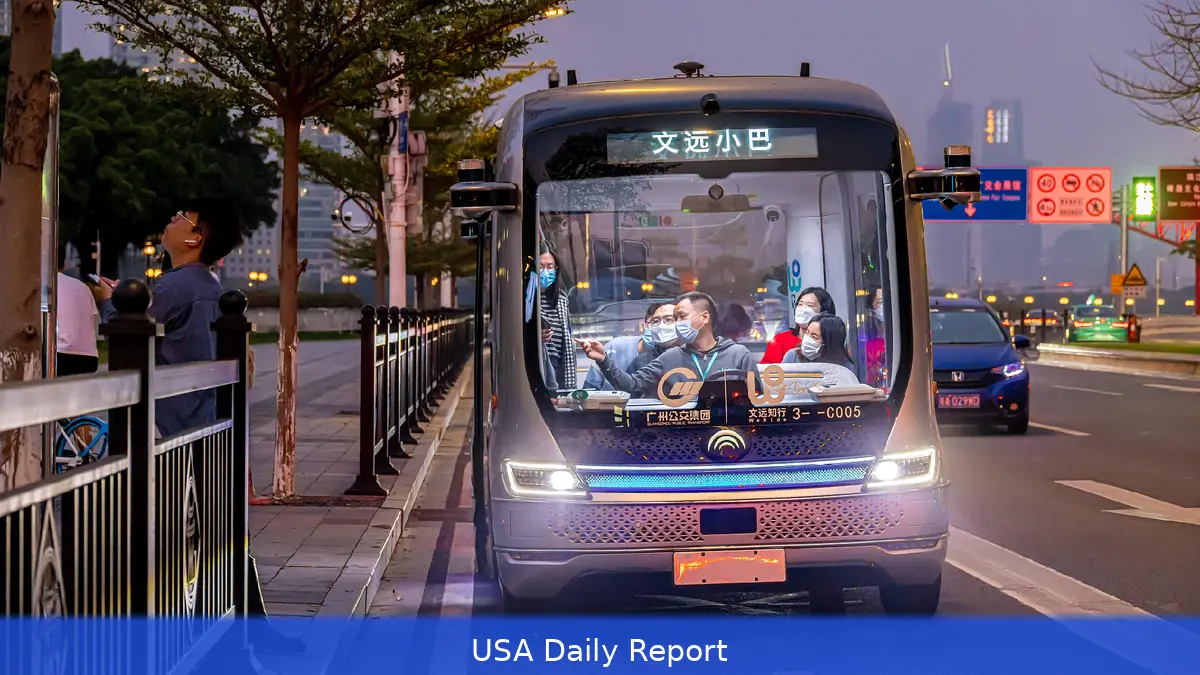
Hundreds of self-driving taxis owned by Baidu froze unexpectedly in the middle of Wuhan’s busy roads last Tuesday. Passengers found themselves trapped inside the malfunctioning vehicles for up to 90 minutes, sparking alarm over the reliability of autonomous transport in China’s expanding robotaxi market.
Massive Technical Failure Halts Baidu’s Robotaxis
In Wuhan, central China, Baidu’s Apollo Go fleet came to an abrupt stop during rush hour, leaving cars immobilized on highways, including in fast lanes. Social media posts revealed multiple incidents where the robotaxis simply shut down without warning, stranding passengers amid heavy traffic. Videos showed dozens of these driverless vehicles parked bumper-to-bumper, creating a traffic jam that lasted for over an hour.
One college student, identified only by her last name, He, described being trapped inside a Baidu robotaxi with two friends for nearly 90 minutes. The vehicle stalled multiple times before finally stopping near a quiet intersection in eastern Wuhan. The in-car display instructed passengers to stay seated with seatbelts fastened while waiting for company staff to arrive “in five minutes.” Instead, the wait stretched on, and when no help came, the trio exited the car and left on foot.
Passengers experienced clear problems with Baidu’s customer support. He said it took around 30 minutes to reach a representative by phone, only to receive vague responses and no clear timeline for assistance. Other passengers reported similar frustrations, with SOS buttons inside the cars failing to work and phone lines going unanswered. One passenger had to force open the door to escape as traffic built up behind the stalled robotaxi.
Safety Hazards and Public Backlash
Police in Wuhan acknowledged the incident, attributing it to a system malfunction under investigation. They confirmed no injuries occurred and all passengers had exited the vehicles. Yet the incident raised serious safety questions. Dashcam footage shared online showed drivers narrowly avoiding collisions with inactive robotaxis.
In one case, a human-driven car crashed into a frozen Baidu vehicle, underscoring the danger of sudden, unexpected stops on busy roads.
Public reaction on Chinese social media expressed outrage and concern. Many questioned the readiness of autonomous taxis for widespread urban deployment, especially when emergency systems like SOS features failed during the malfunction. The lack of timely company response only fueled distrust.
Robotaxis: A Growing but Risky Market
Baidu is among a few Chinese tech giants racing to expand autonomous ride-hailing services. The Apollo Go program operates hundreds of robotaxis in Wuhan, one of the nation’s key testing grounds for self-driving technology. This company’s ambition reflects broader trends as driverless vehicles gain traction worldwide, promising to reshape urban transport and reduce costs.
The Wuhan outage showed just how vulnerable the technology can be. Autonomous vehicles rely heavily on complex software, sensors, and network connectivity. Failures in any of these components can cause cars to stop abruptly, stranding passengers and disrupting traffic flow. Baidu’s incident echoes earlier challenges faced by companies like Waymo and Cruise in the U.S., where technical glitches and accidents have slowed adoption.
In San Francisco, for example, early self-driving services encountered traffic jams caused by robot cars clustering on roads. More alarmingly, a pedestrian was struck by a Cruise robotaxi last year, leading to regulatory pushback and temporary bans.
Even with these problems, companies keep improving their systems and growing their service areas, hoping people will accept the technology eventually.
Implications for Investors and Urban Mobility
The recent Wuhan incident could weigh on investor confidence in autonomous vehicle firms, particularly those heavily invested in robotaxi fleets. Safety glitches and customer service failures risk tarnishing brand reputations and slowing regulatory approvals. Baidu, a major player in China’s AI and tech sectors, faces pressure to improve reliability and transparency to maintain user trust.
This incident also reveals how tough it is to expand autonomous transport in crowded cities. Urban environments present complex variables—from unpredictable human drivers to infrastructure limitations—that robotaxis must safely navigate. Companies will need to boost system robustness and emergency response capabilities before self-driving taxis can become a dependable alternative to traditional ride-hailing.
For consumers, the promise of driverless rides remains compelling but now carries new cautionary notes. The Wuhan robotaxi freeze is a reminder that autonomous tech still has a way to go before it can fully replace human drivers without risking passenger safety or convenience.
Authorities in China and elsewhere will probably look closely at these incidents, trying to balance innovation with safety. The outcome could shape the pace and direction of autonomous vehicle integration into everyday transit networks over the next decade.
With robotaxi fleets expanding, Baidu’s Wuhan outage warns us that technical glitches can quickly turn into safety risks and hurt customer trust. Whether autonomous taxis can overcome these hurdles will be a defining test for the future of urban mobility.


