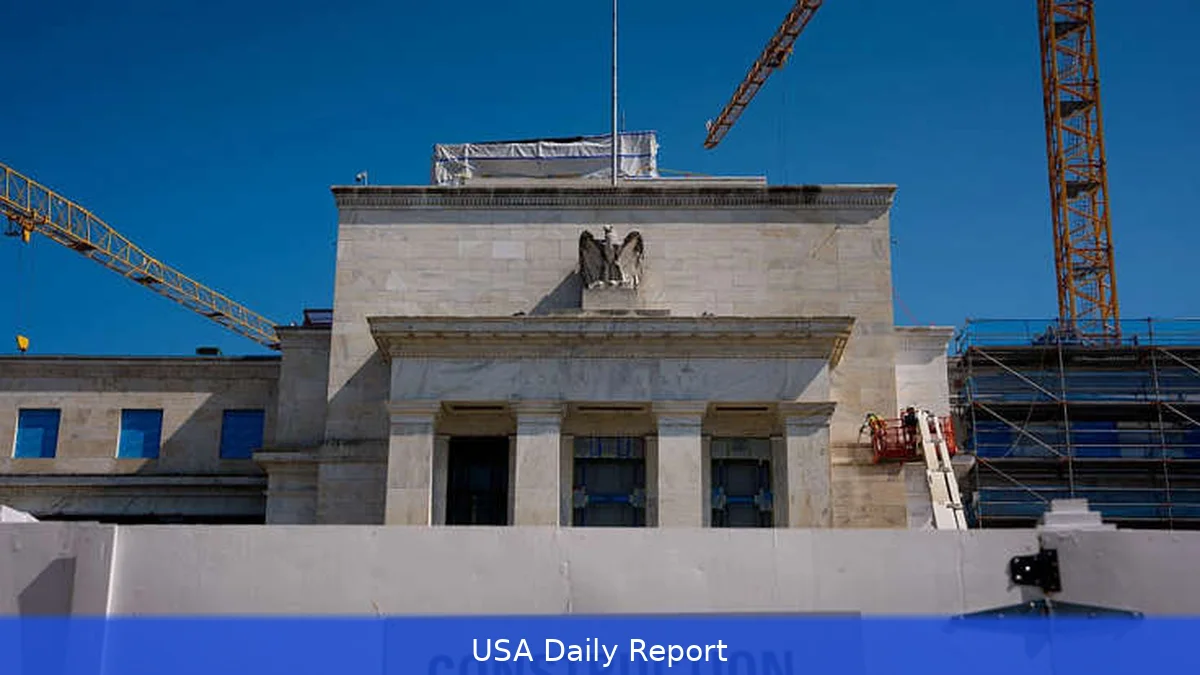
Two federal prosecutors showed up at the Fed's renovation site without notice. They were turned away.
Unscheduled visit at the center of a tense investigation
Two prosecutors and an investigator from U.S. Attorney Jeanine Pirro's office arrived at the Federal Reserve's Washington headquarters renovation project on Tuesday and asked to tour the work site, Fed lawyers said. The team was not granted access and were provided contact information for the Fed's legal staff instead, according to a letter the Fed's counsel sent to Pirro's office.
Look, this wasn't a routine check. It was an unusual, public move in an investigation that's already attracted national attention.
What Fed lawyers told prosecutors
Robert Hur, the outside legal counsel for the Federal Reserve, wrote to Pirro's office that the prosecutors appeared "without prior notice" and told staff they wanted to "check on progress" of the renovation project. Hur's office raised objections in writing after workers at the site declined to let the prosecutors through without prior clearance.
The renovation is the subject of a criminal probe opened by the U.S. Attorney's Office in Washington in November.
The investigation focuses on work at the central bank's headquarters — a yearslong project that has cost roughly $2.5 billion so far, according to Fed statements.
Frankly, the timing is combustible. Federal judges, the Fed and the Justice Department have already sparred in recent months over subpoenas and whether the probe is a legitimate criminal inquiry or political pressure.
Judicial pushback and continuing legal fight
In March, Chief Judge James Boasberg of the U.S. District Court for the District of Columbia quashed two grand jury subpoenas that had been issued to the Fed. Boasberg wrote that there was "abundant evidence" the subpoenas’ dominant purpose was to harass and pressure Fed Chair Jerome Powell into lowering interest rates or stepping aside. "On the other side of the scale, the Government has offered no evidence whatsoever that Powell committed any crime other than displeasing the President," Boasberg wrote.
The Justice Department asked Boasberg to reconsider his ruling; the judge denied that request earlier this month. The legal back-and-forth has left the investigation in public view even as no charges have been filed.
Powell's response and the broader political context
Fed Chair Jerome Powell disclosed in January that the Federal Reserve had received grand jury subpoenas tied to the renovation inquiry and said the subpoenas raised the possibility of a criminal indictment related to his testimony before the Senate Banking Committee in June 2025. Powell has publicly suggested the probe amounts to political pressure meant to sway monetary policy decisions.
Point is, Powell's stance has become part of a wider clash between the central bank and the White House. President Donald Trump has repeatedly pushed the Fed to cut interest rates faster, and his allies have pressed federal investigators to pursue the matter — an effort critics say risks undermining central bank independence.
Where the Justice Department stands
Pirro's office confirmed the unscheduled visit. A spokesperson for the U.S. Attorney's Office said the team went to the site on Tuesday but didn't provide additional comment beyond confirming the visit took place. The office has declined to discuss investigative steps publicly.
The move to send prosecutors to a construction site is highly unorthodox. Longstanding Justice Department and professional conduct rules emphasize fair, even-handed treatment in criminal matters. Previous aggressive moves by prosecutors in politically charged investigations have drawn scrutiny and, in some cases, ethical complaints.
Experts and former officials weigh in
Former Fed officials and other economic policy veterans from both parties have warned that legal action aimed at a central bank chair could chill monetary policymakers and disrupt markets. Former Federal Reserve Governor Kevin Warsh, who has been nominated by President Trump to chair the Fed, has been mentioned in political discussions about the bank's future leadership.
And those concerns aren't just academic. Markets pay close attention to signals about Fed independence because monetary policy affects borrowing costs, investment and inflation.
Any perception that the central bank's decisions are being shaped by political pressure, rather than economic data, can shift expectations and prices.
What happened at the site
The Fed's outside lawyer, Robert Hur, told Pirro's deputies they couldn't access the renovation site without prior clearance. Construction supervisors at the location declined to allow the visitors in and passed along Hur's contact details so the prosecutors could arrange an authorized visit if necessary.
The renovation project itself is massive: it's stretched over years, has involved multiple contracts, and has already totaled roughly $2.5 billion. The Fed has said it's not funded by tax dollars, a reminder that the institution's operating costs come from its own revenues rather than congressional appropriations.
Legal options and next steps
After the subpoenas were quashed, the Justice Department announced it would seek appellate review. That appeal is pending. The department has said it believes its investigative tools were appropriately used and that the probe should continue if legal avenues allow.
So far, no criminal charges have been filed against Chair Powell. He remains in his role and can continue to vote on monetary policy even after his term as chair ends in May; Fed governors can serve on the central bank's board until their terms expire, which for Powell could extend into 2028.
Why the site visit matters
The unannounced visit makes people wonder about prosecutorial strategy and about how law enforcement interacts with sensitive institutions. Federal buildings and major construction sites typically have security protocols; investigators generally coordinate with property managers and legal teams before arriving on site.
Thing is, critics argue that the visit looks like an attempt to escalate pressure. Supporters of the investigation say showing up in person can be a legitimate part of gathering facts. Either way, the episode adds another chapter to a dispute that has already drawn national attention and court rulings.
One immediate consequence: the Fed has moved to document the encounter in writing and to channel any future communications through its legal team. That preserves a record and keeps interactions formal — a step meant to avoid misunderstandings and to ensure the Fed's staff and contractors follow established procedures.
Political stakes and market sensitivity
Monetary policy decisions are often technical, but the current disagreement has become political quickly. President Trump's public push for lower interest rates and the nomination of Kevin Warsh have made Fed personnel choices and policy settings part of the campaign conversation.
Markets, meanwhile, monitor both courts and the White House for signs that the Fed's independence could be compromised. Traders and investors react not just to interest-rate moves but to the perceived drivers behind those moves — and legal actions against a Fed chair are one of the most dramatic signals possible.
For now, the site visit closed without incident. The prosecutors left after being denied entry and after Fed counsel supplied contact information for formal requests. But the visit has already fed into an ongoing legal and political dispute with the potential to influence monetary policy debates.
Related Articles
- Central Banks Face Rising Inflation Expectations
- Wholesale inflation hits three-year high
- JPMorgan: New Fed Rules Would Lock $20B
"There is abundant evidence that the subpoenas' dominant (if not sole) purpose is to harass and pressure Powell either to yield to the President or to resign," Chief Judge James Boasberg wrote.


