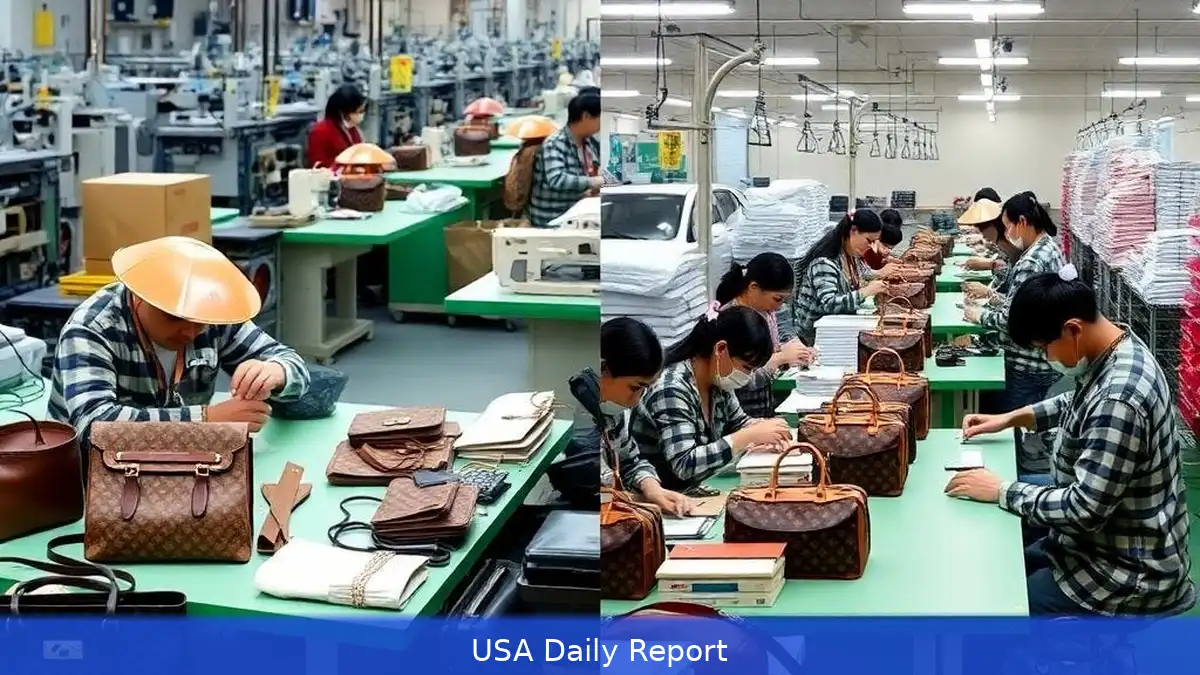
Lucid’s Arizona plant sits under a microscope. Kays Scotland’s small workshop gets the Olympic nod.
Factory as proof point
Look, factories do more than crank out parts. For luxury brands, production sites have become proof — a way to show buyers, press and investors that a product is real, reliable and worth a premium.
Consider Lucid Group. The company built a sprawling factory in Arizona to produce its luxury electric sedan, the Lucid Air, and now the Gravity SUV. The factory isn't just a place to assemble cars — it's the argument Lucid makes to justify massive capital spending and to persuade skeptical investors that the business can scale. If Gravity doesn’t sell well or if Lucid misses its next product deadlines, the plant becomes a liability rather than an asset.
And those stakes are explicit: Lucid's plan calls for a midsize model to begin production by the end of 2026. That launch is more than product planning — it's the company's best shot at reaching higher volumes where the math improves and the Arizona factory starts to make sense on paper.
Here's the key point: the midsize model must begin production on schedule for the Arizona plant to make financial sense.
Small plants, global reach
Not every production story is about massive clean-room floors and multibillion-dollar builds. Sometimes, a handful of workers and a tight operation can carry a brand's reputation around the world.
Ricky English, operations manager at Kays Scotland, puts it plainly. "We're kind of servicing the whole sport," he said of his firm's role in curling. Kays Scotland, a small factory about a 45-minute drive north of Turnberry, has made Olympic curling stones since 2006. That single line of work converts a modest workplace into the official supplier for medal events — and that pedigree becomes part of the story the sport and its broadcasters tell.
The result: a tiny shop in Scotland ends up on global broadcasts, not because of marketing spend but because the product carries official status and historical association. The stones themselves — made to exacting standards — become a symbol; the factory becomes part of the narrative whenever cameras cut to the ice.
That detail matters—investors will treat the plant as a risk if new models don't sell.
Design houses and brand storytelling
Luxury also depends on storytelling, partnerships and consistent brand messaging, not just handwork. It's also about storylines, partnerships and the consistent communication of value. Milan’s design and furniture companies show how manufacturing and brand strategy intertwine.
Flos B&B Italia Group, a conglomerate of high-end furniture and lighting names, has been reshaping its leadership and structure while juggling brands and partnerships. Lucia Nadal, who served as marketing and sustainability director at Flos B&B Italia Group, told WWD, "I am honored to have joined this company. Davide [Groppi] is a visionary designer and entrepreneur." Nadal recently moved to Dexelance as general manager of lighting firm Davide Groppi, a shift that highlights how executives with storytelling and brand-building experience are prized assets in the luxury ecosystem.
Flos B&B Italia owns a portfolio of labels — from B&B Italia and Maxalto to Louis Poulsen and Audo Copenhagen — and it inked a joint venture with Fendi in 2021 to develop Fendi Casa. Those corporate moves show how ownership, licensing and strategic alliances are used to extend a brand's narrative beyond the workshop floor and into high-end interiors worldwide.
A small, skilled workshop can carry global prestige just as much as a giant factory can.
What factories do for luxury pricing
Factories can bolster premium pricing by proving provenance, but overcapacity or heavy discounts can quickly destroy that edge.
When a maker can point to a specific plant, a skilled crew and a documented production process, customers hear a story about reliability and authenticity. That matters in markets where buyers are paying tens of thousands — or hundreds of thousands — of dollars for a product.
But the flip side is real. If a luxury product needs heavy discounts to move out of a factory, those cuts don't just affect margins; they chip away at the image that justified the price in the first place. Lucid's experience with the Air, where early buyers praised hardware but noted buggy software, illustrates the risk: craftsmanship alone isn't enough — the whole user experience must support the premium pricing.
And when companies change leadership or sell off divisions — as Flos B&B's recent management turnover suggests the group is doing — the narrative can get messy. Buyers and partners pay attention when senior executives leave; they notice when brands shift ownership or when licensing deals are reshaped. Those changes feed back into how a factory's output is perceived.
When executives leave or brands are sold, buyers and partners notice—and that can change how a product is valued.
Why the media and partnerships matter
Reporters and broadcasters use factory footage to show authenticity: the camera tracks the artisan, zooms on tool marks, and highlights the finished product's sheen.
For Kays Scotland, the image of a curling stone sliding down the ice is as compelling as any factory tour. For design houses, a factory can be a content source for catalogs, influencers and retail partners.
And then there are partnerships. Flos B&B Italia's joint venture with Fendi shows how production and brand licensing can be married to extend a designer's reach into furniture and home goods. Corporate buyers, hotel chains and interior designers don't just buy a lamp or couch; they buy a label, a provenance line, an association with a name they can sell to their clients.
So factories feed media and partnerships with stories that do the selling — often more effectively than ads ever could.
Investors notice the narrative, too
Investors read factory plans as much as they read balance sheets. The Arizona plant served as a headline for Lucid's ambition; the expectation that Gravity would justify the facility is baked into how Wall Street values the company. If Gravity falters, investors will question whether Lucid can justify the Arizona plant and the heavy capital tied up in it.he midsize model and promised ramp-through will arrive on time — and whether the plant can ever reach the volumes needed to change the economics.
That's where timing and product mix matter. If a luxury maker lowers prices or leans on incentives to fill a factory's capacity, the market will see margin pressure. Still if demand holds and expansion follows a measured cadence, the factory becomes an engine for value creation.
Short sentence.
Not just watches — a broader lesson
Luxury watch factories sit in the middle of all this logic even if we don't drill into a single example here. The pattern is clear from cars to curling stones to designer furniture: production sites are marketing tools, quality proof points and strategic levers. They help brand owners tell buyers why a product commands a premium. They attract media moments that multiply perceived value. And they give investors a tangible signal about whether a company can scale without destroying margins.
Frankly, making the product is table stakes. The real art is turning a place that makes things into a place that proves why those things matter.
Related Articles
- AI Hunters Are Uncovering Decades-Old Bugs — And Opening New Risks
- Anthropic closing in on OpenAI as business demand surges
- SiFive raises $400M, jumps to $3.65B valuation with Nvidia among backers
Kays Scotland has about 50 workers and has been the exclusive Olympic maker of curling stones since 2006, said Ricky English, operations manager.


