
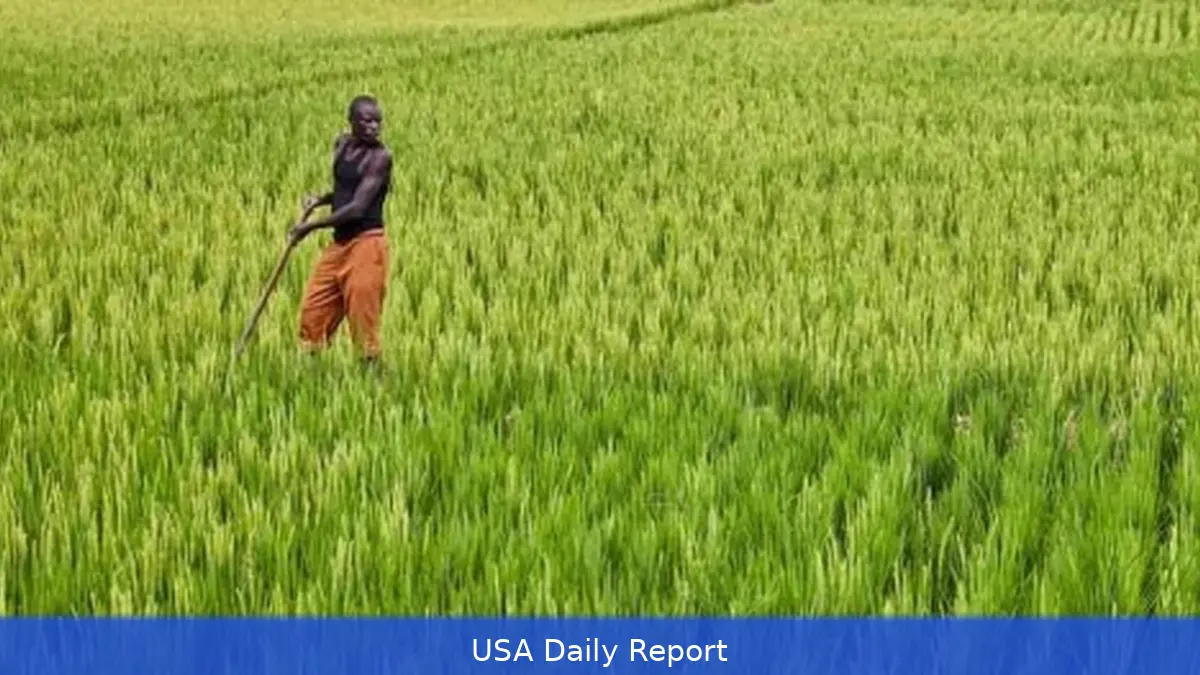
Water shortages are already shifting Africa's economic map. Look, the continent's trade and food systems are being tested — and money will follow where risk and need meet.
Why water matters for money
The African Development Bank Group has long argued that investment, not aid, will drive Africa's growth. Akinwumi Adesina, President of the African Development Bank Group, repeated that thesis while pointing to broad economic gains across the continent and the role of infrastructure and trade finance in fueling growth. But water — or the lack of it — now threatens some of those gains.
Water impacts farms, factories, and ports, and it disrupts supply chains. If rains fail or floods destroy crops, prices rise and trade patterns shift.
Recently, the AfDB has moved from just lending to focusing on projects that attract private investors. The bank has poured funds into regional connectivity and trade mechanisms: it has committed more than $1 billion to support trade finance through Afreximbank, including $650 million in credit lines and $350 million in insurance, and it mobilized investor interest through the Africa Investment Forum where 49 deals worth over $38 billion attracted attention.
Adesina explains these efforts boost trade, create jobs, and draw investment.
So where does water fit in? For one, agriculture in many African countries still depends heavily on rain-fed systems. Maize — the continent's dominant staple — grows on roughly 100 million acres, and in parts of eastern and southern Africa the crop provides more than half the calories and protein for many households. When water fails, yields collapse. When yields collapse, imports rise.
Imports, prices and vulnerability
Currently, Africa imports roughly $50 billion worth of food annually, mostly cereals, based on reports from growers and market analysts. Those shipments cushion bad harvests. They also expose governments and businesses to global price swings and shipping disruptions.
Wawira Njiru, founder of Food4Education, told CNN that recent volatility stems from climate shocks, market structures and mismatches between demand and supply. "We've seen a lot of volatility when it comes to price shocks caused by climate change, the lack of a structured market, and demand versus supply," Njiru said. Her point: when local production fails, the fiscal and market shock lands quickly on consumers and state budgets.
This affects finances because governments with limited budgets must spend more on food imports or increase subsidies. Traders and banks face higher credit risk when harvests collapse. Investors discount future earnings on agribusinesses that lack irrigation or resilient seed systems. All of which pushes the conversation from humanitarian relief to financial resilience.

Climate shocks are already playing out
Climate extremes are severely impacting the region. From Cyclone Gati and Cyclone Batsirai in recent years to flood-related epidemics in Mozambique, the story is one of too much water and not enough — sometimes both in the same country. Dhesigen Naidoo, senior water and climate researcher at the Institute for Security Studies, said climate change is increasingly experienced as a water crisis. "We're talking about floods and droughts and very high energy storms that have been experienced around the world and in Africa with absolutely devastating impact," Naidoo said. "Our ability to manage that has really diminished over time as the challenge gets bigger and bigger."
As a result, crop yields drop and livestock perish, turning food security into a major economic concern. In areas where maize yields barely top two tons per 2.5 acres — roughly the continental average cited in reporting — a single dry season can wipe out household incomes and reduce exportable surpluses. By contrast, the United States produces on average about five times more maize on the same land, giving it far greater buffer capacity.
Investment gaps — and where banks step in
Adesina has argued that infrastructure and trade finance are central to Africa's future, and the AfDB has already backed major transport corridors — including funding feasibility work for the Lagos‑Abidjan corridor and financing 1,000 kilometres of road between Addis Ababa and Mombasa, which officials say increased trade between Ethiopia and Kenya fivefold. Those projects show how targeted investment can reshape commerce. But water infrastructure — irrigation, storage, treatment and distribution — remains underfunded.
Building roads and ports definitely helps transport goods. Still, without reliable water for farming and cities, demand will always exceed supply. And investors notice.
The African Union's decision to make water the theme for its 2026 summit reflects how political and security leaders now see water as more than an environmental issue. Sanusha Naidu, foreign policy analyst at the Institute for Global Dialogue, told journalists the conversation is about commodification, access and conflict. "Water is life," Naidu said. "But Not just that water is life — water is becoming a commodity of corporatisation and access. It's a humanitarian conflict. It's a climate change conflict. It's a peace and security issue."
Financial products and agricultural resilience
Markets are responding with insurance, credit lines and blended finance. The AfDB's support to Afreximbank — the $650 million in credit lines and $350 million in insurance capacity — is an example of how bank-led finance can shore up trade when markets get stressed. Those tools help traders and banks keep flows moving when harvests fail or port congestion snarls shipments.
Point is, money can also be directed to resilience: irrigation projects that reduce dependency on erratic rains, seed banks that preserve drought-tolerant varieties, and regenerative agriculture practices that restore soil moisture. Some communities are already exploring those options. In Colombia and elsewhere, indigenous groups have turned to heat- and drought-resistant crops and seed banks. African research networks and NGOs are piloting similar approaches.
But scaling requires capital. Private investors want predictable returns. Public banks want to leverage limited balance sheets. That's where blended finance and guarantees come in — they de-risk projects enough to attract private money while keeping development goals in view. The AfDB has been pushing that model through summits like the Africa Investment Forum, which linked deals with investors. The forum generated bids for multiple projects across sectors — trade, transport and energy — and showcased how public capital can unlock private deployment.
Where the risks land
Thing is, for finance ministers, the immediate worry is fiscal stress from higher import bills and emergency relief. For banks and insurers, the worry is rising default rates and higher claims. But for investors, the worry is project viability in a hotter, wetter and more volatile climate.
At the household level, the risk shows up as empty stomachs and shrinking incomes. That's a political problem too: poor service delivery and sudden food price jumps can catalyze protests and instability, which in turn raise borrowing costs and scare off investors.
What gets funded next
Adesina has pushed the argument that Africa will grow through investment, not aid. The AfDB's recent moves — from trade finance to roads — reflect that strategy. The next test is whether the bank and its partners steer more capital into water resilience and climate-smart agriculture. If they do, the returns could be both social and financial: fewer food shocks, steadier trade, and projects that deliver reliable revenue streams to investors.
Still, doing that requires political will and careful design. Water projects are often local, complex and slow to yield returns. Getting private investors on board will mean mixing concessional finance, guarantees and strong regulatory frameworks. It will also mean recognizing water as a cross‑sectoral driver of risk for finance, trade and food security — not just an environmental line item.
Related Articles
- Palantir’s government work fuels a stock surge — and a valuation problem
- Two Billion Gmail Users Face a Major Choice as Google Turns on Gemini in Mail
Adesina said the African Development Bank has invested over $1 billion in Afreximbank — including $650 million in credit lines and $350 million in insurance.
This article was created with AI assistance.


