
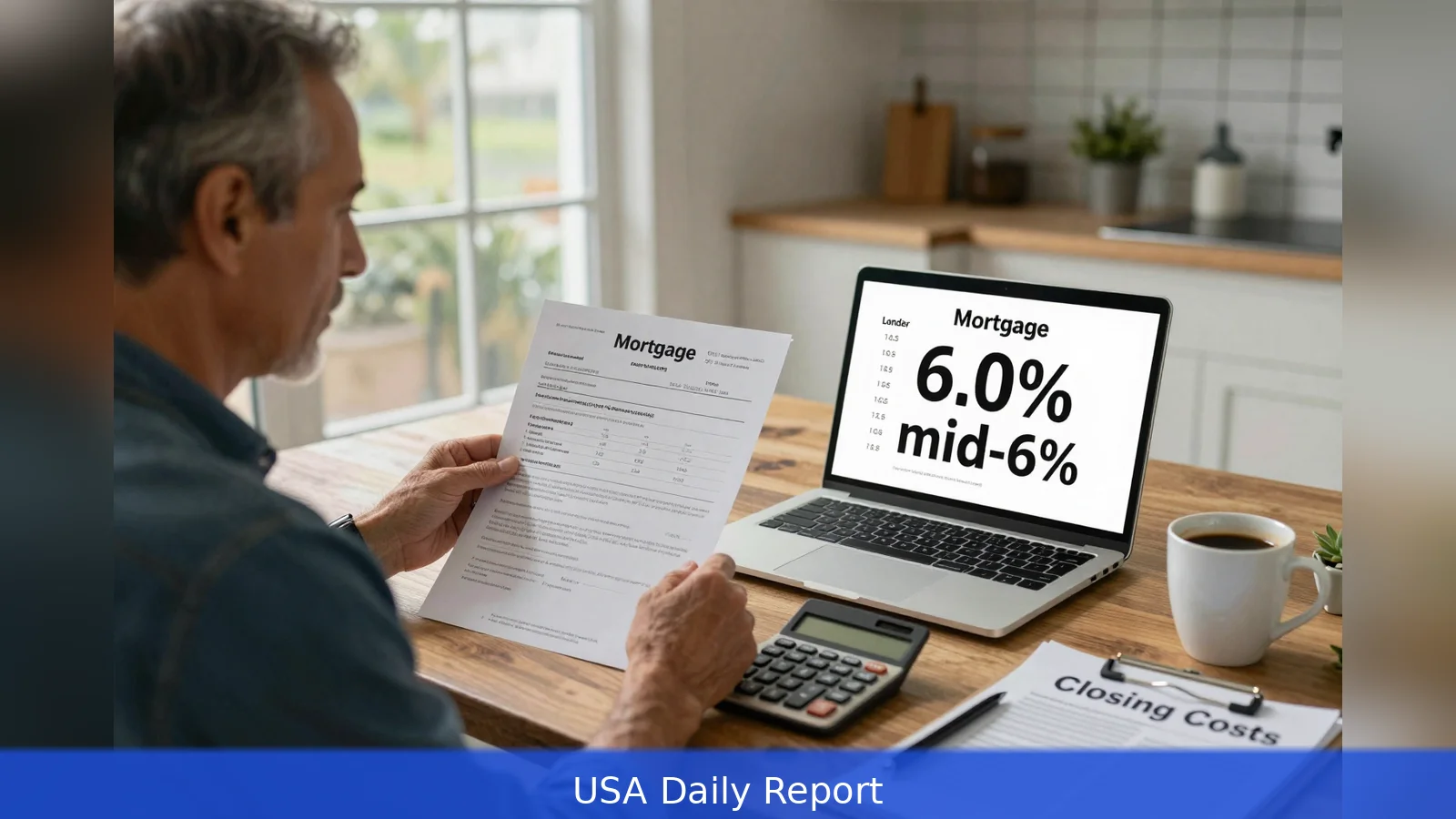
Mid-6%. That headline 30-year refinance rate on July 1, 2026, means most homeowners with sub-6% legacy mortgages won’t save enough to justify refinancing. Daily lender-marketplace snapshots cited by consumer sites showed 30-year averages in the mid-6% area, while 15- and 20-year refinance rates ran mid-5% to mid-6% and eased modestly week-over-week. Those gaps translate directly into higher monthly payments and fewer borrowers reaching a break-even point after closing costs.
Mid-6% is the headline 30-year refinance rate on July 1, 2026, and it frames how households and mortgage markets are thinking about refinancing this summer. Daily lender-marketplace snapshots, including Zillow's averages reported by consumer outlets, flagged modest week-over-week softening. Those numbers matter because they translate directly into monthly payments, borrower break-even calculations and who gets a tangible benefit from refinancing.
Why rates are where they are
Mortgage rates didn't fall back to the ultra-low levels seen during the pandemic even after the Federal Reserve began easing in late 2024. The Fed's tightening campaign through 2023 established a higher baseline, and markets repriced again in March 2026 when geopolitical tensions and a spike in energy prices pushed Treasury and swap yields higher. Reporting that reviewed Zillow's data and central-bank developments traced the transmission from higher sovereign yields into mortgage pricing, while analysts cited in mainstream coverage pointed to stubborn inflation and periodic risk premiums as the main forces keeping refinance rates elevated relative to pre-2022 levels.
Those mechanics are why a headline number in the mid-6% range isn't only abstract market noise. Mortgage pricing reflects long-term Treasury moves, swap markets, and lender-specific spreads. When energy or geopolitical risk lifts yields broadly, lenders widen the cost they charge on top of those reference rates. Zillow's reporting around June 29-30 showed 30-year averages in the mid-6% area, and that gap versus legacy loans explains why refinancing has stayed muted.
Closing costs and loan mechanics turn a headline rate into a borrower-by-borrower decision. Consumer guides and calculators commonly show closing costs run a few percent of the loan amount. Consumer-facing models translate a mid-6% headline into noticeably higher monthly payments than borrowers with sub-6% legacy rates typically pay. That increases the total interest over the life of the loan at the elevated rate.

Beyond dollars and cents, the refinance process carries frictions. Applications typically trigger a hard credit inquiry, which can cause a temporary dip in credit scores. Lenders require documentation and an underwriting review similar to an original mortgage application. Those paperwork costs, the possibility of a higher rate on a refi than a purchase loan, and lender premiums on certain product types create a break-even threshold: borrowers must calculate how many months it will take for the monthly savings to offset closing costs and any rate-related fees. Lenders also price product tiers differently: jumbo loans, VA refinances and other special-term products show distinct spreads versus conforming 30-year loans, and lenders commonly charge a premium for refinances relative to purchase loans.
That pushes the break-even point higher for some borrowers, particularly those seeking cash-out refinances.
Who feels the impact most? Three groups stand out. First, homeowners whose current mortgage rates are above today's market rates can lower monthly payments and interest costs if the numbers work after fees. Second, borrowers seeking cash-out refinancing face both higher interest and the higher fees associated with pulling equity, so their calculus weighs the benefit of liquid funds against elevated long-run interest costs. Third, prospective movers who need purchase financing confront a market where new-loan pricing is still elevated, which affects housing affordability and may influence timing decisions.
Market snapshots in late June and into June 30 showed small declines week-over-week across several refinance tenors, according to Zillow's lender-marketplace averages and related series. Those daily variations have produced narrow windows where some products briefly priced below early-June levels, prompting mortgage brokers and attentive borrowers to lock rates. Still, the absolute level of rates remains far above the pandemic lows that allowed massive refinancing waves earlier in the decade, and that structural gap explains why overall refinance volume has stayed muted even when the 30-year average ticks down.
Analysts and lenders watching the flow of Treasury yields and swap spreads expect short-term momentum to be the chief determinant of daily refinance activity. Small moves in the underlying reference rates quickly show up in daily lender quotes, which is why borrowers who are close to a break-even calculation often watch the daily snapshots from Zillow, the Mortgage Research Center and related feeds. Consumer sites' use of these numbers provides a real-world translation: the headline percent becomes a monthly payment, a cash-out cost, and a decision about how long a homeowner plans to remain in place before turning a refinance into a net saving.
For now, the market situation is one of limited opportunity. A subset of homeowners with higher legacy rates can plausibly save by refinancing, and some borrowers found a narrow late-June window where pricing eased. But for the large share of mortgages secured at sub-6% rates, the incentive to refinance remains weak unless there's a material and sustained fall in long-term yields.
Related Articles
- Trail Blazers acquire Ja Morant, commit roughly $87 million
- Hovland wins Travelers in Monday playoff, upends FedEx Cup and betting markets
- Record tappable home equity fuels lender rate competition
Watch Treasury yields and swap spreads; small moves will determine refinancing windows.
This article was created with AI assistance.


