
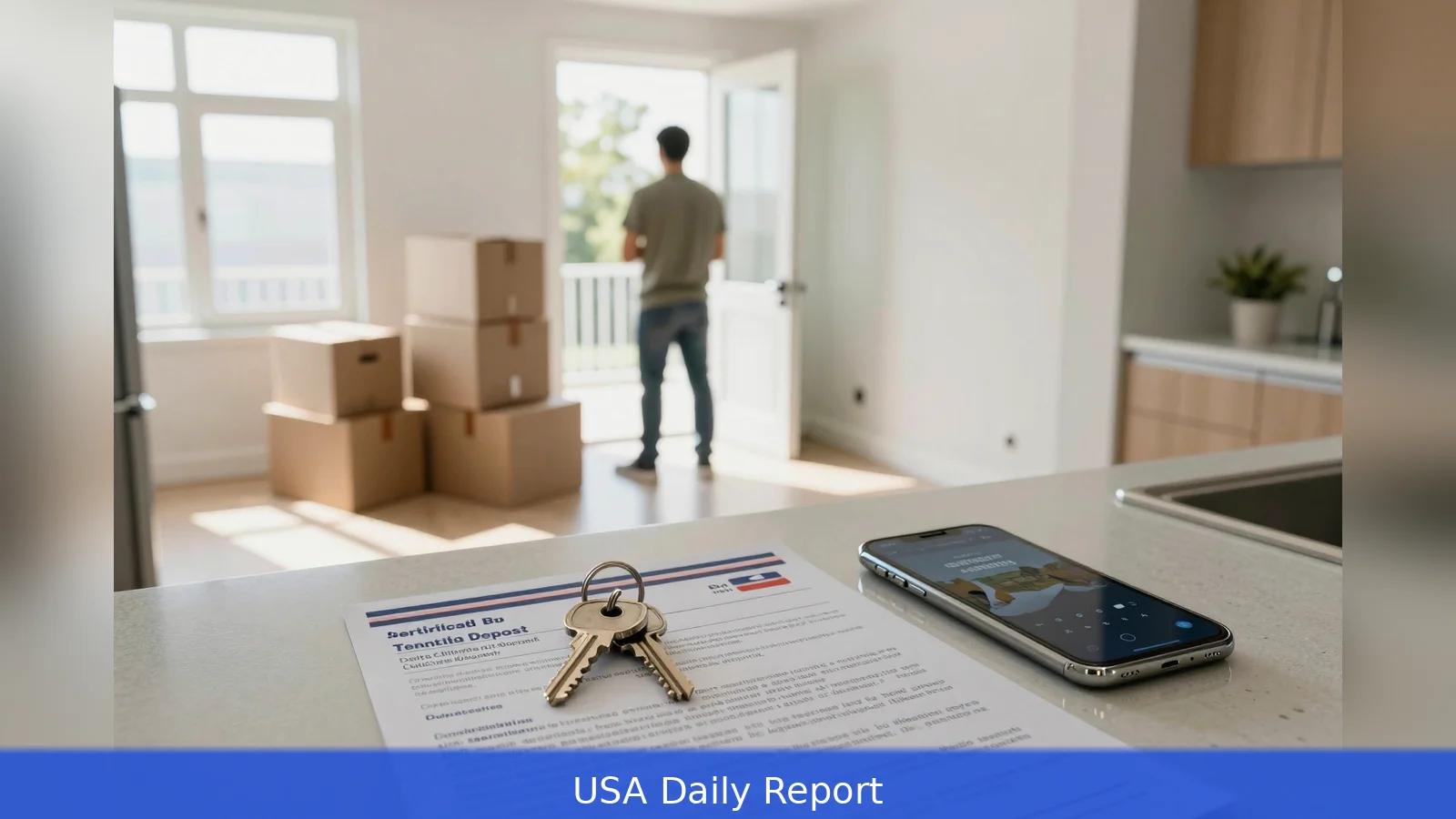
You stand in an empty apartment, keys on the counter, and the landlord closes the door behind you. That moment starts a legal clock that, depending on where you live, can give the landlord as little as two weeks or as long as two months to return your deposit. This guide lays out six practical steps tenants across the United States should follow to maximize the chance of a full refund and to prepare a lawful claim if the landlord withholds money. Follow the calendar and the paperwork in your state and you will know exactly when to demand the deposit or file in court.
You slip the final key through the slot and walk away, but in most states the dispute over the security deposit is only beginning.
1. Confirm which rule and deadline govern your case
Every U.S. state has its own statute for security deposits, and those laws differ in two critical ways: what event triggers the landlord’s deadline, and how long the landlord has to respond. A quick national frame is useful: many states give landlords somewhere in the 14 to 60 day range to return deposits or provide an itemized statement, but the exact trigger and the counting rules matter more than the range itself. Common Counsel reports that most states fit roughly within this 14 to 60 day band.
State examples show how important the trigger language is. Statutes vary about what starts the clock, some begin after move-out, some begin only after the tenant provides a forwarding address, and some tie the deadline to a tenant demand. That variation means you must read the statute in the jurisdiction where the rental sits, or use your state housing agency or a reliable state-by-state list, to calculate the deadline correctly.
Worked scenario: if your lease says the landlord must return the deposit "within 21 days after you vacate," count calendar days starting the day after you vacate; if the statute conditions return on your written forwarding address, send that address promptly and keep proof of delivery.
2. Build the evidence file before and at move-out
Documenting the unit condition is central to any lawful claim. Apartments.com and Common Counsel both recommend a thorough move-in checklist, dated photos, and a signed move-in inspection report to rebut later damage claims.
Those same steps apply at move-out: take time-stamped photos or video of every room, make a dated checklist of keys and appliances, and, if possible, request a written move-out inspection with the landlord present.
Return all keys and preserve proof you did so. If a landlord later claims keys were missing, a signed handoff or a timestamped photo of keys on a counter is strong evidence. If you used a professional cleaner or paid for repairs, keep receipts. Many state statutes require landlords to show receipts or estimates when they deduct repair costs from the deposit.
Worked scenario: when you first signed the lease, you and the landlord walked the unit and signed a checklist noting a small scuff on the living room wall. Keep that signed checklist and use your move-out photos to demonstrate the scuff never became a larger damage claim that would lawfully justify a deduction.
3. Send your forwarding address and build a paper trail
Some states make the landlord’s duty to return the deposit dependent on receiving the tenant’s forwarding address. Tenant-rights resources therefore recommend sending your forwarding address in writing even when it's not explicitly required by the statute. Email creates a quick contemporaneous record; following that with a mailed copy creates stronger evidence of delivery.
When a statute requires proof of notice or receipt, consider stronger delivery methods. Some guides suggest certified mail when the statutory language conditions an obligation on the landlord’s receipt of written notice. Keep the email, the mailed copy, and any delivery confirmation. Those items prove you satisfied whatever procedural step the law requires before the landlord’s time clock starts.

Worked scenario: a tenant who knows the statute ties the return period to a provided written address should email the forwarding address the day they move and then mail a printed copy, retaining the sent email and postal receipt as proof.
4. Know what deductions the landlord may lawfully make
Statutes limit lawful deductions. All sources agree that acceptable reasons generally include unpaid rent, damage beyond ordinary Wear and tear, and, where the lease permits, unpaid utilities or necessary cleaning. Common Counsel emphasizes that normal wear and tear, for example faded paint or minor scuffs, is not a lawful deduction.
Many states require an itemized statement and supporting receipts or estimates for repairs taken from the deposit. Common Counsel and tenant-rights guides stress that vague entries such as "cleaning" without detail or receipts are common red flags and may violate statutory requirements.
New York provides a tighter example of procedural rules: state guidance limits deposits to a set amount in many cases and imposes specific holding and interest obligations in some jurisdictions, and state enforcement agencies can investigate misplacement or nonpayment of deposits. Practice in New York also makes clear that tenants seeking punitive damages must bring those claims in court; administrative investigations and civil claims are different routes to relief.
Worked scenario: if a landlord deducts $400 for "repairs" but provides no receipts, you can demand a compliant, itemized statement and copies of repair invoices. If the state statute requires receipts and the landlord can't produce them within the statutory deadline, the law in many places will bar those deductions.
5. Send a demand letter and, if necessary, file in small claims court
Practical enforcement follows a predictable sequence. Some legal guides frame a statutory checklist as three steps: confirm the deadline, send your forwarding address, and demand an itemization if deductions are claimed. Common Counsel and Apartments.com recommend a formal demand letter before filing suit because many landlords will return the deposit after receiving a clear demand. Tenant-rights groups offer templates and recommend sending demand letters by certified mail when a statute requires proof of notice.
If informal demand fails, small claims court is the common enforcement path. Every state has a small claims forum that allows tenants to sue without a lawyer for deposit disputes. Common Counsel and legal guides note that tenants can pursue recovery there, often including statutory penalties and sometimes attorney fees if the statute permits them. State rules govern allowable claim amounts and filing procedures, so consult the local small claims court website for the exact process and filing fee.
Keep in mind the difference between enforcement and investigatory routes. For example, state attorney general or housing agencies can investigate mishandling but tenants who want statutory or punitive damages usually must file a civil claim. That division of remedies applies in other jurisdictions too: administrative complaints can trigger investigations, but the civil claim is typically where statutory penalties and damages are recovered for the tenant.
Worked scenario: send a certified demand letter on day 1 after the statutory deadline passes. If the landlord still doesn't return the deposit or provide a compliant itemized statement, file in small claims court under the rules for your county or municipal court.
6. Look for local financial help if you can't cover a deposit
If you are moving into a place and can't afford a security deposit, community programs can be an alternative to borrowing. Local nonprofit and faith-based programs supply grants or guarantees in many regions. The Hartford program run by My Sisters’ Place provides a concrete example: it supplies security deposit funds or guarantees for eligible low-income or homeless applicants, and it requires that applicants already have located housing and meet program income or referral criteria.
Use local housing authority, nonprofit, or community action agency listings to find comparable programs in other cities. Eligibility rules, required documentation, and whether the program provides a grant or a guarantee vary by program, so contact the program directly early in the search process.
Worked scenario: if you qualify for a deposit program like My Sisters’ Place, the program often expects you to have an apartment offer in hand and to provide income documentation or a referral before it will issue funds or a guarantee.
The core obligations are common across jurisdictions, but the statute-level details differ and they decide outcomes. State-by-state resources and Common Counsel both cover these variations and emphasize different elements. State-by-state lists note triggers such as tenant demand and forwarding-address requirements, and they supply examples of statutory remedies including double damages in some cases. Common Counsel offers a national framing that many states allow double or triple damages for bad-faith withholding and that missed deadlines often forfeit landlord deductions. These accounts complement one another, but you must rely on the exact statute in the landlord’s jurisdiction to know which rule governs your case and what penalties you can claim.
In practice, that means two things: first, confirm the trigger language so you measure the correct deadline; second, read the penalty provisions to know whether your state allows double or triple damages, attorney fees, or other remedies when a landlord acts in bad faith. If the statute is unclear or you have a novel factual question, a local legal aid clinic or tenant-focused nonprofit can usually point you to the exact statute and explain the remedies.
Checklist to act now
Follow these six steps without delay: First, verify your state statute to identify the exact deadline, the event that triggers the clock, and the available statutory remedy. Use a state law source or your housing agency and consult a state-by-state list as a quick reference. Second, gather evidence: the move-in inspection report, dated photos, and a copy of the lease are central. Apartments.com and Common Counsel emphasize these items as essential evidence.
Third, send your forwarding address in writing if it's required or recommended, and keep proof of delivery. Tenant-rights guides recommend an email plus a mailed copy for a strong record. Fourth, on or before the statutory deadline send a written demand for the return of the deposit or for a compliant itemized statement, and preserve proof of delivery. Fifth, if the landlord fails to comply, file in small claims court or use an available local enforcement or consumer protection office. Common Counsel and legal guides note that small claims is the usual forum and that some statutes permit additional damages and attorney fees. Sixth, if you need help paying a deposit, contact local nonprofits or programs such as My Sisters’ Place in Hartford for eligibility requirements and application steps.
Related Articles
- Windows 11 Dual Monitor Setup: 2-Display Guide
- 7 steps to pick Apple Maps or Google Maps for daily navigation
- 5 Steps to Compound Growth with AI Side Hustles
In short: - Calculate your exact state deadline and note which event triggers the clock. - Send and keep proof of your forwarding address and move-out photos, plus any receipts. - Send a statutory demand on or before the deadline, and file in small claims if the landlord withholds the deposit.
This article was created with AI assistance.


