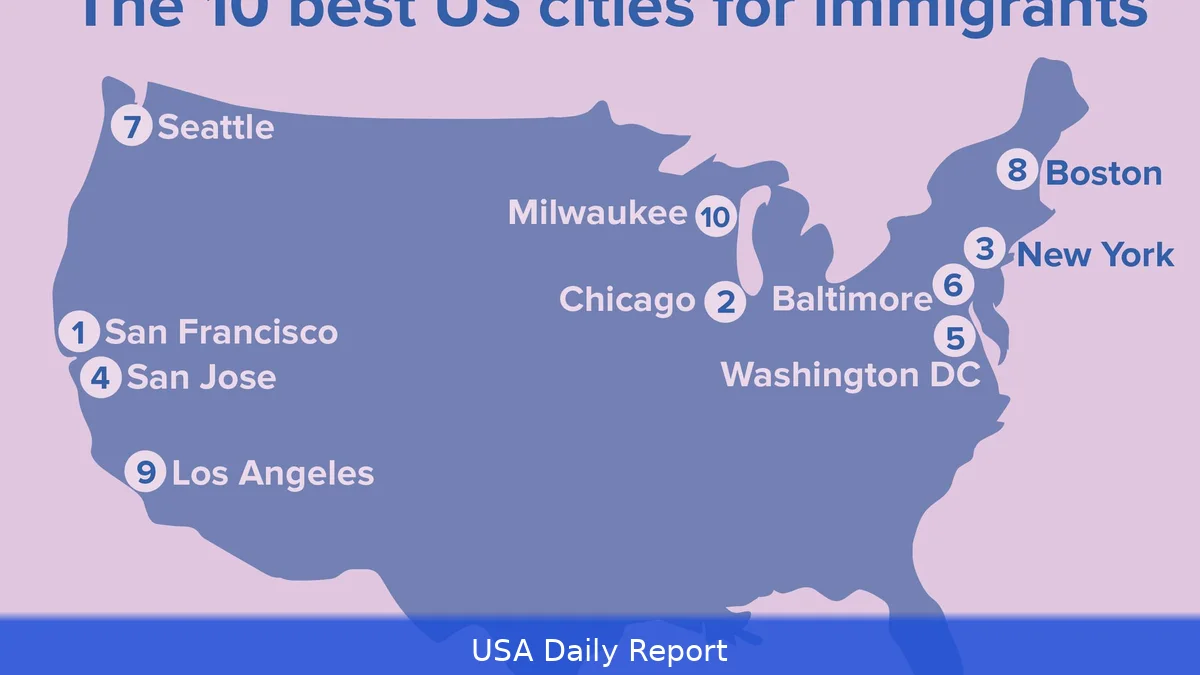
If you're searching for the best US cities for immigrants in 2026, you want a place that offers good jobs, affordable living, and friendly neighborhoods. No matter if you're relocating for a job, school, or a new beginning, this guide highlights cities where immigrants do well. We considered things like job availability, housing costs, school quality, and cultural mix to help you pick the right city.
Quick Comparison: Top 10 US Cities for Immigrants in 2026
- Naperville, IL – Best overall with strong jobs and schools.
- Cambridge, MA – High-tech jobs and vibrant community.
- The Woodlands, TX – Affordable housing and growing economy.
- Arlington, VA – Access to government jobs and diverse neighborhoods.
- Bellevue, WA – Tech hub with excellent amenities.
- Atlantic Station, GA – Walkable with rising employment.
- Colonial Village, VA – Close to D.C. With good schools.
- Evergreen Park, CA – Near Silicon Valley with job access.
- Downtown North, CA – Urban living and tech opportunities.
- Clarendon Hills, IL – Small community feel with strong schools.
1. Naperville, Illinois
Naperville has been number one for three years straight. It combines great schools, plenty of jobs, and more affordable living than many metro areas. Immigrants find a welcoming community and a variety of industries, including healthcare, education, and tech. Unemployment here is low at around 3.2%, below the national average. Housing prices average around $380,000, which is reasonable given its proximity to Chicago. The city also boasts a high public safety rating and plenty of parks and recreational spaces.
Pros: Low unemployment rate, family-friendly neighborhoods, strong public services, and good public transportation options connecting to Chicago.
Cons: Winters can be harsh with average lows near 15°F in January, and some suburban areas require owning a car to get around efficiently.
Best for: Families and professionals seeking stability, good schools, and a safe environment.
Pricing: Median home price approx. $380,000; average rent $1,400/month as of early 2026. Property taxes average 2.1% annually.
2. Cambridge, Massachusetts
Cambridge stands out thanks to its booming tech and education scene, with Harvard and MIT right there. Immigrants with skills in science, engineering, and education find plenty of jobs here. The city's economy grew 4.5% in 2025, driven by tech startups and research institutions. Cost of living is higher, with median home prices near $750,000 and rents averaging $2,500 per month. Despite the cost, Cambridge offers top-tier public schools and a vibrant multicultural community.
Pros: Access to world-class education and research institutions, excellent public transit, and diverse neighborhoods filled with cultural amenities like museums and international cuisine.
Cons: High cost of living and housing affordability challenges for newcomers, especially those without high-paying jobs.
Best for: Immigrants with advanced degrees or tech skills seeking career growth and academic opportunities.
Pricing: Median home price around $750,000; average rent $2,500/month; property taxes approximately 1.1% annually.
3. The Woodlands, Texas
The Woodlands offers a rapidly growing economy with a strong focus on energy, healthcare, and manufacturing. The job market expanded by 3.8% last year, and unemployment is low at 3.4%. Housing remains affordable, with median home prices around $350,000, much lower than many other booming metro areas. The city has a reputation for family-friendly amenities and excellent public schools rated above state averages.
Pros: Affordable housing, a growing economy, accessible green spaces, and a warm climate with mild winters averaging 45°F in January.
Cons: Limited public transportation options, so owning a car is essential. Summers can be hot and humid, with temperatures often topping 90°F.
Best for: Immigrants looking for affordable suburban living with access to jobs in energy and healthcare.
Pricing: Median home price approx. $350,000; average rent $1,300/month; property taxes around 2.2% annually.
4. Arlington, Virginia
Arlington is a hotspot for government and defense jobs with direct access to Washington D.C. The city benefits from a diverse population and a highly educated workforce. Employment grew by 3.2% in 2025, largely due to federal contractors and tech firms. Housing prices are higher, with median home values near $700,000. Even so, Arlington offers a vibrant urban feel, excellent public transit via the Metro system, and diverse neighborhoods.
Pros: Strong job market tied to government and tech, excellent transit options, and diverse cultural communities.
Cons: High housing costs and a competitive rental market; median rents hover around $2,200/month.
Best for: Immigrants seeking government or tech careers with access to big-city amenities.
Pricing: Median home price approx. $700,000; average rent $2,200/month; property taxes around 1.0% annually.
5. Bellevue, Washington
As a tech hub just east of Seattle, Bellevue hosts major employers like Microsoft and Amazon. The city's economy grew 5% in 2025, one of the fastest in the state. Immigrants with IT and engineering backgrounds find many job openings. Bellevue offers great schools and a high standard of living, but housing is pricey with median home prices hitting $850,000. Rent averages $2,600 monthly.
Pros: Thriving tech sector, excellent amenities, beautiful natural surroundings including parks and lakes.
Cons: High cost of living and traffic congestion during rush hours.
Best for: Skilled tech workers and families wanting quality schools and outdoor activities.
Pricing: Median home price approx. $850,000; average rent $2,600/month; property taxes about 1.0% annually.
6. Atlantic Station, Georgia
Atlantic Station is an urban neighborhood in Atlanta known for its walkability and expanding job market. Employment in retail, healthcare, and technology increased by 3.5% last year. The area appeals to young immigrants looking for city living with access to parks, shops, and public transit. Housing prices are moderate, with median home values around $400,000 and rents averaging $1,700.
Pros: Walkable neighborhoods, growing job market, and proximity to downtown Atlanta.
Cons: Traffic congestion and some concerns with crime rates in surrounding areas.
Best for: Young professionals and immigrants seeking urban lifestyles with reasonable costs.
Pricing: Median home price approx. $400,000; average rent $1,700/month; property taxes around 1.2% annually.
7. Colonial Village, Virginia
Located just outside Washington D.C., Colonial Village offers good schools and quiet neighborhoods. The city benefits from steady job growth tied to federal agencies and private sector businesses. Median home prices are about $550,000, with average rents near $1,800. Public transit access and community programs help newcomers settle in comfortably.
Pros: Proximity to D.C., quality schools, and strong community resources for immigrants.
Cons: Higher housing costs compared to other Virginia suburbs and limited nightlife options.
Best for: Families and professionals wanting quiet suburban life near the capital.
Pricing: Median home price approx. $550,000; average rent $1,800/month; property taxes near 1.0% annually.
8. Evergreen Park, California
Evergreen Park sits near Silicon Valley, giving immigrants access to some of the nation’s top tech jobs. The economy grew 4.3% in 2025, fueled by innovation and startups. However, housing is expensive, with median home prices around $900,000 and rents averaging $2,800. The community is diverse and offers good schools and public services.
Pros: Proximity to Silicon Valley tech jobs, diverse community, and strong educational institutions.
Cons: Extremely high housing costs and intense competition for affordable rentals.
Best for: Highly skilled tech workers and entrepreneurs willing to pay a premium for location.
Pricing: Median home price approx. $900,000; average rent $2,800/month; property taxes about 1.2% annually.
9. Downtown North, California
Downtown North is a bustling urban area with many tech startups and corporate offices. Immigrants find opportunities in software development, marketing, and services. The neighborhood offers urban living with access to cultural venues and public transit. Housing costs are on the high side — median home prices hover around $875,000 and rents average $2,700 monthly.
Pros: Vibrant urban environment, excellent public transit, and diverse job opportunities.
Cons: High cost of living and limited affordable housing options.
Best for: Young professionals and immigrants seeking city life with tech jobs.
Pricing: Median home price approx. $875,000; average rent $2,700/month; property taxes near 1.1% annually.
10. Clarendon Hills, Illinois
Clarendon Hills is a small suburban town offering a strong sense of community and excellent schools. It’s ideal for immigrants wanting a quieter lifestyle without giving up access to Chicago’s job market, reachable within 30 minutes by commuter rail. Median home prices are about $420,000, and average rents are $1,500. The town is known for its safety and family-friendly environment.
Pros: Small-town charm, good schools, easy transit access to Chicago.
Cons: Limited nightlife and cultural diversity compared to larger cities.
Best for: Families and immigrants seeking suburban calm near a major metro area.
Pricing: Median home price approx. $420,000; average rent $1,500/month; property taxes around 2.1% annually.
How We Chose
We analyzed data from the U.S. Census Bureau, Bureau of Labor Statistics, and local housing market reports through early 2026. Key factors included employment growth rates, unemployment figures, median home prices, average rents, school ratings from GreatSchools, and community diversity indexes. We also considered accessibility to public transportation and the presence of immigrant support services. Each city was ranked to balance affordability, job opportunities, and quality of life for newcomers.
Final Verdict
The best US cities for immigrants in 2026 offer a mix of job opportunities, affordable living, and strong communities. Naperville leads with a solid balance of schools, jobs, and affordability. Cambridge and Bellevue cater to tech-savvy immigrants, despite higher costs. The Woodlands and Atlantic Station provide affordable options with growing economies. Arlington and Colonial Village stand out for government-related employment and suburban amenities. For those targeting Silicon Valley, Evergreen Park and Downtown North deliver job access but come with steep prices. Clarendon Hills rounds out the list with a small-town feel near Chicago. Wherever you land, these cities provide solid foundations for immigrant success in 2026.
The best US cities for immigrants in 2026 offer a mix of job opportunities, affordable living, and strong communities. From Naperville’s balance of schools and jobs to Cambridge’s tech-driven economy, each city on this list has unique strengths. Whether you want suburban calm, urban buzz, or proximity to tech hubs, these places give you a solid chance to build your future.


