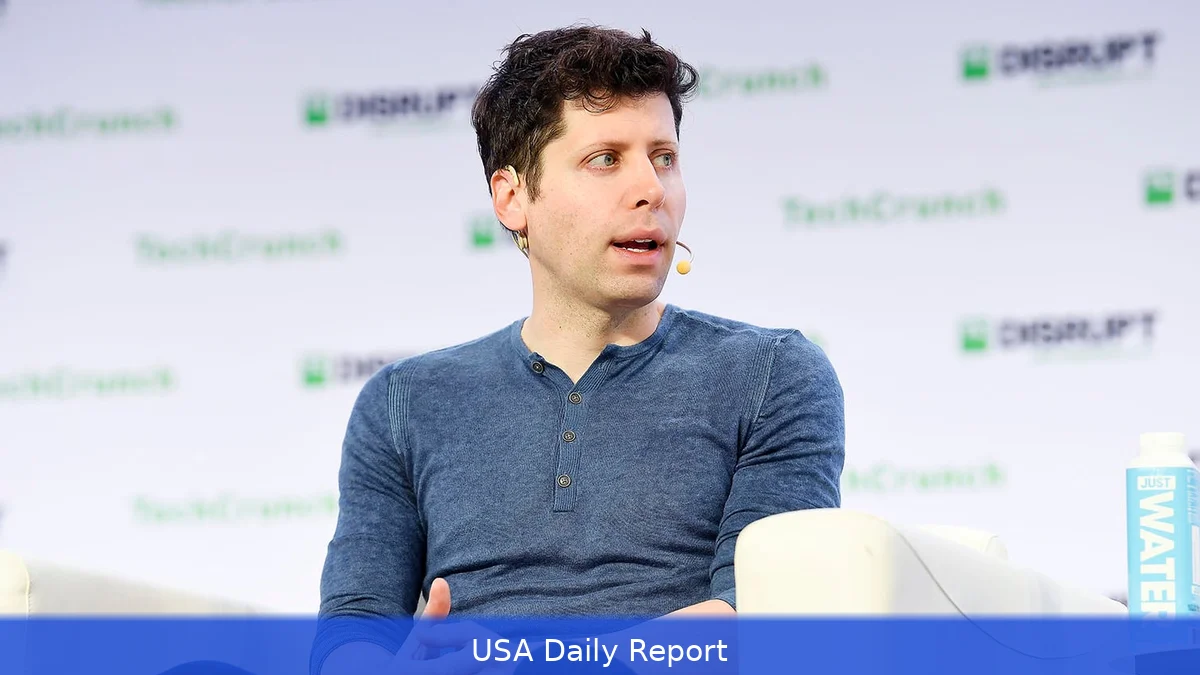
OpenAI’s path to going public is anything but smooth. CEO Sam Altman and CFO Sarah Friar appear to have different ideas about when the company should hit Wall Street. Meanwhile, the AI giant is juggling a major leadership reshuffle as it prepares for a blockbuster IPO.
Leadership Reshuffle Signals Strategic Pivot
OpenAI is in the middle of a high-stakes transformation. The company announced that longtime Chief Operating Officer Brad Lightcap is stepping into a new role focused on special projects, directly reporting to CEO Sam Altman. His former commercial duties are now partially handled by Chief Revenue Officer Denise Dresser, who was only recently appointed. The move shows OpenAI’s desire to sharpen its focus on enterprise sales and partnerships, especially with private equity firms.
At the same time, two key executives are stepping back for health reasons. AGI Deployment CEO Fidji Simo is on temporary medical leave to treat a neuroimmune condition, expected to last several weeks. Chief Marketing Officer Kate Rouch also stepped down to concentrate on cancer recovery, though she hinted at a possible return in a different capacity. These absences put extra pressure on the remaining leadership to maintain momentum.
OpenAI’s president and co-founder Greg Brockman has taken on more responsibility during this period, overseeing product development along with CFO Sarah Friar and Chief Strategy Officer Jason Kwon. The company is clearly working to maintain continuity while navigating these executive gaps.
IPO Plans Create Internal Tension
Reports suggest CEO Sam Altman is gearing the company toward an IPO as early as the second half of 2026, aiming for a valuation around $1 trillion.
Internal moves, like reducing the number of executives reporting directly to him, point to his intent to streamline decision-making ahead of the offering.
But the CFO, Sarah Friar, seems to be taking a more cautious stance on timing. While Altman pushes for a fast track to public markets, Friar’s focus has been on solidifying investor relations and ensuring OpenAI’s financials and revenue streams are robust enough to justify such a lofty valuation. The tension between their approaches underlines the high stakes involved.
The company recently raised a massive $122 billion funding round, valuing it at $852 billion. That injection of capital has given OpenAI breathing room but also set high expectations for growth and profitability. The IPO could raise upwards of $60 billion, depending on market conditions and revenue trends, according to sources.
Shifting Product Focus and Revenue Strategy
OpenAI is pivoting away from some of its more experimental offerings. The popular Sora video-generating model, launched in late 2024, was discontinued after revealing its steep compute costs—estimated at $1 to $5 per 10-second video. At scale, that could translate into more than $5 billion in annual expenses, making it an unsustainable product for now.
Instead, OpenAI is doubling down on enterprise tools and coding agents, which offer better profit potential. The company is also exploring new revenue streams like advertising within ChatGPT and developing a unified “Super App” that integrates chatbot, coding, and browsing capabilities into a single platform. These moves aim to boost monetization while controlling costs.
The company’s safety and security teams have been restructured as well. Altman relinquished direct oversight of safety, folding that team into research under Chief Research Officer Mark Chen. Security was shifted to the division run by Brockman, reflecting a clearer operational split as OpenAI scales its infrastructure.
Competition and Market Pressure
OpenAI faces growing competition from rivals like Google and Anthropic, which is also reportedly targeting a 2026 IPO. That puts extra pressure on OpenAI to prove it can execute effectively and maintain a technological edge.
With a global user base nearing one billion, OpenAI’s ability to stabilize its leadership while delivering on ambitious product and revenue goals will be critical. Investors will be watching closely as the company balances rapid innovation with the demands of public market scrutiny.
OpenAI’s IPO timing remains uncertain as internal leaders weigh growth ambitions against financial readiness. With a reshaped executive team and sharpened product strategy, the company is racing to prove its worth before stepping onto Wall Street.


