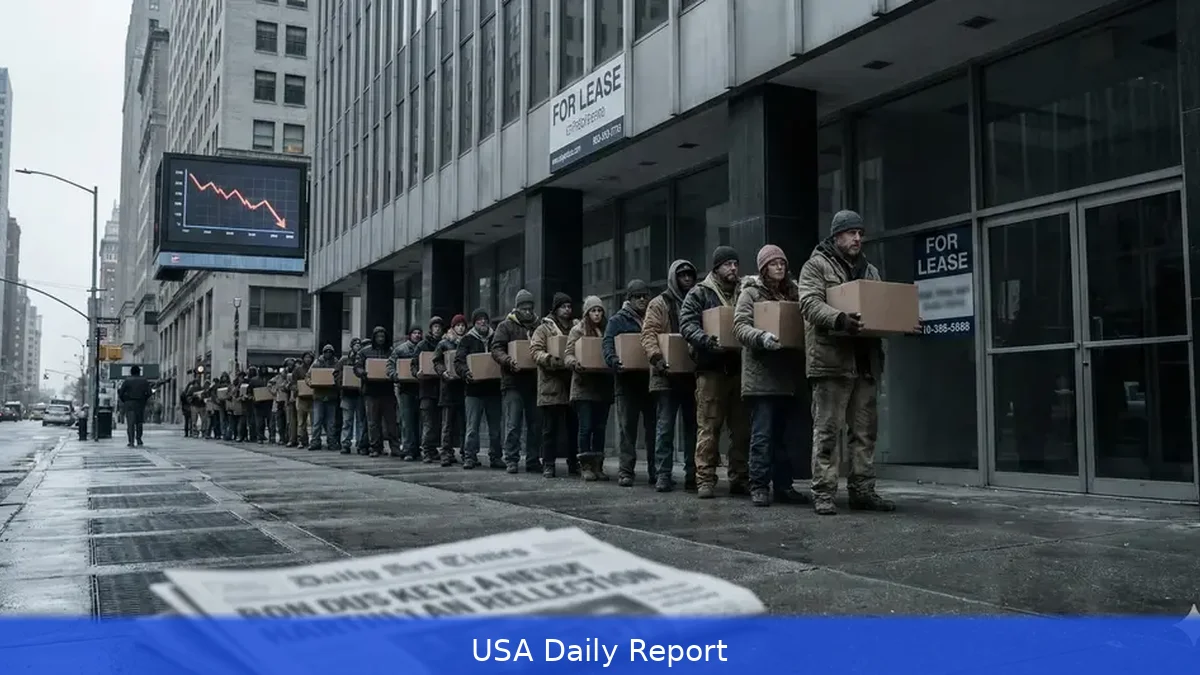
Layoffs are rising across many industries, making the US job market tougher than it has been since 2020. Workers are scrambling to hold onto jobs, while new technology stirs fresh worries about the future of work.
Rising Layoffs Stir Anxiety
Diesel hit $5 a gallon in parts of Texas last week. That hasn't happened since 2008. But the real shockwaves are coming from the labor market, where layoffs have surged to levels unseen since the early pandemic days. Companies across sectors are cutting staff to protect their bottom lines amid economic uncertainty and inflationary pressures. While some see this as a cyclical adjustment, many workers face a scramble to stay afloat.
Unemployment affects real people, not just numbers. The emotional toll on those losing jobs is brutal. For journalists, layoffs come with an especially public sting. Many are forced to announce their job losses online, exposing themselves to trolls who celebrate their misfortune — often for reasons unrelated to job performance. That cruelty adds insult to injury, while the scramble for health insurance and bills paints a grim picture of life post-layoff.
Point is, the job market isn’t just shrinking; it’s getting meaner. The gap between employers and employees widens, with fewer jobs available than seekers. Even industries with union protections aren’t safe. The traditional hiring pipeline is tangled, and the threat of the ax looms large.
Tech’s Double-Edged Sword
Right now, AI is a hot topic. But the fear that robots will steal all jobs is overblown, says Strauss Zelnick, CEO of Take-Two Interactive.
Speaking at a recent conference, he called the idea that AI will make everyone unemployed 'the stupidest thing.' Instead, Zelnick argues that AI will change the nature of work, not eliminate it.
He points out that while development tools, including AI, make some tasks more efficient, they also enable tackling more complex projects — which actually raises costs. That means humans still have plenty to do. New technology will replace some roles, but it will also create new, often better-paying jobs. The call center worker replaced by AI might move into more engaging roles, Zelnick suggests.
But that hopeful outlook doesn't change the fact that many depend on the jobs AI might replace. The transition won't be smooth for everyone. This US agricultural example is telling: in the 1800s, up to 70% of Americans worked on farms. Today, it’s less than 2%. Technology wiped out many jobs but also created new industries and opportunities. Still, for individuals caught in the middle, the shift can be devastating.
Innovation Meets Sustainability: A Unique Employment Angle
Not all change spells doom. Some startups are turning challenges into opportunities that could reshape job markets and industries. Take Hand Made Stone (HMS), a Turkish company selected for a major mentorship program in Asia aimed at boosting mission-driven ventures. HMS has developed a patented composite stone technology that offers a cleaner, more sustainable alternative to traditional pumice stones used in denim manufacturing.
The denim industry in Asia is huge, and HMS's innovation addresses two big problems: toxic sludge pollution and excessive water consumption. Their technology reduces water use by 20% per load and cuts down on frequent stone changes, offering both environmental and commercial benefits. Denim giants like Levi Strauss & Co. And Kontoor Brands are already clients.
HMS’s success story shows how sustainability can spark job growth and investment in new sectors. By breaking down barriers to employment and promoting circular innovation, such startups could help ease some pressure on labor markets squeezed by layoffs and automation.
The Bigger Picture: Employment in Flux
US employment right now is a mixed bag of layoffs, technological shifts, and new opportunities. The surge in layoffs reflects economic challenges but also deeper, structural changes in how work gets done. AI and automation are reshaping roles across fields, sometimes replacing routine jobs but often creating more complex ones.
Workers face a tough environment: fewer jobs overall, plus the need to adapt skills quickly. Employers want efficiency but also complexity, which means demand for highly skilled labor is rising even as entry-level roles shrink. That creates a squeeze for many Americans trying to find stable, well-paying work.
The transition won’t be smooth for everyone. Some people will be left behind, while others find new paths.
The internet trolls cheering layoffs don't help. But neither does ignoring shifts underfoot.
With layoffs rising and AI changing jobs, the US employment landscape faces many challenges. The question is how workers, companies, and policymakers respond to this wave of change — and whether new innovations like sustainable manufacturing can open fresh doors for jobs in tough times.


