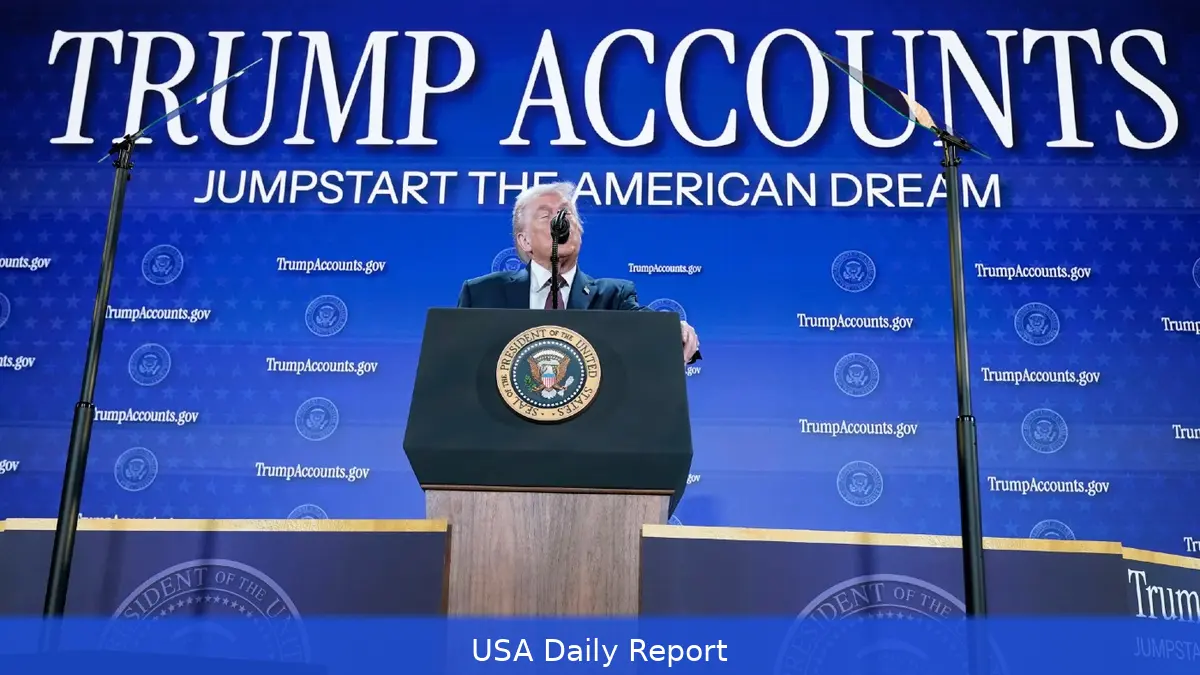
The Treasury Department has tapped the Bank of New York Mellon to serve as financial agent for the upcoming Trump Accounts program, a new federal initiative aimed at boosting children’s long-term savings. The program is set to launch this summer, with BNY Mellon playing a central role in app development and account management.
BNY Mellon’s Role in the Trump Accounts Program
The Bank of New York Mellon Corporation, one of the oldest financial institutions in the U.S., will act as a key partner to the Treasury Department as the Trump Accounts program gears up for rollout in July. The bank will oversee the creation of the Trump Accounts app and manage the first wave of accounts opened under this initiative. These accounts are designed as individual retirement accounts (IRAs) for children, intended to encourage early savings and investment habits.
Robinhood, the well-known brokerage and fintech platform, has been selected as the initial trustee and brokerage partner. The Treasury said that the partnership between BNY Mellon and Robinhood will help ensure that eligible children can access their Trump Accounts quickly and with ease.
BNY Mellon CEO Robin Vince expressed pride in the bank’s new role, emphasizing the institution’s historic ties to the U.S. Financial system and its commitment to expanding financial opportunity.
Vince stated in an email that BNY Mellon’s involvement aligns with their mission to support economic investment and strengthen capital markets while providing a foundation for children’s long-term financial security.
Meanwhile, Robinhood CEO Vlad Tenev highlighted the company’s mission to deliver a user-friendly platform for the next generation of investors. Tenev called the collaboration with BNY Mellon “historic and trusted,” adding that Robinhood is focused on powering Trump Accounts with technology that makes investing accessible.
Understanding Trump Accounts and Their Impact
Trump Accounts are a new kind of IRA that parents or guardians can open for eligible children.
Contributions to these accounts can come from the employers of a child’s parents or guardians, certain government entities, or qualifying charitable organizations. However, direct contributions by parents or guardians aren't explicitly mentioned, suggesting the program targets external sources of funding to encourage savings.
Once opened, the funds within Trump Accounts are locked in until January 1 of the year the child turns 18, ensuring the money remains untouched during childhood and adolescence. The program also establishes annual contribution limits, though specific caps haven't been detailed publicly.
One major incentive for families is the Treasury Department’s commitment to seed these accounts with $1,000 for every child born between January 1, 2025, and December 31, 2028. This upfront federal contribution aims to kickstart long-term savings and investment growth.
Billionaire philanthropists Michael and Susan Dell announced in December that they plan to invest $6.25 billion into Trump Accounts, aiming to reach 25 million children. This massive private donation will probably fuel the program’s reach and impact significantly.
The Broader Financial Context and Potential Challenges
Trump Accounts come at a time when Americans face increasing challenges building retirement savings. Roughly half of U.S. Households have no retirement account at all, and financial literacy remains low among younger populations. By introducing savings vehicles early in life, the Treasury hopes to foster more stable financial futures.
Still, the program’s success hinges on more than just the initial funding. The involvement of BNY Mellon and Robinhood suggests a focus on technology and accessibility, crucial for engaging families in a digital age. Yet, the choice of Robinhood as trustee may raise eyebrows given the company’s controversial past around trading outages and regulatory scrutiny.
The Treasury and its partners seem confident that teaming up a well-established bank with a fintech company will build a reliable platform. The Trump Accounts app will be central to this effort, enabling parents and authorized contributors to monitor and manage accounts with ease.
There are also questions about how the program will integrate with existing retirement and education savings plans, such as 529 college savings accounts and traditional IRAs. Coordination among agencies and clear communication to families will be vital to avoid confusion and maximize uptake.
Looking Ahead: What to Expect From the Trump Accounts Program
Contributions to Trump Accounts won’t begin until July 4, 2026, according to IRS guidelines. This delay allows time for the app’s development, regulatory compliance, and outreach to potential contributors. Eligible families and employers will need clear guidance on how to participate.
The program aims high, planning to include millions of children across the country. If successful, Trump Accounts could represent a major shift in how the U.S. Encourages retirement savings from an early age. The combination of government seed money, private philanthropy, and financial sector support could create a model other countries might watch closely.
But the program’s complexity also invites scrutiny. Who exactly qualifies for these accounts?
How will contribution limits be enforced? What protections will exist to safeguard the funds? These are questions still to be answered as Treasury moves forward.
For now, the Treasury Department is focused on launching the program on schedule, with BNY Mellon and Robinhood at the financial helm. This partnership shows the government wants to offer users a smooth, modern experience.
As the July launch date nears, all eyes will be on BNY Mellon and Robinhood to deliver a strong platform capable of managing millions of Trump Accounts. The program’s success could redefine childhood savings in America — but it still faces hurdles in execution and adoption.


