
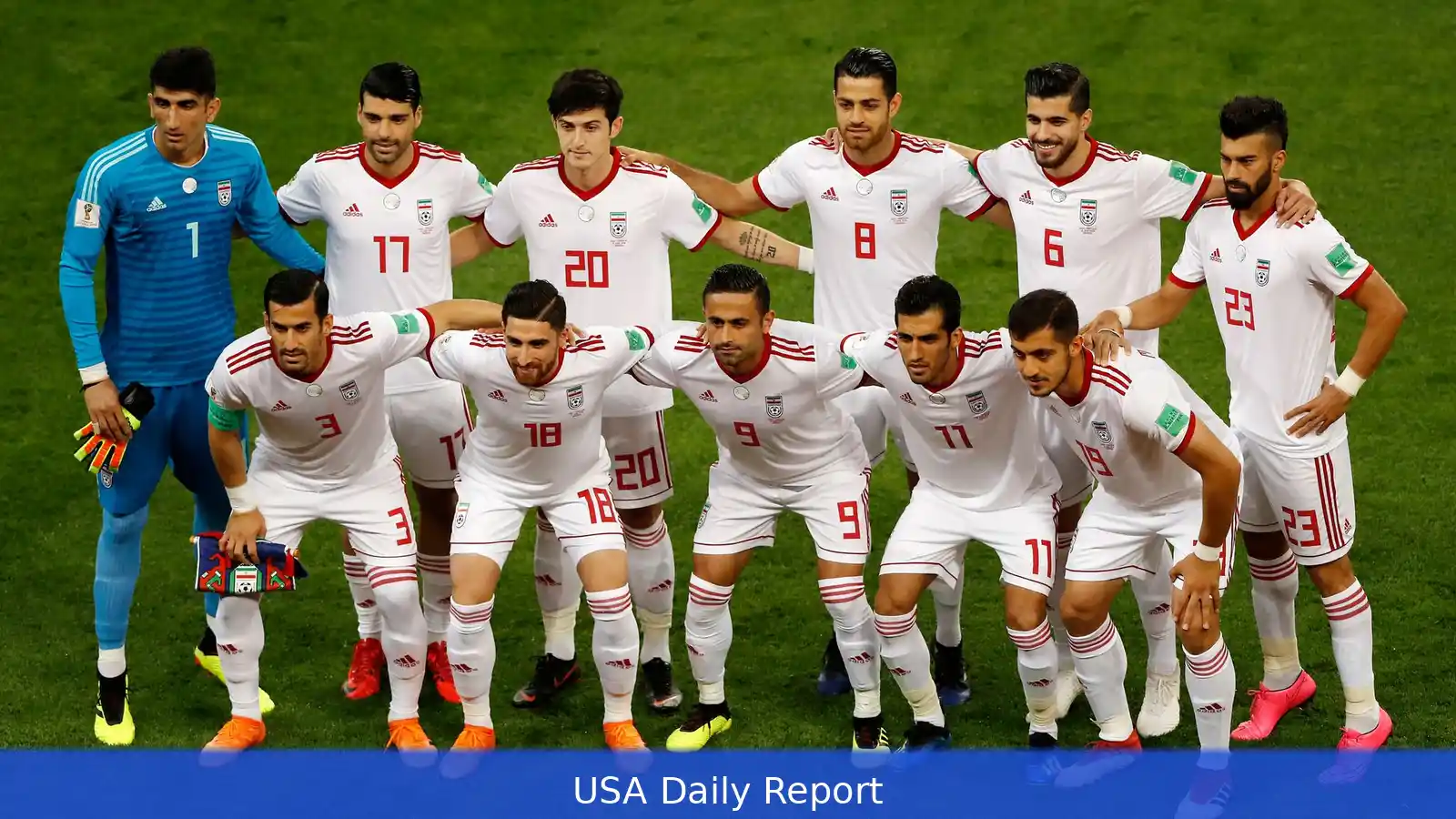
Iran will only send its national soccer team to the 2026 World Cup if Tehran receives guarantees the players will be safe in the United States, Sports and Youth Minister Ahmad Donyamali said.
Government will make the call
Iran’s participation in the 2026 FIFA World Cup is tied directly to guarantees about the players' security, Sports and Youth Minister Ahmad Donyamali said on Tuesday. Donyamali told state media Tehran will only send Team Melli if officials are satisfied the squad will be safe while in the United States. He said the final decision will rest with the Iranian government and the Supreme National Security Council.
Team Melli are scheduled to play all their World Cup matches in the United States as part of the tournament co-hosted by the U.S., Canada and Mexico. Donyamali added that the national team will continue training as preparations proceed and that the Iranian Football Federation (FFIRI) would set up training camps if authorities give the green light to travel. "If the safety of the national team’s players in the United States is ensured, we will travel to the World Cup," he said.
Ceasefire clock and regional tensions
The uncertainty follows a sharp escalation in tensions after Iran and U.S.-aligned forces entered a conflict phase that began on Feb. 28, 2026, prompting urgent diplomacy. A Pakistan-mediated ceasefire was in place but approached a deadline on April 22, 2026, raising fresh doubts about whether Iran would feel secure sending its squad abroad. Those diplomatic moves will shape Tehran’s judgment.

For Iranian leaders the question is as much political as practical: sending the team could be read domestically as a sign of normal ties, while staying home would be framed as putting citizens’ safety first. The Supreme National Security Council, the body Donyamali cited, includes senior political and military figures who will weigh the risks.
FIFA backs fixtures; Infantino pushes participation
FIFA has insisted the World Cup schedule will go ahead as planned and rejected requests from the FFIRI to move Iran’s matches out of the United States, saying logistical hurdles made alternative host arrangements impractical. FIFA President Gianni Infantino said he was confident Iran would play, adding he hoped the situation would be peaceful by tournament time and that the players want to play.
Political friction and reputational risk for the U.S.
Washington faces a delicate task: hosting World Cup matches while responding to a distant but intense geopolitical dispute. The tournament draws global attention, and the presence or absence of a high-profile team such as Iran will create political reverberations.
At a practical level, multiple U.S. agencies and local authorities would need to coordinate security, visas and travel logistics:
- Department of State – visa processing and diplomatic engagement;
- Department of Homeland Security – border and travel security coordination;
- Local police and venue security – on-the-ground stadium safety and crowd management.
There are also diplomatic trade-offs involved in assuring visiting teams they can be protected without becoming a party to the underlying conflict.
Related Articles
- US seizes Iranian-linked vessel amid sanctions probe
- DR Congo Accepts First Deportees from US
- Six women win 2026 Goldman Environmental Prize — first all-woman cohort
The government and the Supreme National Security Council will make the final call, with the Pakistan-mediated ceasefire approach and its April 22 deadline likely to shape Tehran’s decision. "If the safety of the national team’s players in the United States is ensured, we will travel to the World Cup," Donyamali said.
This article was created with AI assistance.


