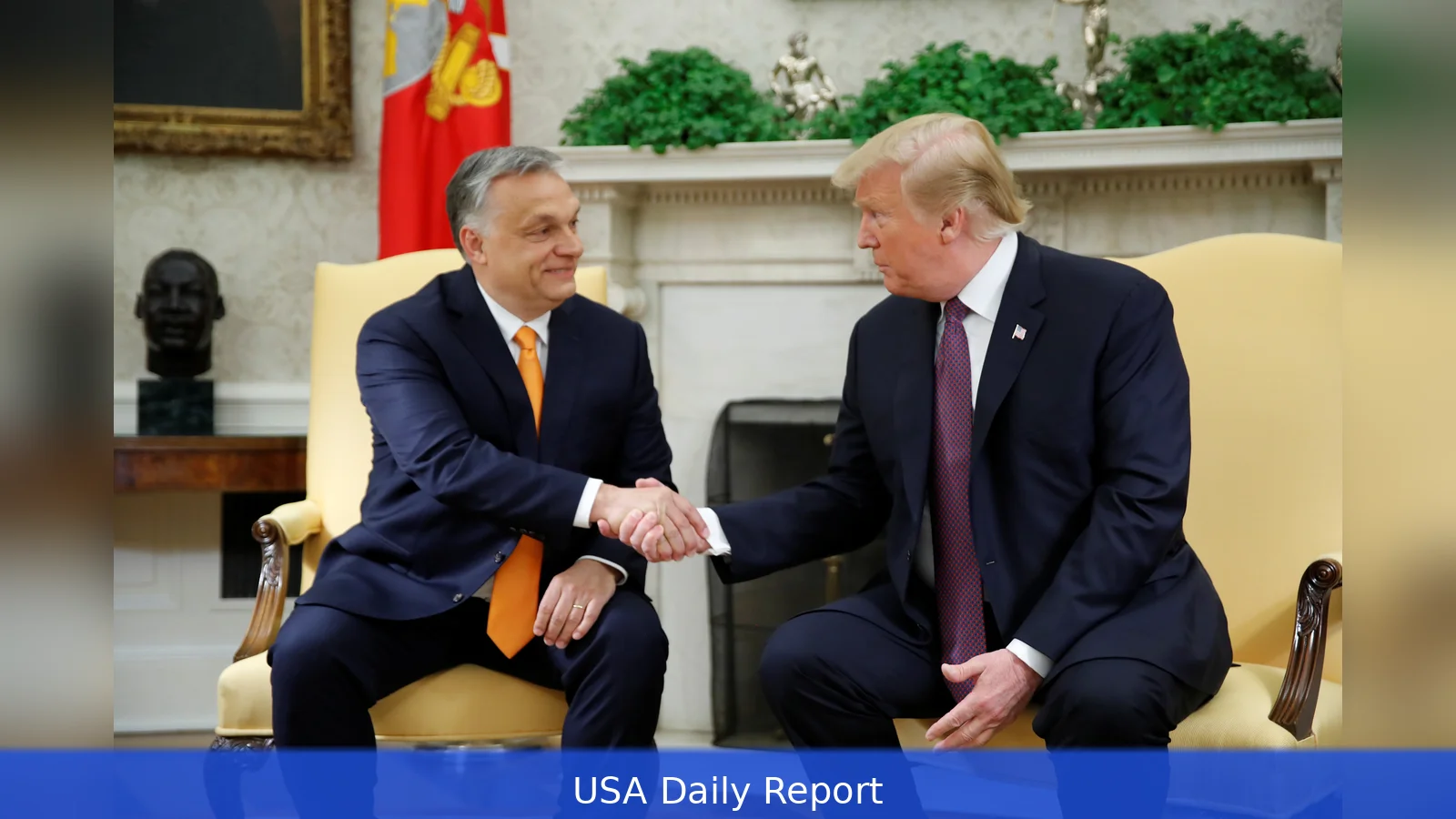
Magyar met Hungary's president. The meeting came as Donald Trump called the country's next prime minister "a good man."
Talks in Budapest
Magyar met the Hungarian president on matters that could shape Budapest's role in European decisions, including a contested veto tied to an EU loan to Ukraine. Officials only shared basic statements about the talks, but the timing is important. Hungary was one of three EU countries that opted out of a loan for Ukraine last December, and the veto is still a key issue.
Magyar has told officials he doesn't view the veto as decisive, according to government comments released after the meeting. That leaves open a question: how will Brussels, Budapest and other capitals resolve a standstill that could hold up financing for Kyiv?
What the veto means
The veto relates to a joint EU decision on a financial package to support Ukraine. Hungary's choice last December not to participate in the loan was noted by European officials at the time, and the new objection has reignited concern about whether collective EU support can move forward without unanimous backing.
A veto from any EU member can delay or block initiatives that need everyone’s agreement. And while Hungary's leaders have defended their position as a national decision, the refusal to join the loan made Budapest one of three countries that opted out, complicating a wider European effort to keep steady funding lines for Ukraine.
Donald Trump's intervention
Donald Trump, former US president, weighed in publicly, saying the next Hungarian prime minister would be "a good man." Trump’s comments add an unusual twist: a former US leader commenting on the internal politics of a NATO ally while those domestic choices are affecting European policy toward Kyiv.
His comment comes amid tense US-EU coordination on aid to Ukraine, adding a US political angle to a dispute mostly handled within EU bodies. That matters in Washington because American policymakers watch EU unity closely when planning their own support packages and sanctions strategies.
Why Washington cares
For US officials, a fractured EU response to Ukraine complicates strategic planning. If EU loans or budget decisions stall, the United States could face pressure to extend or deepen its own financial and military assistance to Kyiv. That would come at a time when Congress remains deeply divided over additional foreign aid packages.
At the same time, Hungary sits inside NATO. Any tension between Budapest and Brussels can ripple into alliance discussions about burden-sharing, collective deterrence, and the political cohesion needed to present a united front to Moscow. So, even a technical veto in Brussels has defense and diplomatic consequences that cross the Atlantic.
Economic ripple effects
Delays in EU lending plans could shake investor confidence in Europe. If the bloc can't present a consistent support plan for a major security partner, investors may interpret that as political risk — and that can affect borrowing costs for European governments and institutions tied to support packages.
For Ukraine, any pause in agreed financing makes budget planning harder. That in turn could reduce Kyiv's room to cover urgent costs, which may increase Kyiv’s reliance on emergency bilateral help from the United States and other allies.
Where Viktor Orbán fits
Viktor Orbán, Hungary's prime minister, has been central to Budapest's recent EU posture.
But it's not yet clear whether Orbán will personally steer the process to lift or maintain the veto. Government statements after the meeting with the president gave no precise roadmap for how the issue will be resolved or whether Orbán will be directly involved in negotiations with EU partners.
Magyar said the veto shouldn’t take over other policy issues, but he didn’t explain how Hungary might change its stance. That leaves diplomats in Brussels and capitals like Washington guessing about what leverage — political, legal or diplomatic — will move Budapest.
Domestic politics and the broader picture
Inside Hungary, the issue feeds domestic debates about sovereignty, foreign policy orientation and Budapest’s relationship with the European Union. Hungarians who support a more independent national line see the veto as an assertion of national interest. Opponents argue it isolates Hungary and risks economic and political costs.
Internationally, the clash shows a pattern: national politics inside EU member states can directly affect collective foreign policy. And when those national decisions intersect with security issues — like backing for Ukraine during an armed conflict — the stakes grow beyond regional diplomacy.
Next steps in Brussels and Washington
EU officials will have to decide whether to open technical or political channels to address the veto. That could include formal legal steps to challenge or circumnavigate the block, or it could mean bargaining — concessions in unrelated areas to secure consent. Right now, no clear method has been announced to lift the veto, and officials have noted that unanimity in the EU makes such obstacles possible.
In Washington, officials are likely to monitor talks closely. If EU financing stalls, US policymakers may have to reassess the timing and size of their next moves on assistance to Ukraine. Congressional dynamics will shape how far the US can step in, but for diplomats the immediate task is to keep allied coordination intact.
Questions left open
Key unknowns remain. Will Hungary shift its stance? Will Orbán take charge of negotiations? Can Brussels find a workaround that preserves both the principle of unity and individual members' preferences? Those are practical puzzles for diplomats now doing behind-the-scenes work.
Frankly, the outcome depends on political choices in Budapest and pressure from other EU capitals — and on whether allied leaders, including voices from the United States, push for a settlement that keeps aid channels to Ukraine open without eroding the EU's decision-making rules.
Related Articles
- Airlines Urge EU to Shield Flights as Strait of Hormuz Disruption Pushes Jet Fuel to Crisis Levels
- Raffle winner claims $1M Picasso with $117 ticket
- Home Equity Loans: When to Tap Your House
"a good man," said Donald Trump referring to Hungary's next prime minister.


