
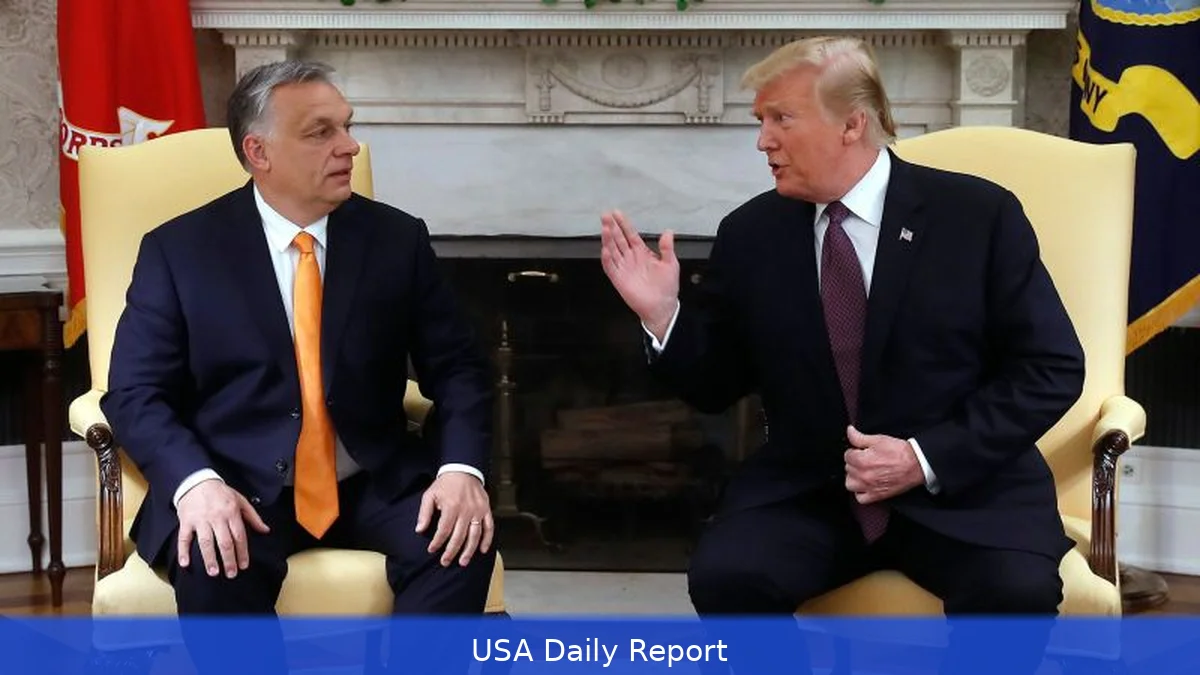
Viktor Orbán is running for a fifth straight term. He's spent 16 years at Hungary's center of power.
Background: A long tenure and a clear profile
Viktor Orbán has been the dominant political figure in Hungary for 16 years, shaping the country's institutions and public life. His tenure as prime minister has stretched over multiple election cycles, and he's now pursuing a fifth consecutive term. Look, that kind of longevity is rare in EU member states.
He has built a reputation for steering Hungary away from some mainstream European policies.
Domestically, Orbán's government holds strong centralized control and enjoys steady support from large groups of voters. On the international stage, he often breaks from Brussels' consensus on topics like migration and judicial reform. The point is — he doesn't behave like a typical European conservative.
That profile matters now more than ever.
Alliances and endorsements
Orbán is often described as Vladimir Putin's strongest partner in the European Union, a label that has followed him through recent campaigns and diplomatic meetings. The relationship with the Russian president has been one of the major international talking points tied to his rule.
At the same time, Orbán has drawn public support from figures in the United States. US President Donald Trump has publicly endorsed Orbán's bid for re-election. Trump also promised to bring US "economic might" to Hungary if he wins another term, framing the relationship in economic as well as political terms.
And five days before the election, Vice-President J.D. Vance traveled to Budapest to make an appeal on the Hungarian campaign trail. Vance directly urged voters to "stand with Viktor Orbán, because he stands for you" — a short, pointed message aimed at rallying support at a crucial moment. Such high-profile foreign intervention in a national vote is unusual and shows the contest's wider significance.
Why the endorsements matter
Endorsements from abroad shift how a campaign looks and carry real strategic importance. Orbán's ties to Putin raise alarm in parts of Europe. But the endorsement from President Trump — and the promise of economic leverage — puts Washington's posture into the picture too.
Endorsements do more than cheerlead—they send political signals that can sway investors and diplomatic ties. A pledge of US "economic might" suggests potential trade, investment or diplomatic incentives tied to electoral outcomes.
For Washington, backing Orbán could be framed as aligning with a leader who challenges EU orthodoxy. For Budapest, the overt embrace by a US president signals access to an extra channel of influence beyond Brussels or Moscow. That's a rare mix in contemporary European diplomacy.
How these signals land with Hungarian voters is a complex question. Some will see foreign support as validation. Others may bristle at outside meddling in domestic affairs.

Economic implications
Orbán's long rule has coincided with both economic shifts and policy choices that affect Hungary's place in Europe. Foreign endorsements tied to economic promises are likely to be read by markets and corporate leaders. If Washington follows through on trade or investment incentives, that could reconfigure where international capital flows in the region.
Investors value stability, and Orbán's long rule suggests a predictable political climate. On the flip side, his close ties to Russia complicate Hungary's standing within EU energy and sanctions frameworks. That complexity creates uncertainty for companies deciding whether to expand in Hungary or across Central Europe.
Diplomatic relationships might also influence trade flows. A US administration that privileges bilateral ties with Budapest might direct business toward Hungary, whether through agreements, credits, or public statements that affect perceptions. Conversely, EU disapproval could limit Hungary's access to certain European funds or partnerships — another economic pressure point.
So both opportunities and risks are on the table.
Political consequences for the EU and US
Orbán's role in Brussels has often forced the EU into uneasy compromises. With a strengthened mandate, he could press harder against EU policies on migration, rule of law, and collective sanctions. That can force Brussels into difficult negotiations among member states.
By backing Orbán, the US shows it's ready to work with leaders outside the EU mainstream. That could ease bilateral ties in the short term — but it also risks fraying coordination with European allies on issues where unified action matters, like defense and sanctions policy toward Russia.
Allies in Washington will have to weigh the trade-offs. Do they accept a closer US-Hungary relationship if it undermines broader transatlantic unity? Or do they prioritize alliance cohesion even if it complicates relations with Budapest? Those are strategic choices, and endorsements give them sharper edges.
Beyond government corridors, public perceptions matter. American corporate leaders, diplomats, and analysts will be watching how any promised economic incentives play out, and whether those incentives come with political strings.
Domestic stakes in Hungary
In Hungary, Orbán counts on a loyal voter base that’s kept him in power through many elections. He's been able to consolidate media influence and reshape institutions in ways that critics say entrench his party's position. Support from abroad can reinforce his narrative of standing up to outside elites — while also delivering concrete promises of investment.
Opponents argue that prolonged rule under one leader narrows political competition and weakens democratic checks. Supporters counter that Orbán delivers stability and policies they favor. The tug-of-war shows up in court fights, media battles, and voter mobilization drives.
The U.S. Interventions — both presidential endorsement and Vice-President Vance's appearance — add a new element to that domestic debate. Some Hungarians will welcome the attention. Others will see it as foreign involvement. Either way, it tightens the link between domestic electoral politics and international alignments.
That linkage could alter campaign rhetoric and policy promises in the months ahead.
What to watch next
Observers will be looking at turnout, margin of victory, and post-election policymaking. Watch whether any pledges made by foreign backers translate into concrete actions — trade agreements, investment announcements, or diplomatic initiatives. Those moves would reveal how far bilateral relationships can shift based on electoral outcomes.
And keep an eye on how Brussels responds. The European Union has tools to press member states on rule-of-law issues, and how it uses them against a re-elected Orbán will shape Hungary's trajectory within Europe.
Finally, the tone of Washington's engagement will be decisive. A U.S. Tilt toward offering economic incentives could deepen competition among external powers for influence in Central Europe. Or it could be a brief political flourish with limited follow-through.
Either way, Hungary's voters will decide whether to renew a long-standing mandate or open the door to change. The international reverberations are already clear.
Related Articles
- May 19 primary tests Trump's grip on GOP
- Bennett-Lapid bloc trails Likud by 1 seat
- Seoul appeals court hands ex-first lady Kim Keon Hee 4-year sentence
Five days before the election, Vice-President J.D. Vance told voters: "stand with Viktor Orbán, because he stands for you".
This article was created with AI assistance.


