
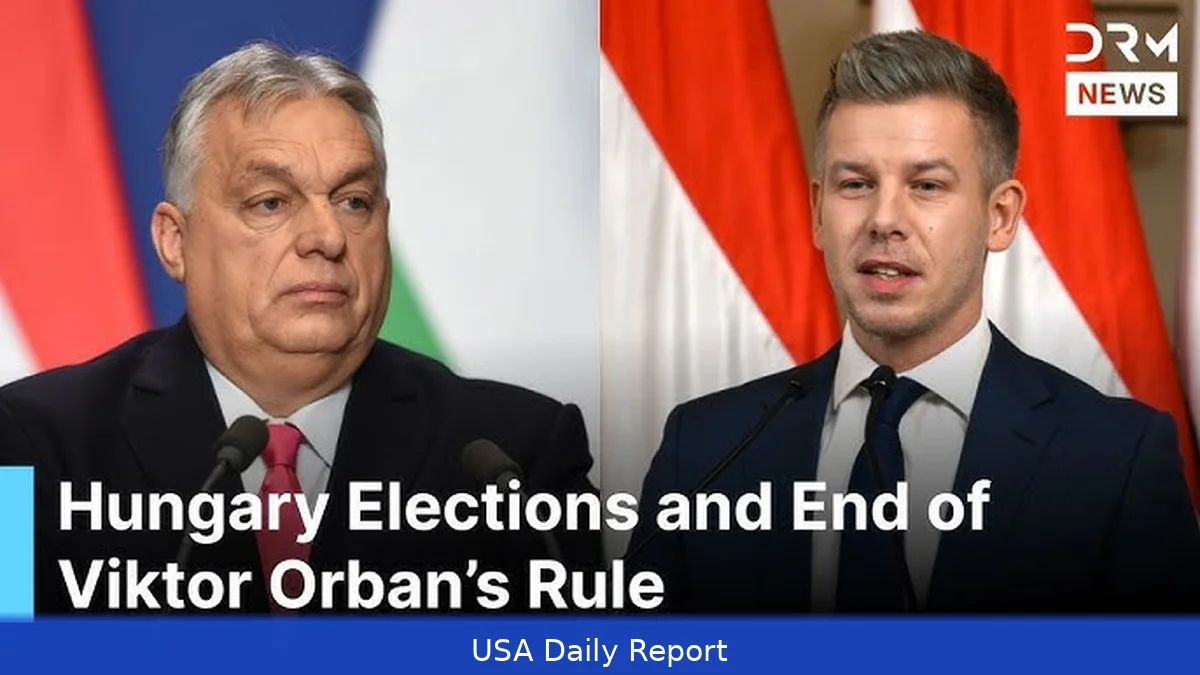
Hungary votes Sunday after 16 years under Viktor Orbán.
A test for an entrenched leader
Viktor Orbán has dominated Hungarian politics since 2010. He has won four straight national contests and remade institutions to suit his rule. Look, few European leaders have done as much to shape the modern right-wing playbook — and his model has been cited by allies abroad.
Still, this election looks different. Campaign season turned febrile, with allegations of "false flag" operations, reports of wiretapping and even talk of a sex tape plot aimed at discrediting opponents. These claims are part of a bigger, messy debate about Hungary’s identity—whether it’s closer to the West or leaning toward Moscow.
Orbán goes into the vote as both a survivor and a polarizing figure. European Union lawmakers and Western watchdogs have said Hungary no longer meets the standards of a full democracy, and critics point to his tightening grip on the media, courts and state institutions.
The Organization for Security and Co-operation in Europe warned last month that interlocutors raised concerns about the poor separation between state functions and the ruling party’s campaign. The OSCE also flagged worries that broad powers under the ongoing state of emergency could be misused during the vote.
These changes to institutions matter since elections don’t happen in isolation. Rules, administration and media access shape outcomes. And in Hungary's case, those systems have been transformed over the past decade and a half.
The opposition, the polls and new challengers
Peter Magyar, once a member of Orbán’s Fidesz party, now heads a center-right breakaway called Tisza — a name that blends the Hungarian words for respect and freedom. Magyar leads in many public polls and has framed the election as more than a change of government.
"We don't want a simple change of government, but a real regime change," Peter Magyar, leader of Tisza, told a rally Friday.
Publicus, a polling group, put Tisza at 52% among decided voters and Fidesz at 39%. Those figures, published ahead of the vote, indicate a substantial lead for Magyar among those who have made up their minds. Government-aligned pollsters tell a different story. The Alapjogokért Központ, a Christian-conservative think tank involved in organizing CPAC Hungary events, had Orbán ahead 50% to 42% in late March.
Hungary's electoral map was redrawn during Orbán's years in power in ways that have benefited Fidesz. And there's another wrinkle: almost half a million ethnic Hungarians living in neighboring Romania and Serbia can vote. Their ballots can shift tight races in border constituencies.

Campaign chaos hasn't helped voters feel certain either. A quarter of Hungarians said they're undecided in the Publicus snapshot — a number that could decide whether Orbán keeps his grip or loses it.
Allies, rivals and outside meddling
Orbán has stood out inside the European Union as a dissenting voice on Russia.
He has opposed a number of EU sanctions on Moscow and has pushed for warmer ties with the Kremlin. Russian President Vladimir Putin has publicly voiced support for Orbán, reflecting a relationship that worries many in Brussels and Washington.
Point is, a returned Orbán would probably keep choosing a closer line with Moscow — and that would complicate collective European policy aimed at punishing and deterring Russia. That matters to the United States because coordinated Western pressure is central to U.S. Strategies on Europe and on Russia.
In fact, some American figures have also tried to sway the election. JD Vance traveled to Budapest this week in an effort to bolster Orbán’s campaign, according to reporting ahead of the vote. The visit showd how the contest has drawn attention from Washington, where some lawmakers and political operatives see Orbán as a kindred spirit and others view him as a problem for trans-Atlantic unity.
Economic and diplomatic implications for the U.S.
Hungary sits at a geopolitical crossroads. It's a European Union member, a NATO ally and an economy that has benefited from foreign investment, including from U.S. Companies. The way Brussels deals with Budapest — whether through political pressure, legal measures or withholding funds — affects markets, supply chains and multinational planning.
Washington's interest in the vote is practical as well as strategic. A government in Budapest that resists EU sanctions or makes warmer overtures to Moscow would create friction for U.S. Policy coordination with European partners. That could affect intelligence sharing, defense collaboration inside NATO and the enforcement of economic measures targeting Russia.
Investor sentiment usually reflects political risks. If the election increases uncertainty about Hungary’s rule of law or its standing in the EU, that could raise the cost of doing business there, push investors to demand higher returns, or slow new commitments. None of those outcomes is guaranteed — but they're possible given how much has changed in Hungarian institutions over the last decade-plus.
Why the vote matters beyond Hungary
Orbán’s reach goes beyond Budapest. His model of centralizing power, remaking public life and courting populist allies has been copied or admired in capitals from Warsaw to Washington. His position on Russia is another reason people outside Hungary pay attention.
For Brussels, the stakes are clear: a Hungary aligned with Orbán complicates EU unity on key foreign policy questions. For Washington, the trade-offs are strategic — balancing ties with a NATO member against the risks of a European partner that could act as a block to coordinated policy on Russia. For regional neighbors, a shift in Budapest shapes cross-border politics and may change how ethnic Hungarian voters in neighboring countries engage with both Budapest and their home states.
Campaign irregularities or perceptions of unfairness could also feed into broader debates about democratic backsliding in Europe. The OSCE's concerns about state-party separation and emergency powers were stark reminders that how elections are run is as important as who wins.
There is no single, neat outcome. If Orbán keeps power, his policies toward Russia and the EU are likely to continue. If Magyar pulls off an upset, Hungary might move back toward closer alignment with EU norms and policies. Either result will reshape political calculations in Brussels and Washington.
But what voters actually decide Sunday is the first-order story.
Related Articles
"We don't want a simple change of government, but a real regime change," Peter Magyar, leader of Tisza, said Friday.
This article was created with AI assistance.


