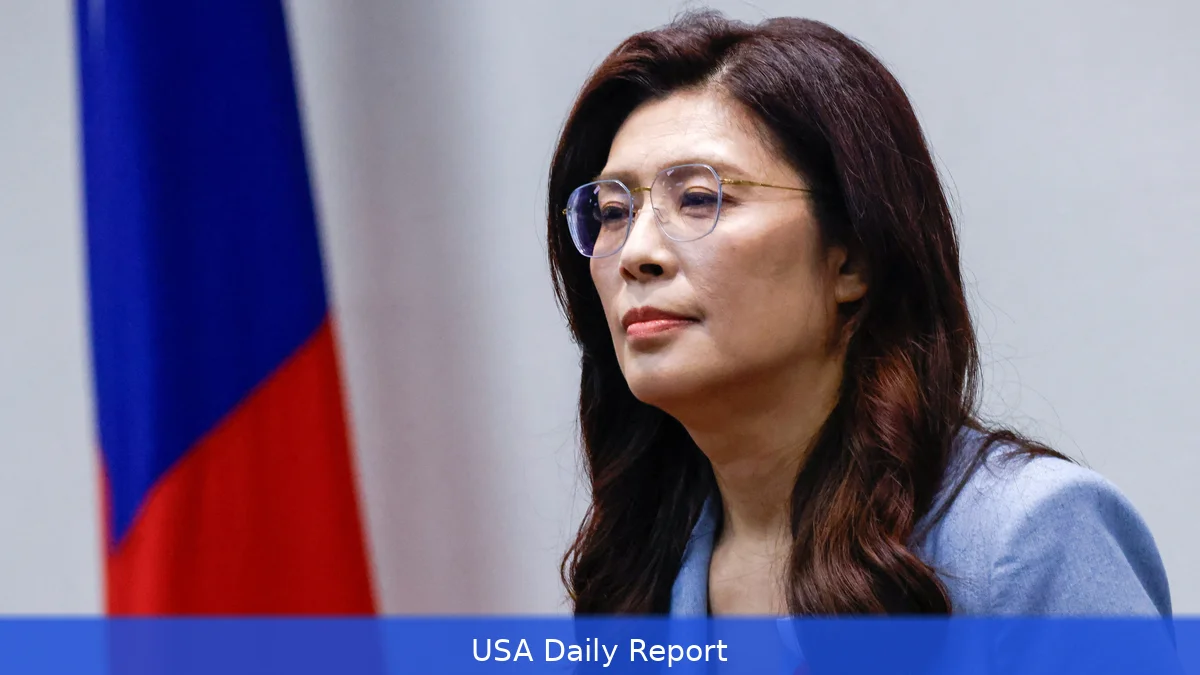
Xi Jinping met Taiwan’s opposition chair this week. Beijing followed with trade and tourism incentives.
Small gestures, big timing
Xi Jinping, General Secretary of the Chinese Communist Party and president of the People’s Republic of China, greeted Cheng Li-wun, chairwoman of Taiwan’s Kuomintang (KMT), at the Great Hall of the People this week. The handshake itself was unusual — and the Chinese leadership quickly paired the encounter with a package of economic measures aimed at Taiwan, according to state media and international reporting.
Look, the meeting didn't produce a formal deal. It did produce concrete policy steps that Beijing says are meant to ease tensions and pull Taiwan’s economy closer to the mainland.
Bloomberg, citing China’s official Xinhua News Agency, laid out the list: Beijing will make it easier to sell Taiwanese agricultural and fishery products in mainland markets, streamline investment approvals for Taiwanese firms that want to operate in China, and move toward restarting group tourism to the island, which has been largely frozen since 2019. Xinhua said the measures are intended to "promote peaceful development" and set up what Beijing called a "regularized communication mechanism" between the KMT and the Chinese Communist Party.
The timing matters. The outreach comes just weeks before a summit planned in Beijing with U.S. President Donald Trump. That has certain geopolitical watchers asking whether Beijing is trying to show a softer face on cross-strait ties while also signaling to Washington that it can influence Taiwan’s domestic politics.
Who gains — and who’s sidelined
The headline winners on paper are specific sectors: farmers, fishers and parts of the tourism industry.
For Taiwan exporters who have struggled with restricted market access and disruptions in cross-strait travel, Beijing’s pledges could mean renewed demand on the mainland and easier capital flows for companies that choose to expand across the strait, Bloomberg reported.
Point is, the incentives are targeted. They aren’t a blanket opening of diplomatic channels. Beijing has been explicit about engaging the KMT while keeping formal ties with Taiwan’s ruling Democratic Progressive Party (DPP) frozen. The DPP, led by President Lai Ching-te, remains excluded from direct contact with Beijing because the Chinese leadership views its officials as supporters of independence.
That political carve-out limits how far the economic measures can go. The DPP has stressed that any cross-strait talks must be authorized by Taiwan’s government. A Reuters-style negotiation with Beijing won’t happen without Taipei’s approval. So even if agricultural shipments pick up, formal policy coordination across governments is unlikely to resume under the current conditions.
Market and investor implications
Financial markets didn’t get a sweeping sign that geopolitical risk has vanished. But sector-level flows could change. Renewed access to China’s consumer market would help commodity-exposed exporters and seasonal industries that rely on group tourism, like hotels and travel agencies. Taiwanese firms that have been cautious about investing in China might face pressure from shareholders or lenders to consider cross-strait expansion if permits and approvals come faster.
That could mean more deal activity involving Taiwan-based agri-food processors and fisheries firms. It could also tilt merger-and-acquisition interest toward companies with supply chains that link island-based production to mainland distribution networks. To be clear: Bloomberg framed the measures as potential economic relief for targeted sectors, not a sweeping economic integration plan.
Another effect: corporate risk calculations. Firms weighing where to park investment will factor in both the potential market access and the persistent political risk. Beijing’s continued military drills around Taiwan — reported by multiple outlets including NBC News and NPR — remind executives that economic openings can come with security volatility. So some investors will take a wait-and-see approach; others may move quickly to seize a first-mover advantage.
Politics drives the economics
Cheng Li-wun presented her trip as a peace mission and said Taiwan should consolidate a stable relationship with the mainland. At a Beijing press event, Cheng was careful not to embrace formal reunification; she told reporters that any rapprochement must be "step-by-step" and pragmatic, according to NBC News. Her stance has caused debate inside Taiwan, where the KMT has less popular support than before and where many voters remain wary of closer mainland ties.
George Yin, senior research fellow at the Center for China Studies at National Taiwan University, told NPR that some KMT figures see talking to Beijing and to adversaries as part of a hedging strategy. Yin said Cheng is trying to capitalize on anxieties in Taipei about dealing with a Trump administration that has been less predictable on Taiwan policy. That strategy could reshape where political pressure lands in Taiwan’s domestic economy — and that, in turn, could shape corporate and investor behavior.
Still, the DPP has made clear that economic exchanges can't come at the expense of Taiwan’s democracy or national interests. So corporations and banks assessing new flows must weigh not just profit potential but regulatory and reputational hurdles in Taipei and other markets that watch cross-strait ties closely.
Supply chains and broader regional context
China’s announcement also lands amid wider supply-chain stressors tied to conflicts and trade shifts worldwide. While the measures are local in focus, anything that eases movement of food and people across the Taiwan Strait could have ripple effects on regional logistics and seasonal commodity flows. For example, resumed group travel would boost short-term consumer spending in tourism-linked services and could alter the timing of seasonal purchases for exporters targeting mainland buyers.
But Beijing’s approach is calibrated. The state-run framing — engaging a party that favors closer ties while keeping a diplomatic freeze with Taiwan’s ruling government — suggests an effort to change political dynamics incrementally rather than to force a large economic integration that would trigger public backlash in Taiwan or global concerns about market concentration.
What business leaders should watch
That said, companies with exposure to Taiwan should watch three things closely: whether Beijing follows through on easing permits and approvals, how quickly mainland buyers actually resume orders for Taiwanese agricultural and fishery goods, and whether group tourism returns at scale. Each of those items will have immediate balance-sheet consequences for firms in affected sectors.
And keep an eye on politics. If the KMT manages to parlay closer ties with Beijing into tangible economic benefits for local constituencies, investor sentiment toward Taiwan-incorporated firms with mainland operations could shift. If the DPP pushes back and blocks key transactions, those gains may not materialize.
Finally, watch global policy signals: Washington’s posture toward Taiwan, including arms sales and diplomatic statements, will matter to investors because U.S. Policy remains a major factor in regional risk assessments.
Related Articles
- Why water bonds could unlock fresh funding for African infrastructure
- ‘The plan is working,’ Trump's trade adviser tells Rust Belt amid rising inflation
- War, Tariffs and Energy Shock: How Europe’s Politics Are Paying the Price
Xinhua said the package will "help the sale of Taiwanese agricultural and fishery products in mainland markets" and move to resume outbound group travel.


