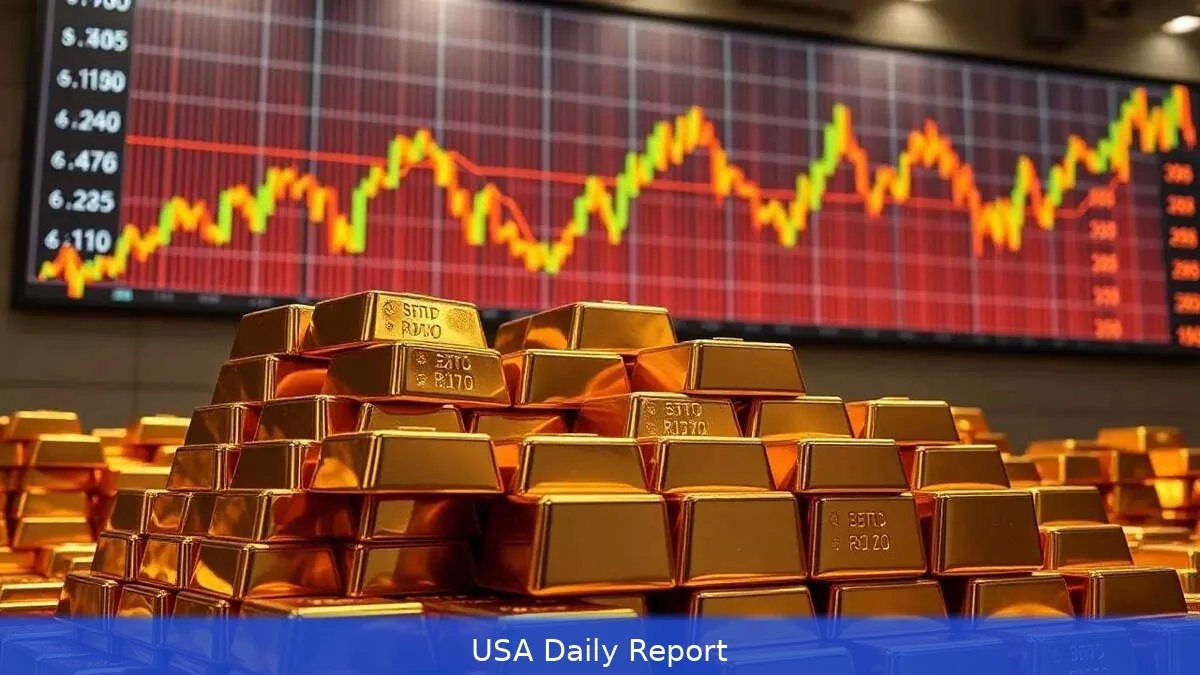
Gold hit its highest price since mid-March amid signs that the conflict between the U.S. And Iran may be winding down. The metal’s gains come as the dollar weakens and investors eye potential Federal Reserve rate cuts.
Gold Surges on Hopes of De-escalation
Gold prices have been climbing steadily, hitting $4,784.22 per ounce on Wednesday, marking a 2.5% gain and the highest level since March 19. U.S. Gold futures followed suit, rising nearly 3% to settle at $4,813.10. The metal has now gained for four straight sessions, largely driven by a softer U.S. Dollar and growing optimism that tensions in the Middle East, particularly involving Iran, could ease soon.
President Donald Trump fueled hopes of a ceasefire, suggesting the war with Iran might end within two to three weeks. Although Iran’s foreign ministry dismissed claims of a ceasefire request, reports indicate talks could be underway. Investors reacted quickly, pushing gold higher as the dollar dropped for the second day in a row, making bullion more attractive for holders of other currencies.
Geopolitical Risks and Fed Rate Expectations
Gold’s recent rally is tied closely to the geopolitical climate around the Strait of Hormuz, a critical shipping lane for global oil supplies. Bob Haberkorn, a senior strategist at RJO Futures, noted that if the conflict calms, gold could surge past $5,000 an ounce, spurred by renewed expectations of Federal Reserve rate cuts. The Fed’s potential easing would reduce interest rates, which often lifts demand for non-yielding assets like gold.
On the flip side, a lasting peace deal might reduce gold’s appeal as a safe haven, since geopolitical fear has driven much of the recent buying. Tony Sycamore, an IG market analyst, explained that a peace agreement could lower oil prices and ease inflation, which might also temper gold prices.
Still, if rate-cut bets gain momentum, gold’s appeal could grow again.
Inflation, Energy Prices, and Market Reactions
March saw gold prices drop over 11%, largely because rising energy costs from the Middle East conflict stoked inflation fears and led markets to dial back expectations for Fed easing. High interest rates also weigh on gold, as investors prefer assets that pay yields. But recent data showed U.S.
Private payrolls rose steadily in March, and retail sales held up, although soaring gasoline prices threaten to curb spending over the next few months.
Meanwhile, Wall Street has been on a rollercoaster. The Dow and S&P 500 have each posted four consecutive months of gains, with the Nasdaq rallying for five months straight, its best streak since early 2024. Still, tech stocks took a hit late last month, dragged down by disappointing earnings from semiconductor companies like Dell and Marvell Technology. Nvidia, a key player in the AI sector, also saw a rare monthly loss.
Fed Rate Cuts and Market Outlook
The Federal Reserve’s recent 25-basis-point rate cut extended a post-election rally, with major indexes hitting record highs. Chair Jerome Powell signaled the Fed would remain data-driven and ready to adjust its pace of easing as inflation and job market data evolve. Inflation has cooled somewhat but remains above the Fed’s 2% target, with the core Personal Consumption Expenditures index rising 2.9% year-over-year in July—the fastest pace since February.
Labor market stress seems to have eased, with weekly jobless claims steady, easing concerns about rising unemployment. Fitch Ratings’ chief economist Brian Coulton said the Fed appears less worried about slowing job growth. Meanwhile, investors remain hopeful that Trump’s regulatory and tax policies will create a friendlier business climate. Evercore ISI projected an 11% rise in the S&P 500 by next summer if the rally continues.
Gold’s climb reflects a complex mix of easing geopolitical risks, a weaker dollar, and shifting expectations for Federal Reserve policy. But whether this momentum holds depends heavily on how peace talks unfold and inflation trends in the months ahead.


