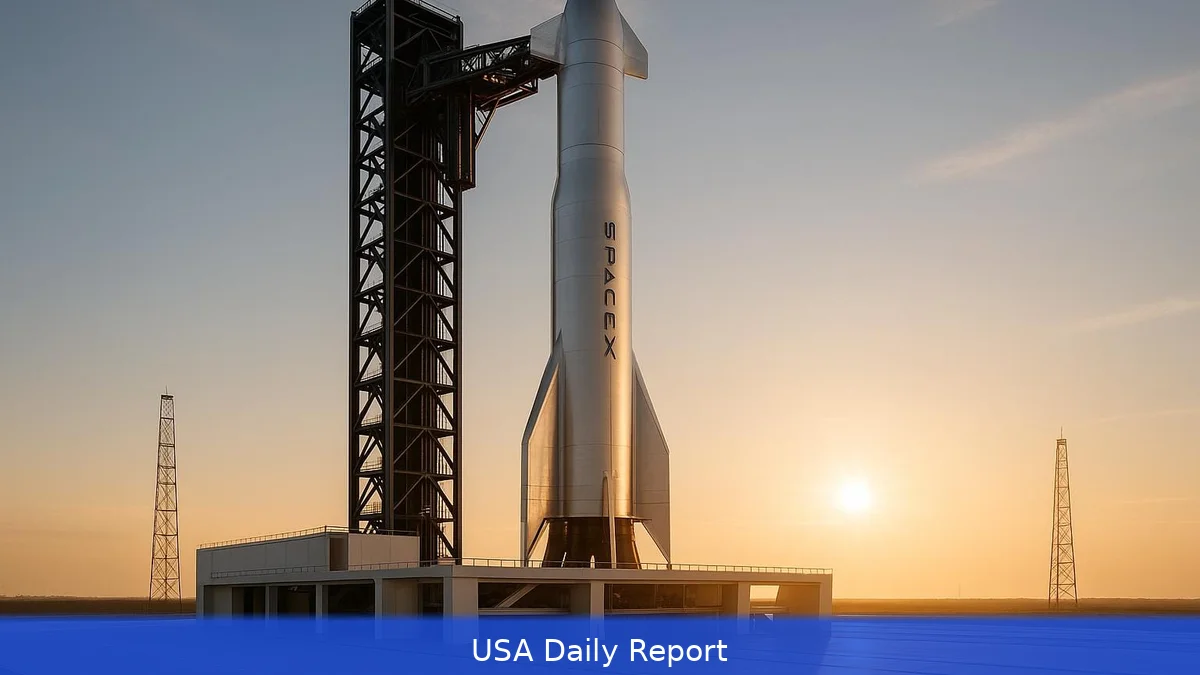
Elon Musk’s SpaceX is gearing up for what could be one of the biggest initial public offerings ever seen. Valued potentially at $1.5 trillion, the company is rewriting the rules of space technology—and investors are watching closely.
SpaceX’s Bold Vision and Market Grip
SpaceX isn’t just another space company. Since its founding in 2002, it has pushed boundaries that once seemed out of reach. Elon Musk’s aim? Colonize Mars. The company’s Falcon 9 rocket has set the bar as the most cost-efficient and dependable launcher worldwide, completing over 630 missions. That track record alone puts SpaceX in a league of its own.
But the Falcon 9 is only part of the story. SpaceX’s Starship spacecraft promises to change the game. Designed for full reuse and capable of carrying up to 150 metric tonnes, Starship is built for missions not just around Earth, but to the moon, Mars, and beyond. Musk plans a fleet of these to ferry humans and cargo, laying groundwork for a self-sustaining city on Mars. Ambitious? Absolutely. But SpaceX has delivered before.
Starlink: A Revenue Powerhouse
Starlink, SpaceX’s satellite internet service, is another key driver. Expected to generate roughly $11.8 billion in revenue by 2025, it’s already a major cash flow source. The service aims to provide high-speed internet globally, especially in remote areas where traditional connectivity is weak. That potential could dwarf current estimates, making Starlink a key part of SpaceX’s financial future.
Then there’s the recent acquisition of xAI, Elon Musk’s AI startup. At first glance, combining space tech and AI might seem odd. But Musk’s vision ties them together through energy: AI data centers need vast electricity supplies, and Musk believes solar power harvested in space could meet that demand. If that pans out, it would make SpaceX’s reach extend far beyond rockets and satellites.
IPO Prospects and Investor Access
SpaceX’s IPO is expected soon, and the buzz is big. A $1.5 trillion valuation would make it one of the most valuable companies to go public in history. Still, no official date or price has been set.
Investors hungry to buy SpaceX shares directly will have to wait.
For now, retail investors can only get indirect exposure. Funds like ARK Venture Fund (NASDAQ: ARKVX) and the XOVR ETF (NASDAQ: XOVR) hold small stakes in SpaceX, offering a limited window into its growth. Meanwhile, public markets do offer other space-related stocks, but none match SpaceX’s scale or tech prowess.
Why Space Could Be the New Frontier for Investors
Interest in space stocks has grown alongside NASA’s Artemis II mission—the first manned moon launch in over five decades. It signals renewed government and commercial focus on space exploration. SpaceX sits at the heart of this surge.
Private space companies face unique challenges, from high capital costs to regulatory hurdles. Yet SpaceX’s ability to lower launch costs and develop reusable tech has given it a strong edge. Investors see not just a company that builds rockets but a firm shaping the future of transportation, communication, and possibly energy.
Waiting for SpaceX’s IPO means missing out on what could be a once-in-a-generation opportunity. But the alternative space stocks available today could still offer gains for those eager to bet on the sector’s growth ahead of the big listing.
SpaceX’s IPO will be a landmark event, possibly reshaping investment portfolios and the space industry alike. Whether it lives up to the hype we'll have to wait and see, but the company’s trajectory has already changed how the world reaches for the stars.


