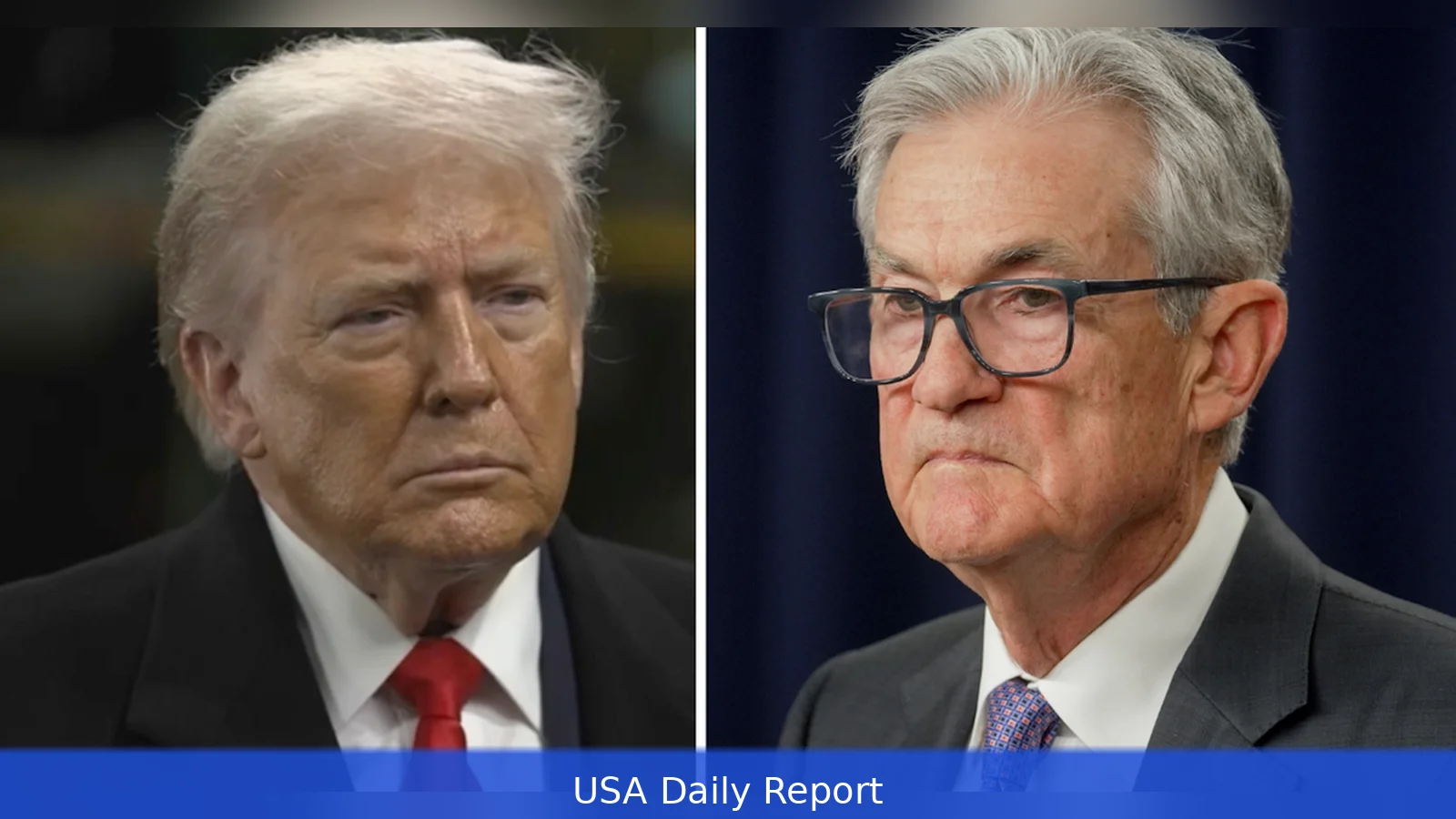
Grand jury subpoenas landed at the Fed last week.
Legal pressure collides with monetary policy
Look, the move was dramatic. Jerome Powell, chair of the Federal Reserve, told the public that the central bank had been served with grand jury subpoenas tied to his congressional testimony about a pricey renovation to Fed headquarters. He said the subpoenas threatened a criminal indictment — and he warned that the legal action risked turning monetary policy into a political battleground.
That sent a clear signal: Powell isn't just sparring with the White House over interest-rate decisions. He's also defending the Fed's institutional independence in the face of what he framed as legal pressure.
Political routes to influence — and their limits
President Donald Trump has been blunt about what he wants from the Fed: lower interest rates. Trump, President of the United States, has repeatedly argued for deep cuts, at one point saying rates should be around 1% to ease borrowing costs and reduce the government's interest burden on the roughly $37 trillion in public debt. He has also publicly criticized Powell's pace, using blunt nicknames and repeated pressure to move faster.
But there's more to the push than public taunts. Trump has signaled he will reshape the Fed's leadership and regulatory approach once he gets the chance. Treasury Secretary Scott Bessent, Treasury Secretary, has openly questioned the institution and called for a broad review of the Fed's role and staff. That fits a wider administration effort to install officials who favor lighter bank rules and a friendlier regulatory climate.
Still, the president's power to remake the Fed isn't absolute. David Wessel, director of the Hutchins Center on Fiscal and Monetary Policy at Brookings, said the White House may not have as much freedom to pick a Fed chair as it assumed. Nominees must clear a skeptical Senate, and the Federal Open Market Committee — 19 members, 12 voting at any time — decides rates as a body, not on presidential command.
Institutional changes underway
Meanwhile, personnel moves inside the Fed are already shifting policy direction. Michelle Bowman, vice chair of the Board of Governors of the Federal Reserve, was elevated into a banking oversight role. Her rise has coincided with proposals to ease capital and leverage requirements for big banks — moves that big financial firms have welcomed and some current Fed officials have criticized.
For example, Fed Governor Michael Barr, who previously led banking regulation, argued the proposed changes weaken capital at the largest banks and could put the system at risk. Opposing views surfaced at a Fed policy conference, where Mike Mayo, a Wells Fargo research analyst, advocated for simpler rules that still aim to keep banks strong. Those debates show how internal appointments can shift the Fed's tilt on rules even before a new chair is named.
Rate decisions versus political demands
Powell has also telegraphed the economic case for any rate move. He noted growth slowed to an annualized 1.2% in the first half of the year, down from 2.5% the prior year, and said labor demand had cooled — a trend that could lift unemployment. But he warned tariffs and trade tensions have started to push goods prices higher, and that inflation pressures could make the Fed cautious about cutting rates too quickly.
The Fed's key short-term rate stood at 4.3% when Powell spoke. Trump wants much lower levels; he has pushed for cuts to as low as 1%, a target no Fed official supports. Powell has been clear he will weigh data, not political convenience, and that any reductions would likely be gradual rather than the rapid cuts the president prefers.
Legal drama complicates confirmation fights
The subpoenas have muddied the water for a new Fed chair pick. Powell's disclosure that the Justice Department issued grand jury subpoenas prompted strong reactions on Capitol Hill. Some Republican lawmakers joined in criticizing the subpoenas; others saw the episode as reason to pause quick confirmation of a new chair. That could postpone any immediate change and keep Powell in a more influential role than the White House might expect.
There is also the prospect Powell could remain on the Fed's Board of Governors after his term as chair ends, even if someone else takes the top job. That would give him continuing influence over policy and committee deliberations.
Regulatory rollback and its trade-offs
Administration officials have said they want to reduce regulatory burdens on banks. Following Bowman's elevation, the Fed moved to propose an overhaul of how much buffer big banks must hold against leveraged assets. Supporters say the tweak will free up lending capacity for businesses and households. Critics, including Michael Barr, say it could lower the financial cushion and make the system more vulnerable in a downturn.
So the choice for Trump and his advisers isn't just about who sits in the chair. It's about how deep the administration will push reform at the Fed, how fast Congress will act on nominees, and how much the Fed's own governors and regional presidents will resist or accommodate those changes.
Congressional checks and public opinion
Trump's strategy faces another hurdle: a confirmation process in the Senate that can slow or block nominees. CBS quoted David Wessel noting the president's limitations in selecting a chair, and several lawmakers have balked at moves they see as politicizing the central bank. That means any nominee perceived as a partisan instrument could face a hard fight in the Senate.
Public opinion matters too. Many economists and institutional advocates argue a politically independent Fed is essential to avoid runaway inflation.
Beth Hammack, president of the Federal Reserve Bank of Cleveland, said she was "laser focused" on delivering good outcomes for the public and tuning out the noise — language that shows how regional Fed presidents are framing their role amid the turmoil.
What the Fed argues it's defending
Powell framed the legal actions against his testimony as a bigger risk than personal or institutional embarrassment. "The threat of criminal charges is a consequence of the Federal Reserve setting interest rates based on our best assessment of what will serve the public, rather than following the preferences of the President," Powell said, arguing the subpoenas went to the heart of whether monetary policy would be driven by politics or by evidence and economic conditions.
That line of defense appeals to many in the central banking community who see independence as a guardrail against inflation and instability. But the controversy also gives the White House and its allies leverage — at least politically — to press for a Fed that's more aligned with the administration's growth and regulatory priorities.
Choices ahead
For now, the Fed faces a tricky balancing act: respond to cooling growth and a softer labor market without igniting higher inflation from tariffs; defend its independence while operating under intense political scrutiny; and proceed with regulatory rollbacks that could reshape bank resilience. Trump will keep trying to steer policy through nominations and public pressure. The Fed will keep pointing to data and committee votes.
Bottom line: the next round of rate decisions, board nominations, and regulatory proposals will show whether the legal and political shocks force the central bank to change course or merely stiffen its resolve.
Related Articles
- Prosecutors Visit Fed Renovation Site Unannounced
- Rate-setters Face Double Danger From Iran and Tariffs
- ECB Officials Lean Toward Holding Rates in April
Powell said the subpoenas threaten the Fed’s ability to set interest rates based on evidence and economic conditions.


