
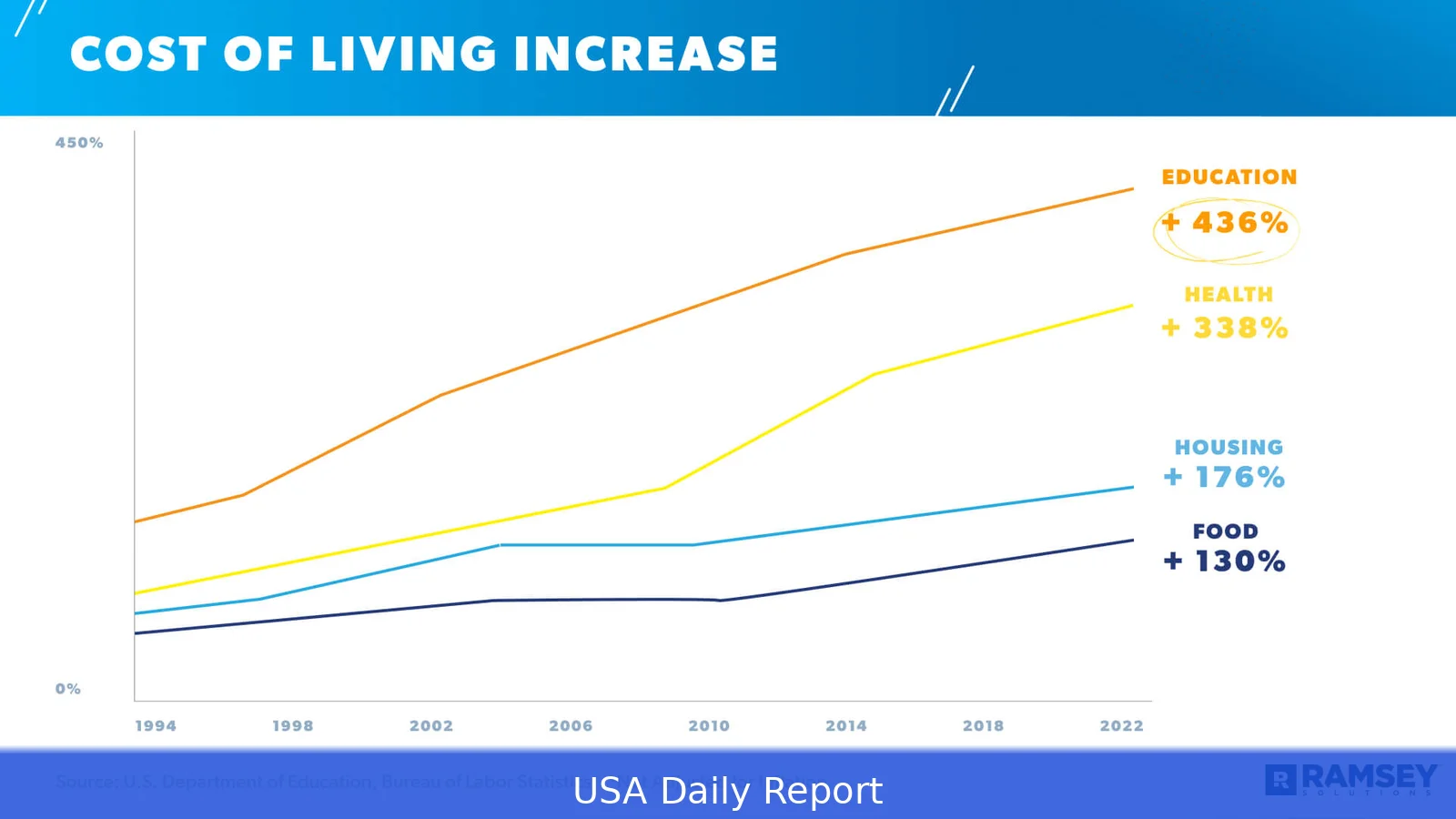
Worried monthly student loan bills will clash with rent, groceries and savings? This 2026 guide explains how to build — and use — a student loan cost of living calculator that shows what you can actually afford each month and what trade-offs you'll face. It's practical, number-driven and built for U.S. Paychecks and prices.
Quick-reference: Key figures and what they mean
- Average federal student loan balance (most recent available year, 2024): about $30,000 per borrower.
- Typical 10-year standard repayment monthly payment for $30,000 at 5%: $318/month (120 months).
- Example: $50,000 at 6% over 10 years: $555/month.
- Example extended consolidation: $50,000 at 6% over 20 years: $358/month; over 25 years: $322/month (longer terms lower monthly cost but raise total interest).
- Federal undergraduate loan interest range for recent fixed-rate loans (2023–2024 cohort): roughly 4.99%–7.54% — new rates reset annually on July 1 for new loans.
- Income-Driven Repayment (IDR) payment shares: 10% of discretionary income for PAYE and REPAYE plans. IBR can be 10% or 15% depending on origination date.
- Discretionary income formula (standard IDR): AGI minus 150% of the poverty guideline. 2024 poverty guideline (contiguous 48 states) for one person: $14,580; 150% = $21,870.
- Example IDR payments: AGI $50,000 → discretionary $28,130 → 10% = $2,813/year → $234/month. AGI $35,000 → discretionary $13,130 → 10% = $1,313/year → $109/month.
- Typical monthly rent (2024 national median): ~$1,500; New York City median rent: ~$3,000; Los Angeles: ~$2,700; Dallas: ~$1,600; Austin: ~$1,900.
- 2024 federal poverty guideline (contiguous 48 states) for a single-person household: $14,580 (used to set IDR thresholds).
- Standard repayment term: 10 years (120 months). Extended terms: 20–25 years available for consolidation or some private loans.
- Example emergency fund target: 3 months of living expenses; for a $3,000/month budget that's $9,000. Six months would be $18,000.
- Payroll taxes (employee share): Social Security 6.2% on wages up to the wage base, Medicare 1.45% on all wages — combined 7.65%.
- Typical savings target for retirement: 10%–15% of gross income; for a $60,000 salary that's $6,000–$9,000/year ($500–$750/month).
What a student loan cost of living calculator does
A student loan cost of living calculator mixes your loan payments with local living expenses to help you see if your budget can cover the basics and your goals. It turns raw loan numbers — balance, interest, term — into a monthly payment, then stacks that against rent, utilities, food, transport, taxes and savings targets. The result: a realistic monthly inflow/outflow snapshot you can act on.
It goes beyond simple math. A solid calculator lets you try out different plans like the standard 10-year payment, income-driven repayment options, consolidation, and refinancing. It also lets you toggle local rent, state taxes, and expected raises. That lets you compare immediate pain (higher monthly payments) with long-run cost (interest paid over time) under different paths.
That way, you can figure out real questions like: With a $55,000 salary and $1,800 rent, can I handle a standard payment on $40,000 at 5%? And if not, is income-driven repayment a better option, and for how long? The calculator gives dollar amounts and percent-of-income signals so decisions aren't guesswork.
Step-by-step: Build and use the calculator
1) Enter loan details.
- Loan balance: add every federal and private loan. Example: $42,000 total.
- Interest rate: enter the weighted average or per-loan rate. Example: 5.25% weighted average.

- Loan type and origination year: federal loans can qualify for IDR or PSLF; private loans usually don't. Record loans by type.
2) Choose repayment scenarios to compare.
- Standard 10-year amortization. Input principal, rate and term. Use the amortization formula — monthly rate r = annual rate/12. Payment = r*P/(1-(1+r)^-n). For $30,000 at 5% (n=120) payment = $318/month.
- IDR plans: estimate monthly by calculating discretionary income = AGI - (1.5 × poverty guideline). Multiply discretionary by plan percentage (10% typical). Example numbers above show how low IDR payments can be — $109–$234/month for two sample AGIs.
- Consolidation/extended terms: compare 20- and 25-year options. Remember longer terms reduce monthly payments by roughly 30%–50% versus 10-year, but increase total interest paid by tens of thousands on larger balances.
- Refinancing: if you can refinance to a lower rate, recalculate with the new rate; include origination fees if any. Example: dropping from 6% to 4% on $50,000 over 10 years saves roughly $106/month ($555 → ~$449) and about $12,700 in interest over the term.
3) Add income and tax effects.
- Gross income: enter annual gross pay. Use this to calculate take-home after federal and state taxes plus payroll taxes. For payroll taxes use 7.65% employee share. For federal taxes, you can use the yearly tax brackets or just estimate with an effective rate between 12% and 22% for most middle-income earners.
- State tax: enter state rate or zero for no-income-tax states. Rates in the U.S. Range from 0% (TX, FL) to about 13.3% (CA top bracket). For budgeting use an estimated state effective rate: 0%–6% for most states.
4) Enter living costs and goals.
- Rent or mortgage. Use local market data: national median rent ~$1,500 (2024). Big-city rents triple or double that. Put exact local rent to see the impact.
- Utilities, groceries, transport, insurance, phone: use per-category monthly figures. Example food: $300–$600/month single; transport: $100–$400 depending on car or transit.
- Savings targets: emergency fund (3–6 months of expenses); retirement (10%–15% gross); short-term goals (car, wedding, down payment) as monthly targets.
5) Run the math and read signals.
- Key outputs: monthly loan payment per scenario, net take-home pay, percent of income used for housing, percent for debt, that leftover for savings. Flag rules of thumb: housing >30% of gross is high; debt-to-income for loans+credit >15% is often risky.
- Example scenario: Gross $50,000 → assume 15% effective federal/state tax = $7,500; payroll taxes 7.65% = $3,825; net pay ≈ $38,675/year → $3,223/month. If rent = $1,600 and loan payment = $318 (standard), combined housing+loan = $1,918 → 60% of net pay leaves $1,305 for food, transport, savings and bills — tight.
- Visualize: show a stacked-bar chart of monthly income vs expenses: rent, loan, taxes, savings, essentials. That highlights where cuts or plan changes are needed.
Regional differences and how to adjust
Costs vary a lot by city. Use local rent and state tax inputs to reflect reality. Here are representative 2024 numbers to anchor calculations:
- National median rent: ~$1,500/month.
- New York City median rent: ~$3,000/month.
- Los Angeles median rent: ~$2,700/month.
- Austin median rent: ~$1,900/month.
- Dallas median rent: ~$1,600/month.
- States with no income tax: Texas, Florida, Washington, Tennessee and a few others — that can boost take-home pay by roughly 3%–6% compared with a similar job in a taxed state.
- High-cost metro effect: if local rents are double the national median, your safe loan payment drops by roughly the same proportion unless income rises proportionally. That matters for career choices — taking a lower-paying job in a high-cost city often makes IDR the only affordable path.
Practical tips and sample scenarios
- Scenario A: Recent grad, $40,000 balance at 5%, gross pay $45,000, rent $1,500. Standard payment: $424/month. IDR (10% discretionary with AGI $45,000) ≈ $157/month. If saving 10% of income ($375/month) and rent is $1,500, standard plan leaves only ~$224/month for food, transport and unexpected costs — IDR gives breathing room but extends repayment and can increase total interest dramatically.
- Scenario B: Mid-career, $120,000 balance with PSLF goals, salary $80,000, rent/mortgage $2,200. IDR or consolidation may be worth it to preserve cash flow while chasing forgiveness after 10 years of qualifying payments. Monthly IDR might be $350–$700 depending on AGI; verify PSLF qualifying payments carefully.
- Rule of thumb numbers: keep housing <30% of gross if possible; aim for total consumer debt payments <20% of gross; and preserve emergency funds equal to at least 3 months of essential expenses.
Forecast: what to watch in 2026
- Interest rates: federal student loan rates for new direct loans are set annually; watch July 1 adjustments. Market-rate conditions through 2026 could keep refinancing spreads tight for qualified private borrowers.
- IDR policy changes: lawmakers and regulators may adjust plan details — but the basic 10% discretionary structure remains the most common comparator in 2026 calculations.
- Housing: rent growth slowed in some metros by 2025, but urban cores still trend higher than suburbs. That affects the housing-to-loan trade-off for recent grads choosing where to live.
Related Articles
- How to File US Taxes for Free in 2026
- File Taxes in the U.S. as an International Student 2026
- How to File Taxes in the States 2026
A student loan cost of living calculator turns debt math into real monthly decisions — with accurate loan inputs, local cost figures and tax estimates it shows whether a payment plan fits life. Run multiple scenarios — standard amortization, IDR, consolidation and refinancing — and compare monthly cash flow, total interest and long-term goals before choosing a path.
This article was created with AI assistance.


