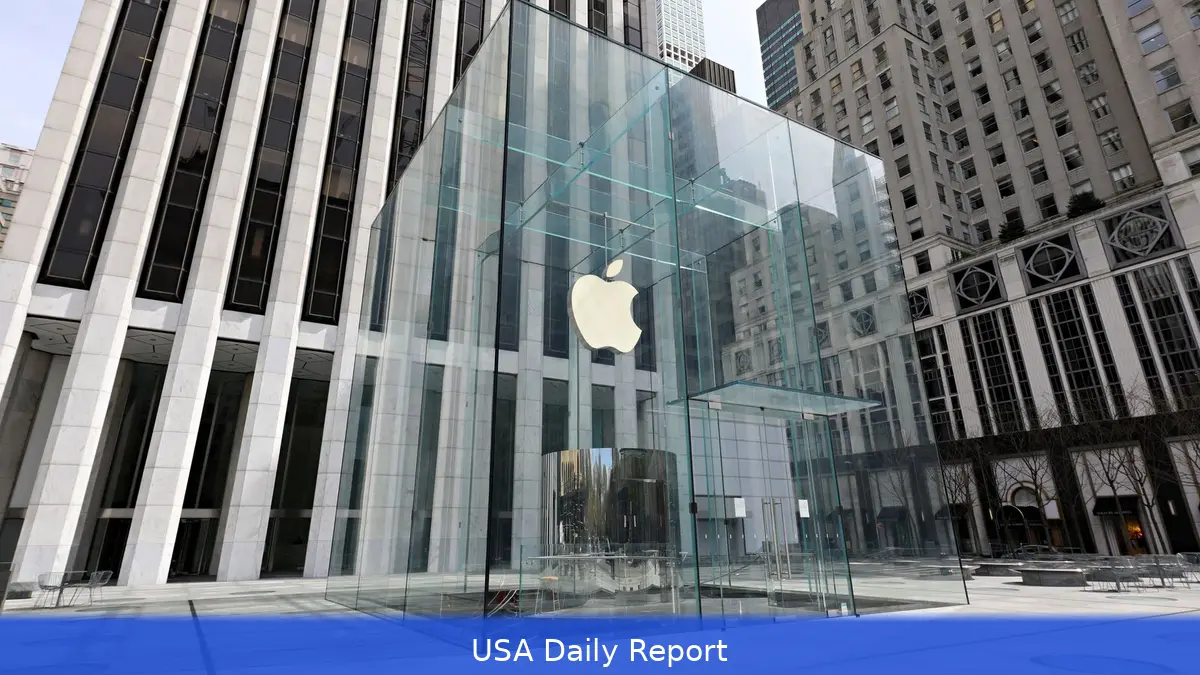
Apple will permanently close three U.S. Retail stores in June.
Stores set to shutter — and where they are
Apple announced it will permanently close three retail locations in the United States this June: Apple Trumbull in Trumbull, Connecticut; Apple North County in Escondido, California; and Apple Towson Town Center in Towson, Maryland. The company pointed to weakening conditions at the malls that house those stores and said the decision is part of an ongoing evaluation of how best to serve customers, both in person and online.
Look, mall traffic has been uneven for years, and these particular sites have lost a raft of anchor tenants. The Trumbull Mall owner recently defaulted on a $150 million loan, and several major chains left Towson Town Center earlier this year. The mall now known as Mershops North County has also changed hands amid declining foot traffic.
Apple told us that employees at the Trumbull and North County stores can move to nearby Apple retail locations. For Towson staff, Apple said employees will be eligible to apply for open positions at the company under the terms of their collective bargaining agreement.
That last detail matters. The Apple Towson Town Center team was the first group of U.S. Apple retail employees to unionize, joining the International Association of Machinists and Aerospace Workers Coalition of Organized Retail Employees, known as IAM CORE, in 2022.
Thing is, the union contract creates a specific pathway for employees to seek other roles within Apple, rather than being subject to the company’s typical internal hiring rules.
All three stores are temporarily closed today and will reopen tomorrow, Apple said.
What this says about Apple’s retail playbook
Apple still sees physical stores as an important part of its business. The company opened 11 new stores since the start of 2025, including locations in U.S. Cities such as Miami and Detroit, and it has remodeled dozens of existing stores worldwide. But the decision to close these three outlets shows Apple is being selective about where it keeps a storefront.
Stores in malls that aren't doing well have different costs and benefits compared to flagship stores downtown. Rents, security, and the logistics of servicing lower-traffic properties make some locations harder to justify — even for a company with record revenue. Apple said they're closing these stores to focus on improving their retail presence worldwide and making sure customers can still get service online and through authorized sellers.
This way, Apple can close stores in malls that aren't busy but invest more in popular areas and online services. It also lets Apple point customers toward other nearby Apple Stores rather than leaving an entire area without in-person support.
Employee impact and the union angle
Staff changes are never simple. Apple said employees at Trumbull and North County can move to nearby stores, while Towson employees have the option to apply for openings under their union contract. Because the Towson team is unionized, Apple has to follow certain rules, which means they might handle this store differently than others.
Amazon, Best Buy, and Target sell Apple products too, but they aren't involved in Apple store employee matters. But when it comes to retail employment and store closures, those companies aren’t directly involved. For affected Apple employees, the immediate questions are practical: transfer options, reassignments, and eligibility for roles in stores or corporate positions. For the company, the calculus is operational — fewer stores in failing malls, more investment where customers actually show up.
Meanwhile: the Apple Watch Series 11 on sale
Apple is currently offering a good discount on its newest flagship wearable. The 42mm Apple Watch Series 11 with GPS is selling for about $299 at major retailers, a roughly $100 reduction from its list price. The 46mm model is also discounted by about $100, with the base GPS configuration available for roughly $329 at the same retailers.
Those sellers include the big national retailers customers expect to find Apple devices at: Amazon, Best Buy and Target. The markdown is the Series 11’s best price to date for the base GPS models.
The Series 11 doesn't change much compared to the Series 10. But it’s Apple's fastest, most durable flagship wearable so far. The device delivers a bright OLED display with wide viewing angles, and Apple has stretched battery life: users can expect up to about 24 hours on a single charge with the standard configuration, or as much as 38 hours in a low-power mode. The LTE-equipped models also benefit from a power-efficient modem that helps preserve battery life during cellular use, and Apple’s faster charging lets a dead watch reach roughly 80% capacity in about 30 minutes.
Health features and software extras
Apple added more health features to the Series 11. The watch supports FDA-cleared hypertension notifications and provides a sleep score feature, along with tools for ovulation tracking and sleep apnea detection. Fall detection remains part of the package, as does the usual array of Apple conveniences: Apple Pay, Siri integration, and on-device music playback.
On the software front, the Series 11 runs watchOS 26 and gains access to features such as Workout Buddy, which offers real-time coaching during exercise sessions, plus gesture controls like wrist flick and double-tap that let users interact without touching the screen.
What shoppers should weigh
If you’re using an older Apple Watch — say a Series 5 or Series 6 — the Series 11 is a clear upgrade in speed, battery, and display. For users on Series 9 or 10, the decision is less urgent. The Series 11’s best price yet makes it appealing for those who were waiting for a discount, though buyers who need cellular connectivity should factor in the higher cost of LTE models.
Warranty and support remain important. Apple continues to offer service online and in store, and even as it trims some mall locations, the company points customers to nearby Apple Stores, the Apple Store app, and authorized service providers for repairs and support.
Where this leaves Apple
Apple is closing three low-performing mall stores while still expanding and remodeling in other markets. Sales promotions like the Series 11 discount show the company can move inventory through traditional retail partners and its own channels at the same time. The moves are practical, not dramatic: a reshuffle of physical locations paired with ongoing product promotions and a steady push toward digital service.
Frankly, it's a reminder that even the most valuable tech companies have to make trade-offs about real estate and customer access. Some malls stop delivering; other neighborhoods still draw crowds. Apple is tilting its footprint accordingly.
Look, customers who want in-person help near Trumbull, Escondido or Towson will still have options — just not at the same address. And shoppers in the market for a new smartwatch can buy an Apple Watch Series 11 for roughly $299 to $329 from major retailers while supplies last.
Related Articles
- I walked 3,000 steps with three wearables — one tracker nailed the count
- One in Five Full-Time US Workers Say AI Has Already Taken Over Parts of Their Jobs
- Developers Are Running AI Locally. CISOs Didn't See This Coming.
Apple said employees at the Towson Town Center store will be eligible to apply for open roles at Apple in accordance with the collective bargaining agreement.


