
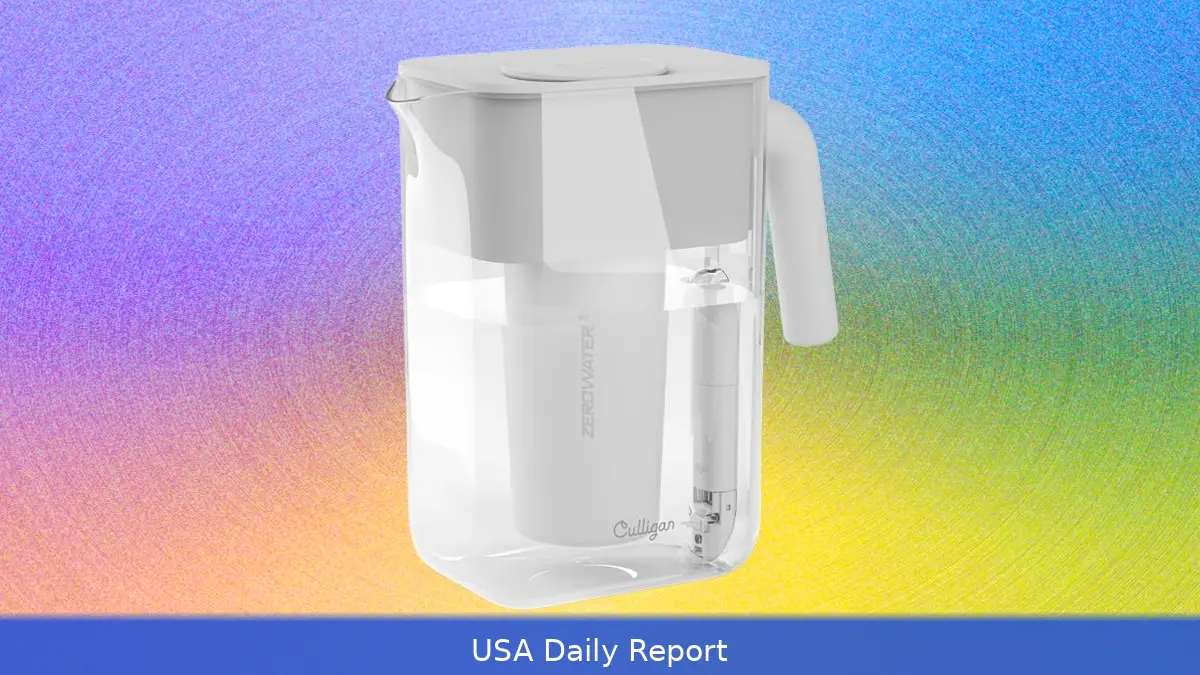
Tap water worries have changed. PFAS “forever chemicals,” lead in aging pipes, and tiny microplastics are routine concerns now. For renters, apartment dwellers, and anyone not ready to plumb in a whole-house or under-sink system, a good pitcher filter is the fastest, cheapest step that actually makes a difference. This guide compares four pitchers that matter in 2026 — what they remove, how long they last, and what they cost to run — so it's easy to pick the one that fits daily use and pocketbook.
Quick-reference summary
Short on time? Here's the fast pick and the numbers that matter. The best pitcher if PFAS and microplastics are your top concern is Clearly Filtered No.1 — broad claims and targeted media. If you want the deepest TDS reduction on a tight budget, ZeroWater is the go-to. Aquagear is the choice for preserving beneficial minerals while cutting lead and PFAS. If your water is mostly about taste, odor and general contaminants — and you want the best fridge-ready value — Brita Everyday Elite fits.
Look, key quick metrics at a glance:
- Clearly Filtered No.1 — Price: about $100; Filter life: ~100 gallons; Typical replacement cost: ~$60; Removes PFAS, microplastics, lead, fluoride on manufacturer testing lists.
- ZeroWater Pitcher — Price: about $40; Filter life: variable (several weeks to 1–2 months depending on TDS); Replacement cost: ~$10–$15; Best TDS (total dissolved solids) reduction to near-zero.
- Aquagear Classic Pitcher — Price: $129–$159; Filter life: ~150–200 gallons; Replacement cost: ~$69; Designed to reduce lead and PFAS while leaving calcium and magnesium.
- Brita Everyday Elite — Price: about $42; Filter life: ~40–100 gallons depending on cartridge; Replacement cost: ~$6–$10; Best-value basic carbon filtration for taste and chlorine reduction.
Ranked: The 4 best water filter pitchers (2026)
1. Clearly Filtered No.1 Water Pitcher
Key features: Advanced Affinity Filtration media engineered to target PFAS and microplastics as well as hundreds of chemical contaminants; claims of third‑party lab testing on dozens of PFAS compounds; BPA-free tritan pitcher body; about 100-gallon filter life (roughly 3–6 months for a household of 1–2 people); pitcher holds roughly 10–11 cups of filtered water with a separate sediment reservoir.
Pros:
- Broad contaminant list — includes PFAS, microplastics, lead, fluoride and dozens of organic and inorganic compounds that many carbon-only pitchers miss.
- Mineral-friendly — keeps calcium and magnesium so water tastes balanced instead of flat.
- Clear replacement cadence — about 100 gallons per filter gives predictable monthly cost planning.
Cons:
- Price — retail often near $100 for the pitcher; replacement filters typically run around $60 each, which means higher cost per gallon compared with simple carbon cartridges.
- Flow rate — dense media reduces pour speed; filling a full pitcher takes longer than with thin carbon cartridges.
- Filter weight — the cartridge is dense and can be heavy to swap for people with limited hand strength.
Who it's best for: Households where PFAS and microplastics are top concerns, or anyone who wants wide-spectrum chemical reduction without losing beneficial minerals. Also good for people who want predictable service intervals.
Pricing (USD): Pitcher about $100; replacement filter about $60; cost per gallon roughly $0.60 assuming 100 gallons per filter.
2. ZeroWater Pitcher
Key features: Five-stage ion-exchange and carbon filtration system designed to bring TDS (total dissolved solids) down to near zero; includes a TDS meter in most packs so users can test performance; pitcher sizes from 6 cups to 10 cups; best performance when municipal water has higher TDS to begin with.
Pros:
- Deep TDS reduction — ZeroWater often produces water with near-zero ppm on a TDS meter, which many users equate with “pure” water.
- Low upfront cost — pitcher retail near $40; replacement filters are inexpensive (roughly $10–$15), so initial outlay is small.
- Visible performance — the included TDS meter gives users a measurable indicator when replacement is needed.
Cons:

- Filter life varies — depends entirely on incoming TDS. In high-TDS areas a filter can last only a few weeks; in low-TDS areas it may stretch to 1–2 months.
- Removes beneficial minerals — because it reduces TDS to near zero, water tastes flat to some drinkers and may not be ideal for brewing coffee/tea.
- Wastewater/regeneration — no regeneration option; used filters must be replaced and disposed of.
Who it's best for: People on a tight budget who want the cleanest possible tap water by TDS, and folks who like to measure and confirm performance with a meter.
Pricing (USD): Pitcher about $40; replacement filters about $10–$15; cost per gallon varies widely — calculate by dividing replacement cost by actual gallons between changes (often 20–100 gallons depending on water).
3. Aquagear Classic Pitcher
Key features: Solid carbon block plus ion-exchange designed to reduce lead, PFAS, chlorine taste and odor while intentionally preserving calcium and magnesium; larger filter life at about 150–200 gallons per cartridge (roughly 6 months for moderate use); BPA-free pitcher; built-in pour spout and comfortable handle designed for frequent use.
Pros:
- Balanced approach — reduces heavy metals and PFAS yet keeps healthy minerals, so water tastes fuller than demineralized alternatives.
- Longer filter life — 150–200 gallons cuts replacement frequency compared with many pitchers.
- Warranty and transparency — Aquagear has offered a multi-year guarantee on the pitcher body and published third-party lab test summaries.
Cons:
- Pricey upfront — retail commonly between $129 and $159 for the pitcher and cartridge combo.
- Replacement cost — filters are often around $69, which makes cost per gallon higher than the cheapest options.
- Availability — in some regions replacement filters ship slower or are sold only online, adding wait time.
Who it's best for: Buyers who want a middle ground — strong removal of lead and PFAS while preserving minerals for taste. Good for coffee and tea lovers who don't want zero-TDS water.
Pricing (USD): Pitcher $129–$159; replacement filter about $69; cost per gallon roughly $0.34–$0.46 assuming 150–200 gallon life.
4. Brita Everyday Elite
Key features: Standard activated carbon and ion-exchange resin cartridge tuned for chlorine taste and odor reduction, some reduction of particulates and basic heavy metals; pitcher designs that fit most fridge doors; easy-swap filters and wide retail availability; cartridge life typically 40–100 gallons depending on the exact model and local water.
Pros:
- Best value — low purchase price (around $42 for many models) and very inexpensive replacement filters (about $6–$10 each when bought in multi-packs).
- Fast fill and pour — thin cartridges allow quicker flow for frequent use.
- Retail ubiquity — replacement filters are sold at supermarkets, big-box stores and online, so no waiting.
Cons:
- Limited scope — carbon-only cartridges miss many PFAS compounds, some microplastics, and a range of industrial chemicals.
- Filter life and performance vary — exact gallons removed depends on starting water chemistry and which Brita filter model is used.
- Not ideal for lead-heavy service lines — while it reduces some lead, it’s not the top choice where lead is a major concern.
Who it's best for: People who primarily want better taste, reduced chlorine, and a low-cost, fridge-friendly pitcher. Great for renters and students who need quick improvement without high running costs.
Pricing (USD): Pitcher about $42; replacement filters about $6–$10 each in multi-packs; cost per gallon often below $0.20 when filters are used to their full life.
How we chose
We looked at the things that matter in daily use — what a pitcher removes, how long the filter lasts, real cost per gallon, ease of use, and how the manufacturer backs its claims. We scored each pitcher on these categories:
- Contaminant reduction breadth — measured by the list of specific chemicals and particle classes the filter is designed to address (PFAS, lead, chlorine, microplastics, fluoride, VOCs, nitrates).
- Independent testing and verification — presence of third-party lab tests, NSF or comparable testing where available, and public test results.
- Filter life and predictable replacement cadence — gallons per cartridge and likely months between changes for an average household.
- Cost to run — replacement filter price divided by gallons of life to give a rough cents-per-gallon running cost.
- Usability — fill-and-pour speed, fridge fit, weight and handle comfort, plus how easy filters are to buy locally or online.
We also gave practical weight to taste and mineral preservation. Some people want near-zero TDS; others want water that still tastes like water — with calcium and magnesium left in. So we scored pitchers differently depending on use-case: drinking, cooking, coffee/tea brewing, or baby formula preparation.
Final verdict
If PFAS and microplastics worry most, choose Clearly Filtered No.1 — it claims the broadest contaminant list and targeted performance for those specific concerns, with a clear replacement cadence and a mineral-friendly result. If budget and measurable TDS reduction are the top priorities, ZeroWater delivers the most noticeable change on a tight budget — the included TDS meter is a real plus. For people who want to cut lead and PFAS but keep healthy minerals for taste and brewing, Aquagear is the balanced pick. And for the best value that improves everyday taste and removes chlorine and common contaminants, Brita Everyday Elite is the practical, widely available choice.
One more practical note — check local water quality first. City or municipal water reports, or a $20–$50 lab test kit, will show whether lead, high TDS, or PFAS are likely in your supply. That simple step narrows the right pitcher fast — and helps avoid paying for a capability you don't need.
Related Articles
- The best Zoom alternatives in 2026: Expert tested and reviewed
- US Redundancy Rights 2026 — Notice Period, Pay and What Employers Owe You
- Best Jobs in the US 2026 — Highest Paying and Most In-Demand
Final verdict: If PFAS and microplastics are the top worry, Clearly Filtered No.1 is the best all‑around choice for broad chemical and particle reduction while keeping minerals. If the goal is the deepest TDS reduction on a tight budget, ZeroWater is the simplest, most measurable option. Aquagear balances contaminant removal with preserved minerals for better taste, and Brita Everyday Elite offers the cheapest way to improve taste and cut basic contaminants for most households.
This article was created with AI assistance.


