
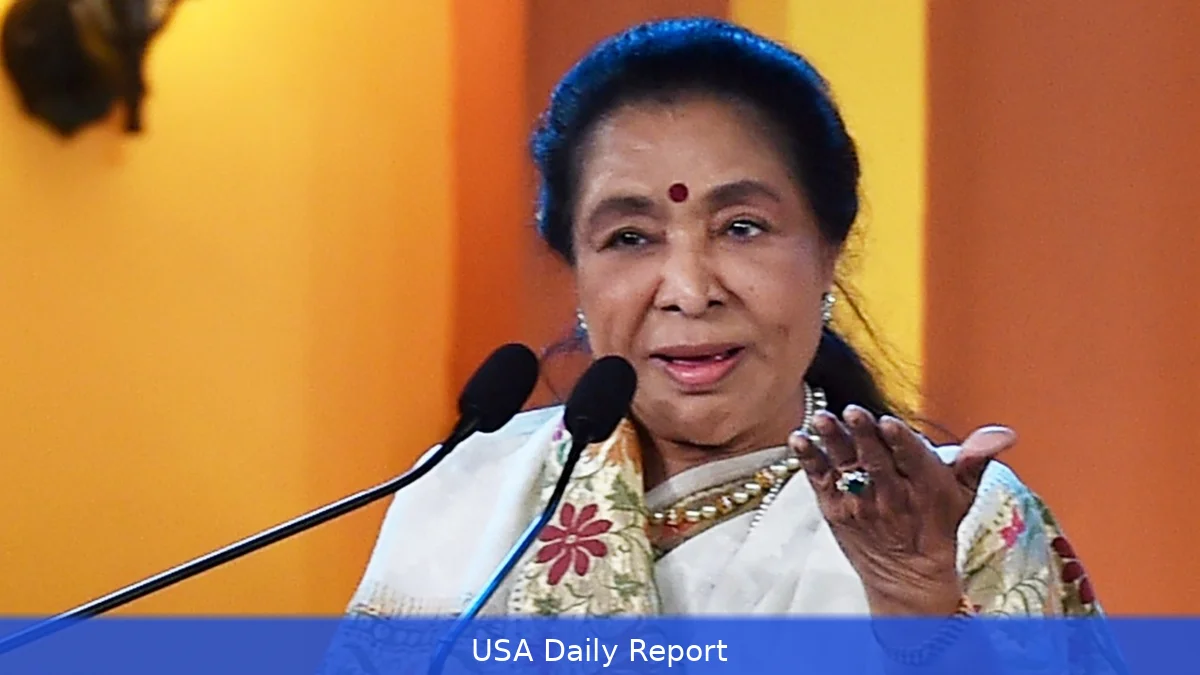
Fans and fellow musicians gathered in Mumbai. They sang one of her hits as she was laid to rest.
A public farewell
A hush fell over the gathering outside the crematorium, then voices rose in unison. Mourners sang an iconic song associated with Asha Bhosle as her body was taken for cremation in Mumbai, people at the scene said. The moment underlined how closely her music is woven into public life in India and across the world.
It wasn't a private event hidden from the public. People turned up — fans, fellow musicians and those who'd grown up with her on the radio and in films. The singing at the cremation turned the ritual into an impromptu communal tribute.
Words from fellow musicians
Tjinder Singh of the band Cornershop captured why the moment felt so charged. "Few have reached the ability to be loved in so many languages and dialects, and even fewer have reached so many with the astonishment of heart that her songs gave us," he said, reflecting on the range and reach of her career.
Singh's words underline a wider truth about how certain performers connect across generations. It shows how a performer can become a cultural bridge — someone whose recordings travel with migrants, who soundtrack weddings and farewells, who appear on playlists from Chennai to California.
What the farewell says about cultural memory
Public funerals often reshape collective memory.
Asha Bhosle's cremation became a moment for ordinary listeners to voice their grief and for artists to acknowledge a predecessor. It also served as a reminder that recorded music can keep an artist’s presence alive in everyday life — on radios, at family gatherings and on streaming platforms.
When people sing together at a farewell, it helps fix those songs in public memory. When many people sing the same song at a farewell, it reinforces a shared past. That shared history doesn't stop at borders. Indian film music has a big audience among the diaspora — including in the United States — and such public displays of mourning can prompt renewed interest abroad.
Implications for the music industry
Streams, searches and catalog sales usually spike after a big-name artist dies; listeners go back to the recordings they remember. Record labels and rights holders typically see a short-term revenue uptick as listeners revisit familiar songs.

For archives and cultural institutions, the moment can trigger efforts to preserve recordings, liner notes and film appearances for future study.
This affects the U.S. music business: streaming platforms that serve global audiences often host and monetize those renewed plays. Second, U.S. Cultural institutions and South Asian studies programs may find increased interest from students and donors seeking to document the artist's work.
Diplomacy, soft power and the diaspora
Such ceremonies can also take on diplomatic overtones. Cultural icons help shape how a country is seen overseas. When artists with long careers die, foreign governments and cultural organizations sometimes issue statements or hold commemorations. That's a soft-power moment — a chance for India to spotlight a global contribution to music and film.
Right now, Indian communities in U.S. Cities often gather at cultural centers or temples to honor prominent figures. Those gatherings can draw media attention and spur conversation about the role of South Asian culture in American life. They also remind policymakers and cultural funders that immigrant communities carry powerful ties to homeland art and memory.
Political resonance at home
Public mourning for major figures sometimes becomes entangled with politics. Elected officials may attend funerals, pay respects or issue statements, using the moment to connect with constituents. That happens in many democracies — and India is no exception.
At the cremation, the focus reportedly stayed on music and memory, not politics. Still, funerals that bring together large crowds can become occasions for national reflection, and politicians frequently note how cultural icons helped shape national identity.
A global catalog revisited
High-profile farewells often prompt international listeners — including in the U.S. — to revisit an artist's work. Libraries, university programs and public radio shows may air retrospectives. That can widen appreciation among listeners who hadn't been exposed to Indian film music beyond occasional hits.
For younger South Asian Americans, events like this can shape how they connect with cultural heritage. They link personal family memories — a grandmother who kept an old record player, parents who hummed certain tunes — to a larger cultural story. In classrooms and community centers, teachers and organizers sometimes use these moments to introduce new audiences to the history behind the music.
Preserving a legacy
Archives and rights holders face practical choices after an artist's death. There's the question of how to preserve master tapes, how to ensure fair payments to estates and how to manage licensing for films and compilations. Those are business questions with cultural consequences: how a catalog is curated can shape how future listeners understand an artist's work.
So music industry executives and cultural custodians watch closely when an artist who defined a genre or an era passes away. They'll sift through recordings, reissue albums and sometimes create boxed sets with contextual essays.
That work can be valuable for historians and for new listeners who want more than a playlist.
The immediate scene in Mumbai
The cremation attracted fans who came to pay final respects, and the singing was described by those present as heartfelt rather than performative. For many attendees, it was the last chance to show publicly how much her voice and music meant to them.
At moments like that, the personal and the public blur. A single melody can carry decades of memories — weddings, films, radio dramas, even political rallies — and when people sing it together, they reaffirm those memories out loud.
Related Articles
Tjinder Singh, of the band Cornershop, said: "Few have reached the ability to be loved in so many languages and dialects, and even fewer have reached so many with the astonishment of heart that her songs gave us."
This article was created with AI assistance.


