
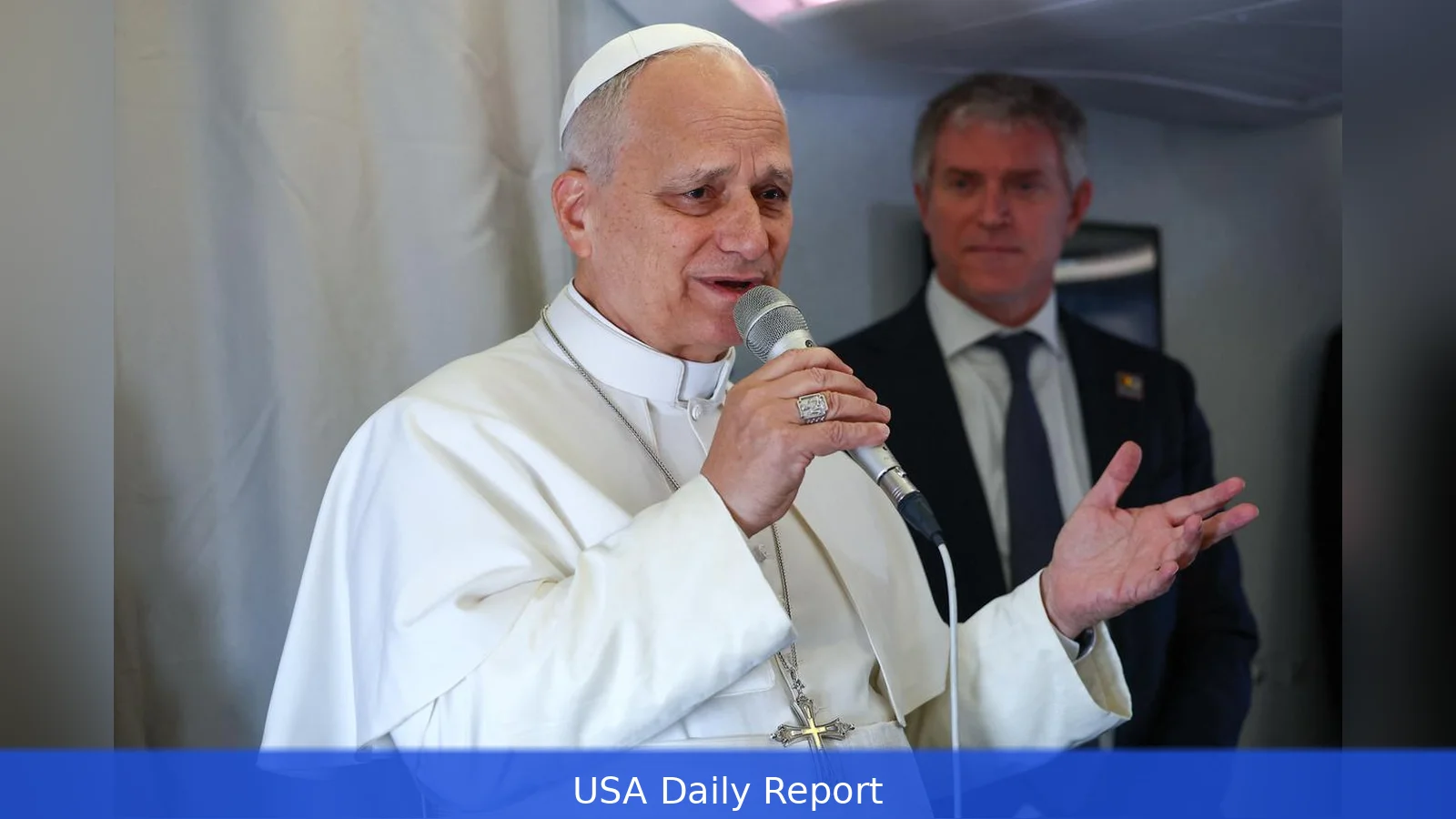
Pope Leo told Cameroon’s leaders to tackle corruption now. He said peace depends on it.
Pope's visit and blunt message
Pope Leo arrived in Cameroon this week and used his public appearances to press a single, direct point: graft is blocking peace. He spoke after visiting a mosque, a stop he described as meaningful in a country with multiple faiths. "I think the visit to the mosque was significant and to say that although we have different beliefs, we have different ways of worshiping, we have different ways of living, we can live together in peace," Pope Leo said afterwards.
The pope didn't shy from politics. He told government authorities that cleaning up corruption is central to resolving social tensions and preventing further violence. His comments were delivered in plain language — rare for a papal visit — and aimed squarely at officials with responsibility for governance and the rule of law.
The message was clear and kept coming back: moral renewal needs to go hand in hand with real changes in institutions. The pope framed corruption not only as a sin but as a practical barrier to reconciliation, service delivery and fair justice.
One sentence of his visit — the mosque stop — echoed through crowds and leaders alike. It showed the trip wasn’t only about religious ritual but about the fragile threads holding communities together.
Why the pope linked graft to peace
For the pope, corruption isn’t an isolated problem. It eats away at trust, drains public resources and hands a tactical advantage to those who exploit grievances. When people don’t see public goods delivered fairly, resentment grows.
So does the chance that disputes turn violent.
The key is that fighting corruption helps ease people's frustrations. It's not magic. It's a step — a practical one — toward restoring confidence in institutions that must arbitrate disputes and provide basic services.
This matters especially where communities feel left out of what the government offers. The pope linked moral calls with a clear political goal: fix institutions or peace won’t hold.
He also used interfaith outreach as proof of concept. By visiting a mosque, Pope Leo signaled that religious leaders can model coexistence while urging secular authorities to act. The optics mattered: a major religious figure walking into another faith’s place of worship and calling for national reform.
Economic and political implications
Corruption messes up economies. It raises costs for businesses, scares away long-term investors and makes public projects more expensive. All of that slows growth and deepens inequality.

When corruption is expected, companies just add it to their expenses. They might choose to invest elsewhere. Donor countries and international lenders often condition aid and loans on governance reforms, too. So a government seen as failing to tackle graft risks losing both private investment and international assistance.
On the political side, tolerance of corruption undermines legitimacy. Leaders who are perceived as allowing or benefiting from illicit deals risk protests, courtroom challenges and a loss of popular consent. Those political disruptions feed into insecurity — a vicious circle the pope warned against.
And it's not only about headline-grabbing scandals. Small-scale bribery at checkpoints, delayed contracts, and opaque procurement all add up. They sap state capacity and make basic services less reliable. That matters to people who need health care, education and stable roads.
Regional and US connections
Cameroon sits in a part of the world where instability can spill across borders. That’s why developments there have regional ripple effects. Violence, governance failures and economic weakness can accelerate migration, strain neighboring states and complicate counterterrorism efforts.
For the United States, those trends matter in several ways. Washington has strategic and humanitarian interests in the region, including preventing violent extremism and managing migration flows. Instability that stems from bad governance makes those goals harder to pursue.
Economically, American companies and investors consider governance when weighing projects. Unclear rules and bribery raise the cost of doing business. So reforms that reduce corruption could open the door to more stable, long-term investment — including from U.S. Firms. Conversely, failure to act could push investors to prioritize countries with clearer rules and fewer hidden costs.
The U.S. often teams up with regional partners on security and development. Those partnerships operate better when host governments show a commitment to transparency and accountability. If corruption is pervasive, cooperation becomes more fraught and less effective.
What domestic actors face now
The pope’s intervention adds moral pressure on Cameroon’s leaders. Civil society groups may use his words to press for concrete measures: stronger anti-corruption laws, independent oversight, public procurement reforms and protections for whistleblowers. Institutions that monitor spending and elections could find new public backing.
Still, change takes time. Legal reform takes time. So does building competent, independent institutions. And entrenched interests resist. That reality means the pope’s words are a starting point, not a finished plan.
Still, leaders who respond with concrete action can lock in political gains. Reforms that make government more transparent tend to widen public support when they work. That’s a political calculation as much as a moral one.
International leverage and follow-through
International partners could boost the pope’s message by linking aid to clear goals. Donors often complement advocacy with capacity-building — training auditors, modernizing procurement systems and funding civil-society monitoring.
That said, international involvement has limits. External pressure can backfire if it’s perceived as meddling. Lasting change usually needs domestic political buy-in, sustained civic engagement and effective institutions.
So the question now is who in Cameroon will translate the pope’s words into action. Political leaders, religious figures and citizens alike will decide whether the moment becomes a turning point or a symbolic episode.
The pope’s message was plain: if leaders want peace, they have to clean up governance. It’s a tall order. But his remarks put moral weight behind a basic political truth — that legitimacy and service delivery matter for stability.
One final, visible sign of the trip: the mosque visit. It reminded viewers that coexistence is possible even before politics changes. The act and the message were linked — moral example and institutional demand in the same breath.
Related Articles
"I think the visit to the mosque was significant and to say that although we have different beliefs, we have different ways of worshiping, we have different ways of living, we can live together in peace," Pope Leo said afterwards.
This article was created with AI assistance.


