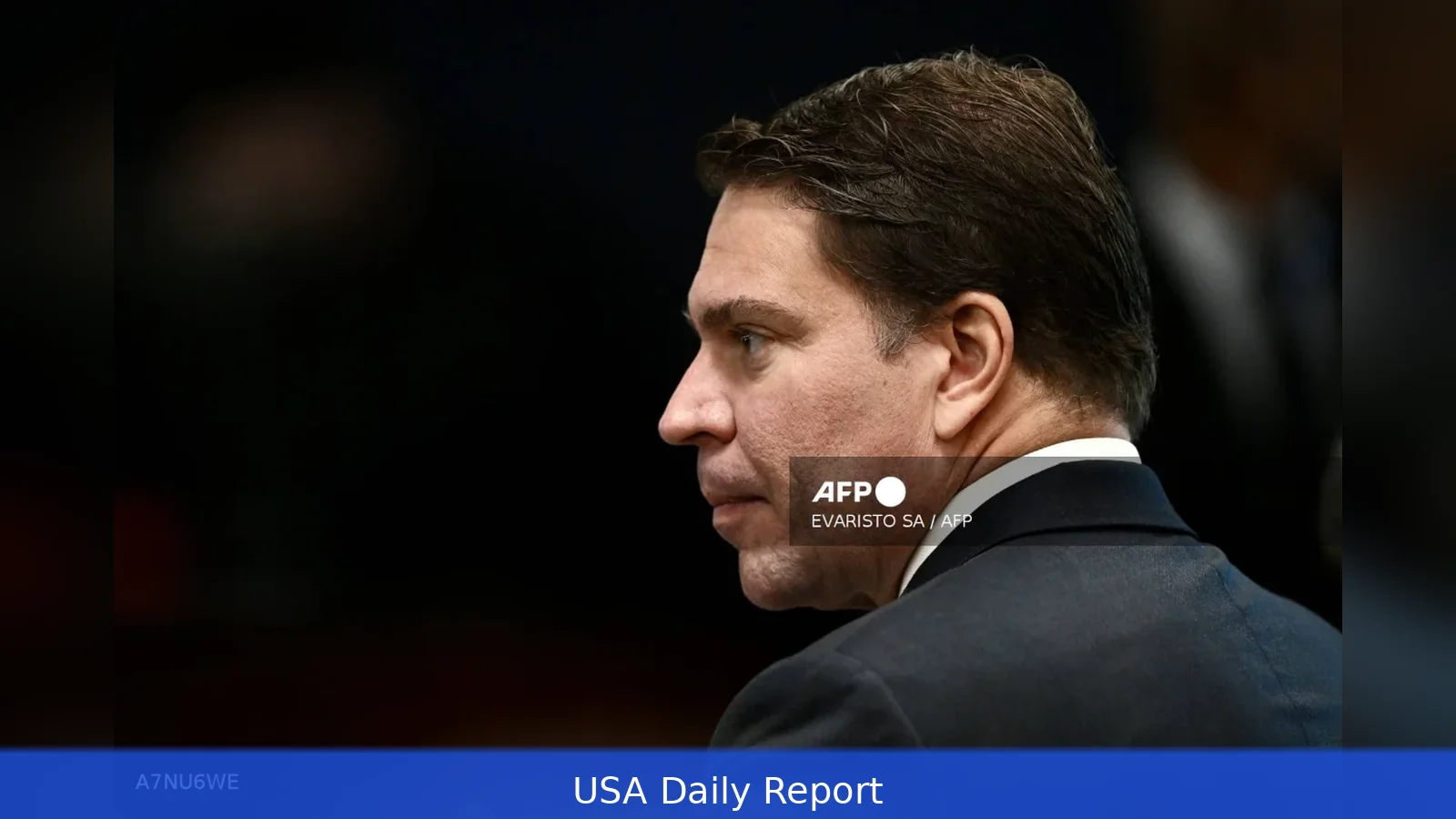
Brazil's former spy chief was released from U.S. Immigration and Customs Enforcement custody. He thanked Donald J. Trump and Senator Marco Rubio in a social media post.
What happened
A former head of Brazil's domestic intelligence apparatus was released from custody by U.S. Immigration and Customs Enforcement after a period of detention in the United States. In a social media message after his release, the former spy chief praised U.S. Political figures and described their response as sympathetic, saying they had dealt with "the sensitivity with which they dealt with this true national hero, who doesn't give up even when he is being persecuted."
U.S. authorities took a senior Brazilian ex-official into custody; ICE held him, and he was later released. The official used his first public comment after that to single out two American figures by name — Donald J. Trump and Senator Marco Rubio — thanking them for their handling of his case.
U.S. Immigration and Customs Enforcement handles immigration detention and removal operations, and its custody decisions can be driven by immigration status, outstanding warrants, or requests from other governments.
Detention of high-profile foreign nationals tends to draw diplomats, lawyers and reporters, and it can trigger rapid diplomatic activity.
How the release unfolded
Details released publicly about the timing, legal basis and conditions of the detention are limited. What's clear from the former spy chief's post is that his release came before he issued a direct public comment, and that he felt the intervention of named U.S.
Political figures played a role in how authorities handled his case.
ICE doesn't always publish full custody records, so cases with foreign officials often unfold behind closed doors. Lawyers file petitions, diplomats get involved, and agencies balance immigration rules with foreign-policy concerns. Those processes can move quickly or drag on for months, depending on the circumstances.
And those processes often intersect with public messaging. The former spy chief's social media post is itself part of that picture: a rapid public statement intended to shape perceptions at home and abroad.
Diplomatic and political implications
The release touches both U.S. Domestic politics and U.S.-Brazil relations. When a high-profile foreign national is detained or freed on U.S. soil, it quickly becomes a matter of diplomacy as well as law. Public thanks directed at named U.S. Figures can be read as an attempt to frame the episode as resolved through political goodwill rather than strictly legal channels.
For the United States, the episode may be awkward. U.S. Officials balance enforcement of immigration laws with the need to maintain stable diplomatic ties. If a detained foreign official is seen as politically exposed in his home country, Washington's handling of the case can prompt scrutiny from Congress, from U.S. Allies, and from private-sector stakeholders who care about predictability and the rule of law.
Within Brazil, the reaction will depend on domestic politics. Some political factions may treat the former spy chief's detention as evidence of politically motivated targeting, while others will demand clarity about the official's conduct and any legal issues that led to the detention. That split could open another front in Brazil's already heated political debate over the role of intelligence services and the boundaries between national security and partisan politics.
Economic fallout and investor concerns
Economically, one detention is unlikely to move markets much—unless it sparks broader political instability. Foreign investors prize predictability. So do companies with cross-border operations between Brazil and the United States. An incident that heightens political tensions can cause a short-term spike in risk aversion among international investors, especially if it sparks retaliatory measures or public disputes between capitals.
Still, Brazil is a large and diversified economy. Trade ties, commodity flows and investment links with the United States run deep. One detention and release by ICE won’t change trade balances or investment fundamentals overnight. What could matter more is how the episode is used politically back in Brazil. If it becomes a rallying point for policy shifts, protectionist rhetoric or legal reforms affecting foreign firms, then business leaders will pay close attention.
Right now, the most tangible economic effect is reputational: firms watching closely to see whether bilateral cooperation on law enforcement and intelligence will be affected. That matters for sectors that rely on security cooperation — energy, infrastructure, and technology among them.
Legal questions and next steps
Legally, a release from ICE custody doesn't automatically resolve all outstanding issues.
The former spy chief may still face immigration hearings, potential removal proceedings, or inquiries from Brazilian authorities depending on the underlying facts. At the same time, the public statement thanking named U.S. Figures suggests his legal and diplomatic teams secured the immediate outcome they sought.
The interplay of law and diplomacy is central here. U.S. Immigration rules are enforced by civil authorities, but when foreign officials are involved, the State Department, the U.S. Attorney's Office and other agencies sometimes get pulled into the process. Those agencies weigh legal obligations alongside bilateral relations, public opinion and congressional interest.
He'll probably focus first on securing his immigration status and resolving any U.S. legal issues.ng any allegations, and managing the narrative back home. For the U.S., the priority is making sure the case is handled within the confines of law while avoiding an unnecessary rupture with a major partner in the Western Hemisphere.
What it means for U.S.-Brazil ties
U.S.-Brazil relations encompass trade, security cooperation, environmental diplomacy and people-to-people ties. Episodes like this test the resilience of those relations because they mix domestic politics with international law. The way officials in both capitals manage fallout will determine whether the episode fades quickly or becomes a persistent irritant.
Frankly, the best-case scenario is a quiet legal resolution and a return to normal diplomatic business. The worst-case scenario is headline-driven escalation that provokes retaliatory measures or hardens domestic political positions in Brazil, complicating cooperation on other issues.
Either way, the public thanks addressed to Donald J. Trump, former U.S. President, and Senator Marco Rubio of Florida are a reminder that domestic political actors in the United States can end up playing an oversized role in bilateral disputes — even when the core matter appears to be legal or administrative.
That intersection of politics, law and diplomacy is the real story here, not just the fact of a release. How each side plays its hand next will shape outcomes for both countries — and for businesses and citizens who rely on steady cooperation across the hemisphere.
Related Articles
- Beirut wary of Lebanon-Israel talks
- Magyar urges quick handover amid Hungary veto standoff
- India Warns Iran War Could Mirror Covid Shock
"the sensitivity with which they dealt with this true national hero, who doesn't give up even when he is being persecuted," the former spy chief wrote on social media after his release.


