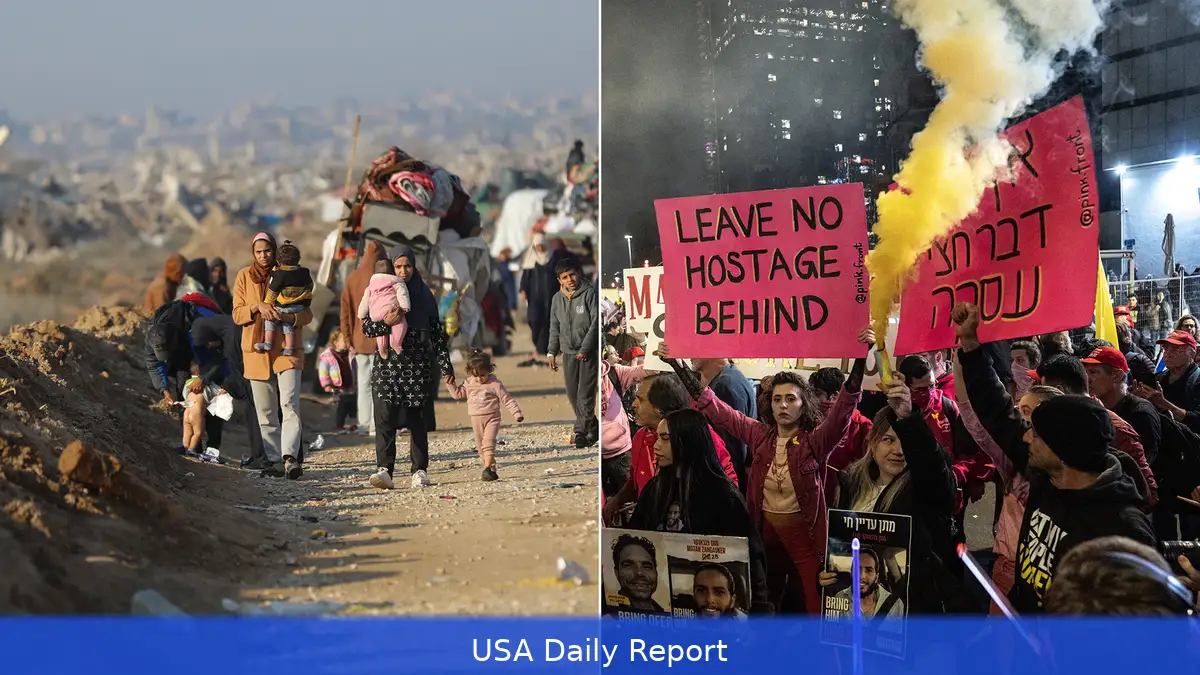
He lost his parents on Oct. 7, 2023. An Israeli and a Palestinian who both lost family now travel the world together for peace.
A personal bond born from grief
Maoz Inon, an Israeli who ran a travel business before turning to activism full-time, lost his parents, Bilha and Yakovi Inon, during the Oct. 7, 2023 attack that killed more than 1,100 people, according to accounts by the two men. Aziz Abu Sarah, a Palestinian and founder of the socially conscious tour company MEJDI Tours, had lost his brother Tayseer decades earlier during a period of upheaval. Both men say those family losses reshaped what they saw as possible — and what they owed the next generation.
They first met years before the 2023 war, in Jerusalem over tea. The meeting didn't spark a dramatic alliance back then. It started small — a conversation, then occasional messages on social media that kept them in touch. Over time, each continued his work running travel businesses that aimed to expose people to the other's narrative.
When the Oct. 7, 2023 violence exploded across the region, their relationship changed. Abu Sarah reached out to Inon as he reeled from the deaths of his parents. "I lost my parents on Oct. 7, but I won a brother," Inon said.
For both men, grief pushed them into action rather than into retreat.
Look, their partnership is personal. It's not a campaign manufactured in a conference room. It's two people who built a shared public life from private catastrophe — and they're using that public life to argue that co-existence is still doable.
From tourism to advocacy
Abu Sarah's path to reconciliation began long before 2023. As a child he lost his 19-year-old brother, Tayseer, after the young man was arrested during the First Intifada and died soon after his release, Abu Sarah has written. "For the rest of my youth, the idea of revenge consumed and drove me," he wrote in a personal essay from 2016.
He shifted course after learning Hebrew and meeting Jews who had emigrated to Israel. Over time he set up MEJDI Tours, a travel company built around telling both Israeli and Palestinian stories to visitors. The idea was simple: when people travel together and hear each other's versions of history, some of their walls come down. For Abu Sarah, that work moved from tourism to public advocacy after 2023.
Inon, who had run his own travel business, stepped away from the commercial side of tourism and embraced full-time activism after Abu Sarah reached out. The men now tour together, speak to audiences across Europe and beyond, and use their joint story as a platform to argue for concrete steps toward coexistence. They co-authored a book, The Future Is Peace: A Shared Journey Across the Holy Land, which chronicles their experiences and sets out an agenda for change.
Thing is, they don't sell a quick fix. They point to history and to slow diplomatic progress as a model. Their timeline is ambitious: they tell audiences they aim to help make Israeli-Palestinian peace happen within five years, citing the roughly five-year span it took for Egypt and Israel to sign a peace deal after the 1973 war.
High-profile encounters and symbolic acts
The partnership has attracted international attention. The two have participated in symbolic events and met religious leaders while promoting their message. In 2024 they visited the Vatican and carried the Olympic torch in Italy in January ahead of this year's Winter Games, turning symbolic gestures into media moments meant to amplify their call for dialogue.
Those public appearances are part advocacy, part storytelling. They let a small cadre of people put faces to a narrative many political actors find awkward: that two people who lost family in the same cycle of violence can build an enduring alliance that rejects revenge.
Some audiences respond. Governments and international NGOs often flag grassroots reconciliation efforts as complementary to diplomacy. But grassroots work rarely flips negotiation tables. The men know that. Still, they say their work creates pressure for political leaders to consider alternatives to military or zero-sum approaches.
Political and economic implications
Their work comes at a time when the conflict has ripple effects well beyond the region. The 2023 war hardened positions globally, and the men argue their story offers a different narrative that could matter for diplomacy and for foreign policy debates in capitals such as Washington.
U.S. Policymakers face competing pressures: managing strategic alliances and humanitarian concerns, while navigating domestic political divisions over support for Israel and responses to civilian suffering in Gaza. Activists and public figures who present a shared Israeli-Palestinian perspective can influence how those debates are framed in U.S. Media and on Capitol Hill. Grassroots reconciliation can also shape public opinion among diasporas and among faith-based advocacy groups that lobby American lawmakers.
Economically, prolonged conflict feeds uncertainty in markets and strains regional trade and investment. While the men focus on social bridges, they argue that reducing animosity is a prerequisite for rebuilding commerce, tourism, and cross-border cooperation that could benefit ordinary people on both sides. If peace talks ever move forward, investors and aid donors will look for grassroots signals that communities are ready to cooperate — and groups like theirs try to provide those signals.
Right now, though, the street-level reality is fraught. Security concerns, displacement, and shattered infrastructure make recovery and normal economic activity difficult. The two activists say their immediate aim is to keep a different storyline alive — that people on both sides want to live and trade and raise families without constant fear. Whether that shifts the incentives of political leaders or international funders is an open question. They accept that, but insist it's worth trying.
How they argue for change
The pair's approach mixes personal storytelling, community programs, interfaith gatherings, and media appearances. They tell audiences about their losses. They also share examples of ordinary people who have met across lines and made small, practical agreements: joint cultural events, shared economic initiatives, and educational programs that bring Israelis and Palestinians into the same classrooms.
Those programs are designed to show that peaceful interaction can be habitual rather than heroic. Abu Sarah describes it as lowering the everyday temperature: when people meet regularly, they stop demonizing each other. Inon adds that when people hear the other side's pain without immediately denying it, there's room to build policy proposals that address fears on both sides.
They also put forward a political argument. Peace, they say, isn't only a moral aim — it's pragmatic. A stable region could attract tourism, investment, and reconstruction dollars that would otherwise be diverted by insecurity. They frame reconciliation as an economic as well as a social project.
Limits and skepticism
Not everyone is persuaded. Critics warn that individual relationships can't replace formal negotiations or accountability for violence. Some Israeli and Palestinian activists say the focus on interpersonal reconciliation risks sidelining core political grievances. The two men acknowledge those critiques. They say their work isn't an alternative to negotiation; it's a complementary strand designed to change public sentiment and create constituencies for compromise.
Still, their effort faces a simple reality: politics shapes outcomes more directly than people's emotions do. Leaders decide when and how to negotiate. But leaders also respond to publics. If the public mood shifts, even slightly, it can change the calculus in closed-door diplomacy.
So the question becomes: can two men and the network they build nudge a broad public enough to alter political incentives? They believe it's possible, and they're betting their reputations on it.
Related Articles
- U.S. and Iran Could Resume Face-to-Face Talks as Soon as This Week
- Cameroon separatists say they'll pause fighting for Pope Leo's visit
- IEA Says Half of Closed Gulf Oil Fields Could Restart Within Weeks
“I lost my parents on Oct. 7, but I won a brother,” said Maoz Inon, an Israeli peace activist and former travel business owner.


