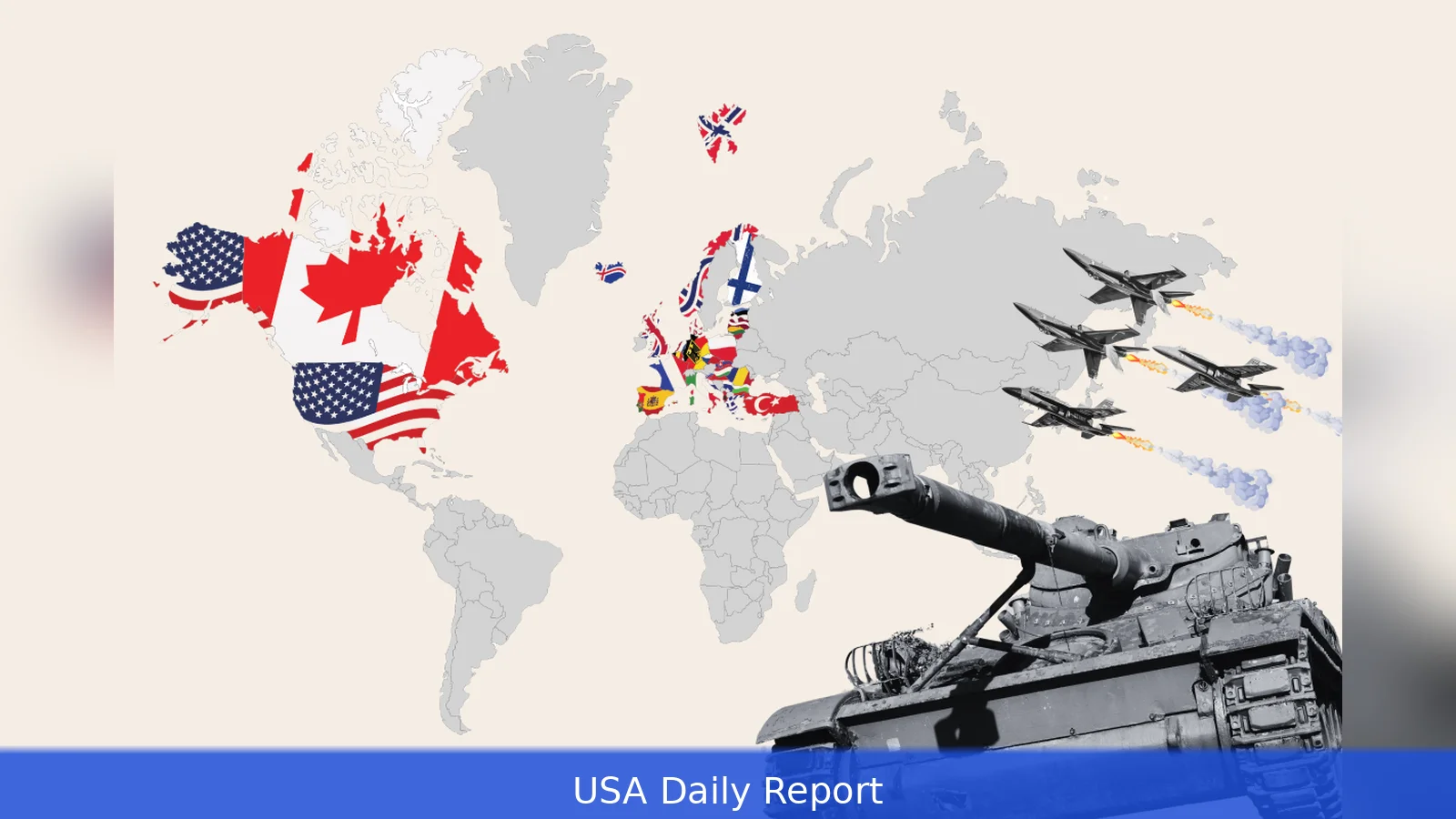
NATO set a 5% GDP defense pledge for allies.
What sparked the fight
NATO’s call for allies to aim for 5% of gross domestic product on defense by 2035 has forced a reckoning in Europe. Governments will need to scale up acquisition, recruit troops, and beef up industrial capacity to hit that target—fast. That’s a big lift: one analysis put the extra annual bill for EU countries at roughly $1 trillion versus 2024 levels.
Look, the arithmetic alone creates hard choices. Do countries buy off-the-shelf systems from established U.S. Suppliers, or do they pour cash into European factories to build a homegrown arsenal? The question has turned into a clash over who calls the shots: NATO, which sets capability goals, or the European Union, which controls many of the levers—money, regulation and industrial policy—to expand production.
How NATO and the EU define spending
The difference starts with definitions. NATO’s own guidance lays out what counts as defense spending: payments by central governments linked to their armed forces, allied operations, NATO common funding and approved trust funds. That includes salaries, pensions paid to retired military and civilian employees, stockpiled equipment, research and development, and military aid sent from one ally to another when the donor finances it.
That definition matters because it broadens the base of eligible outlays and can change the headline percentages countries report. For Brussels, the focus often shifts to targeted procurement and industrial subsidies that create sovereign production lines in Europe. And since the EU can direct funding, harmonize rules and spark joint procurement, officials in Brussels say they're better placed to mobilize the industrial response.
Where the tension sits
Officials in both institutions have been blunt. Some in Brussels argue that buying European-made systems is the only realistic way to get large quantities of equipment quickly and in a cost-effective way. NATO, by contrast, stresses allied interoperability and integration with U.S.
Systems—a stance that reflects longstanding operational ties.
Secretary General Mark Rutte, as cited in coverage of the row, warned EU lawmakers to "keep on dreaming" if they believe Europe can fully defend itself without U.S. Backing. That blunt line underlines a strategic friction: NATO worries that an industrial turn toward exclusive European supply chains could fragment alliance logistics and complicate operations.
But EU officials push back that relying on non-European suppliers risks long-term dependency and weaker European industrial bases. They've also pointed to political uncertainty across the Atlantic. President Donald Trump has repeatedly criticized NATO allies over burden-sharing and suggested the U.S. Might scale back support if contributions don’t rise. Such rhetoric has lent urgency to European arguments for greater strategic autonomy.
Numbers on the table
Those debates are happening against a backdrop of markedly higher defense budgets. The Atlantic Council’s NATO defense spending tracker, authored by Kristen Taylor, Julia Salabert and Zak Schneider, noted a sharp uptick: European allies and Canada boosted spending by about 20% in 2025 compared with the previous year, and all allies now clear the old 2% target. The tracker also recorded a milestone: Norway spent more per capita on defense than the United States for the first time on record, underscoring a rapid European scaling-up.
And the commitment to reach 5% by 2035—adopted at the Hague summit last year and reinforced in NATO planning—would, if fully realized, add roughly $1 trillion a year in spending by EU countries compared with 2024 baselines, according to reporting grounded in alliance estimates. That kind of money will shape industrial policy, employment in defense sectors, and arms export patterns across the continent.
Economic and industrial impact
Thing is, ramping production by that scale is an industrial project as much as a military one. Building factories, certifying supply chains and training workers takes time and money. The EU can offer grants, loan guarantees and procurement rules that favor domestic producers. Those tools change commercial incentives.
For U.S. Firms, the shift could mean both opportunity and competition. If European governments decide to prioritize local producers, American defense contractors could find themselves bidding for smaller market slices or pushed into industrial partnerships. That would push the transatlantic defense market toward joint ventures and industrial offsets rather than open procurement of U.S. Systems.
And financial flows will change. Governments will have to decide whether to keep buying technologies built around U.S.-origin components, which may be faster soon, or to fund retooling that replaces foreign inputs with European ones. The scale-up also creates spillover effects for allied economies: more defense jobs, higher defense manufacturing output, and shifting trade balances for high-tech components.
Political fallout and alliance logistics
The debate isn't merely commercial. Military logistics depend on shared standards and common platforms. NATO argues that fragmented procurement could add cost in the long run by forcing the alliance to sustain multiple systems, separate maintenance chains and divergent training doctrines. EU advocates counter that a resilient European supply chain makes the continent less vulnerable to geopolitical shocks and to political swings in Washington.
Right now, both priorities exist simultaneously: allies want interoperable forces able to operate with the United States, and they also want stronger domestic industry to assure supply in crisis. That dual demand is what’s driving friction between NATO and the EU as both institutions try to steer the same large expansion of military capacity.
What it means for the United States
The U.S. Is both partner and supplier in this story. Higher allied spending strengthens collective defense and buys more U.S.-compatible equipment for integrated operations. At the same time, if Europe pushes a protectionist tilt into procurement, American defense companies could face reduced market access or be pushed into sharing technology through costly industrial partnerships.
From a strategic perspective, Washington will have to juggle two objectives: encourage burden-sharing while preserving interoperable supply chains. If Europe becomes substantially more self-enough, the U.S. Could see a reduction in its leverage over European military capabilities—though dependence is a two-way street, and many systems will remain transatlantic in design and sustainment.
Practically, U.S. Policymakers will be watching EU procurement rules, subsidy programs and joint buying initiatives closely. Allies’ decisions on what counts as defense spending—whether they emphasize R&D, pensions, or procurement subsidies—will alter NATO burden-sharing metrics and influence how Washington calculates its own contribution relative to partners.
What's next
Expect the dispute to play out in policy committees and procurement offices, not just public statements. Leaders will press their cases ahead of key alliance meetings, and national capitals will weigh industrial policy against immediate operational needs. The Atlantic Council tracker, updated April 9, 2026, shows the spending surge is already underway and will be a touchstone for those debates at the July 2026 NATO summit in Ankara.
Related Articles
- Benin Activist Kemi Seba Arrested in South Africa
- Malaysia Eyes Aminul Islam’s Migrant Worker Platform
- Geelong refinery fire threatens Australia’s petrol supplies
Allies pledged at the Hague summit to aim for 5% of GDP on defense by 2035.


