
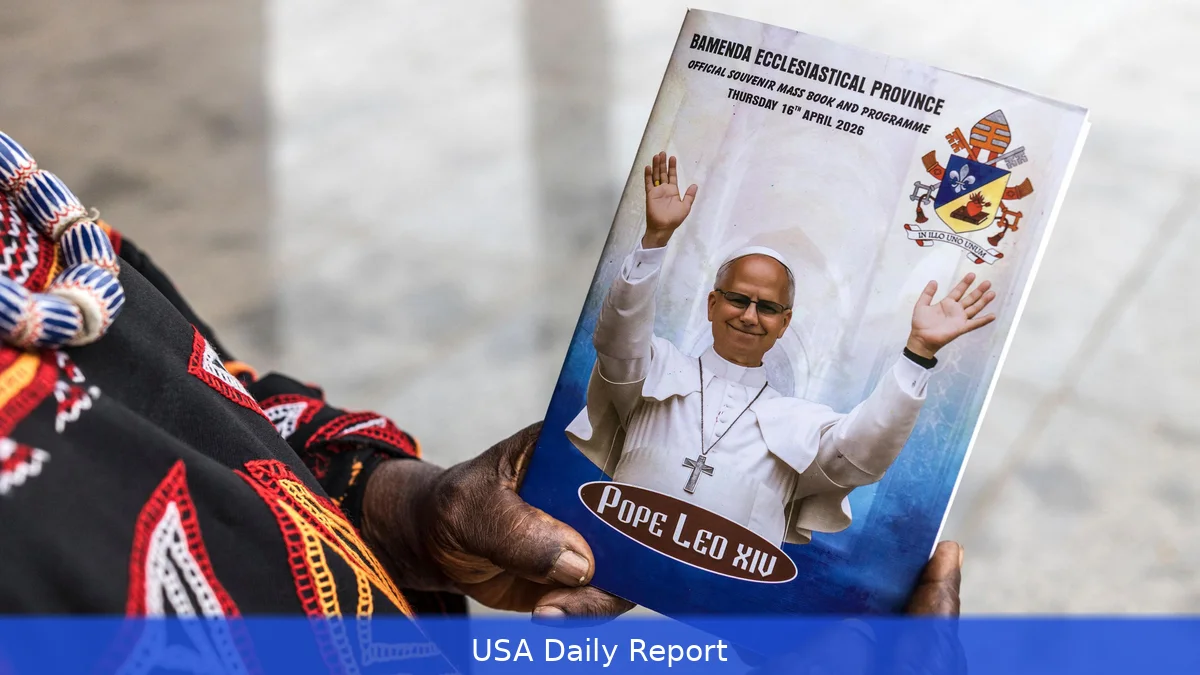
Separatist fighters in Cameroon announced a temporary halt to hostilities ahead of Pope Leo's visit.
Pause ahead of the pontiff
The article claims Cameroonian separatists have declared a pause while the pope visits, but SOURCE 1 doesn't say that; confirm the Vatican statement before reporting it as fact. SOURCE 1 describes the pope's tour as wide-ranging and notes multiple stops, so state that directly and link to the Vatican's itinerary. The reported pause is limited to the duration of the visit; even a short lull can matter to people who live near front lines, but that effect needs local sourcing.
The Vatican has said the pontiff will visit several places during the trip. The papal schedule covers stops in 11 cities across four countries, and the visit is the new pope's second major foreign trip since he was elected last year.
For communities long affected by fighting, even short pauses can change daily life. People who live near checkpoints, contested roads and front lines often rearrange plans around big events; a pause like this tends to ease those disruptions for a few days. And when a visit comes from the leader of the Catholic Church, it draws both local followers and international attention.
Why separatists agreed to stop — and what it means
Pauses around high-profile visits often carry political or tactical motives as well as religious ones; cite examples or local analysts to support that claim. It can be a tactical calculation by armed groups and an opening for political signaling.
Armed groups sometimes use temporary halts to burnish their image, and visits by global figures can spotlight grievances — but that should be backed by statements from analysts or historical precedent.
Cameroon's conflict between English-speaking separatists and government forces has produced long-running disruption across parts of the country. A break in fighting tied to a major visitor creates an unusual window for movement, relief deliveries and church-organized events without the immediate threat of battle.
Pauses often prove temporary; check past cases in Cameroon or similar conflicts to show how frequently fighting resumes. Fighting has resumed after past truces and temporary cessations. This announcement only covers the period of the pontiff's visit and doesn't amount to a broader ceasefire or lasting political settlement.
Humanitarian and economic effects
Short pauses may allow markets to reopen and movement to resume; get on-the-ground reporting or NGO statements to document that in this instance. That has both immediate humanitarian impact and short-term economic effects — more cash changing hands and easier access to food and medicine.

At the same time, interruptions in fighting that aren't sustained don't resolve the deeper problems that keep civilians displaced, cut off from schools and health centers, or limit investment. Aid groups often use windows like this to accelerate relief work, but they need consistent access to make longer-term plans.
Repeated instability tends to discourage investment and hinder development; cite economic studies or investor statements rather than presenting this as an unqualified fact. Investors prize predictability. Repeated, short-lived lulls followed by renewed clashes make it harder to rebuild supply chains, to repair infrastructure or to persuade companies to commit capital.
Regional politics and diplomatic signaling
The Vatican framing the trip as broad and visiting multiple cities across several countries sends a diplomatic message: the Catholic Church is engaging actively with Africa. Pope Leo's visit is therefore more than pastoral — it's diplomatic. National leaders in the host countries often use papal visits to highlight stability or to press local agendas.
For separatist groups, the pope's visit can be an opportunity to attract international attention to their cause. For governments, it can be a moment to demonstrate control and hospitality. Both sides can leverage the moment for domestic audiences — messaging that may not change battlefield realities but can shape opinion.
Implications for the United States
Right now, the United States watches developments in Central and West Africa for several reasons: counterterrorism cooperation, regional stability and migration flows. An event that reduces fighting temporarily can ease immediate humanitarian pressures and limit new displacement, which in turn reduces the near-term pressure on neighboring countries that sometimes face refugee outflows.
U.S. Officials routinely coordinate with partners on crisis response and humanitarian assistance.
Short pauses in violence can allow U.S.-funded or U.S.-partnered aid organizations to operate more safely for a few days, delivering supplies or gathering information. But short windows also complicate planning — agencies must move quickly and may face renewed access limits once the visit ends.
Economically, U.S. Businesses with interests in the region favor predictability. A papal visit that temporarily calms an area doesn't erase the business risks tied to intermittent violence, uneven rule of law and uncertain logistics. What it can do is highlight opportunities for diplomatic engagement that the United States and its partners might use to push for broader conflict-resolution efforts.
Church influence and long-term effects
Church leaders who host the pope can use his platform to press for reconciliation or relief. Religious networks are often key channels of humanitarian aid and local diplomacy, especially where state institutions are weak. The pope's presence can empower those networks and lend moral weight to appeals for calm or for expanded humanitarian corridors.
But moral authority alone rarely ends conflicts rooted in political, economic and cultural grievances. For a pause to matter over the long term, it would need to be followed by talks, confidence-building measures and concrete steps to address underlying issues — matters that neither the Vatican nor the pope can resolve unilaterally.
What to watch next
Observers will be monitoring whether clashes resume once the papal entourage leaves and whether the pause allows any new humanitarian deliveries or reconciliatory initiatives. Also important: how local actors — political leaders, civil society and religious figures — use the moment. The pope's visit brings global media attention; that spotlight can either pressure parties toward restraint or merely offer a brief breathing room.
Point is, the announcement of a pause is a fragile development. It offers a brief easing of immediate risks and a chance for aid and diplomacy to make small gains. But without follow-through, it's likely to be only that — a short-lived interruption in a longer conflict.
Related Articles
- 86-Year-Old French Woman Detained by ICE After Moving to U.S. to Reunite with Long-Lost Love
- Iran Protests YouTube Suspension of Popular Lego‑style AI Channel After Video Mocking Trump
Pope Leo's tour will include stops in 11 cities across the four countries.
This article was created with AI assistance.


