
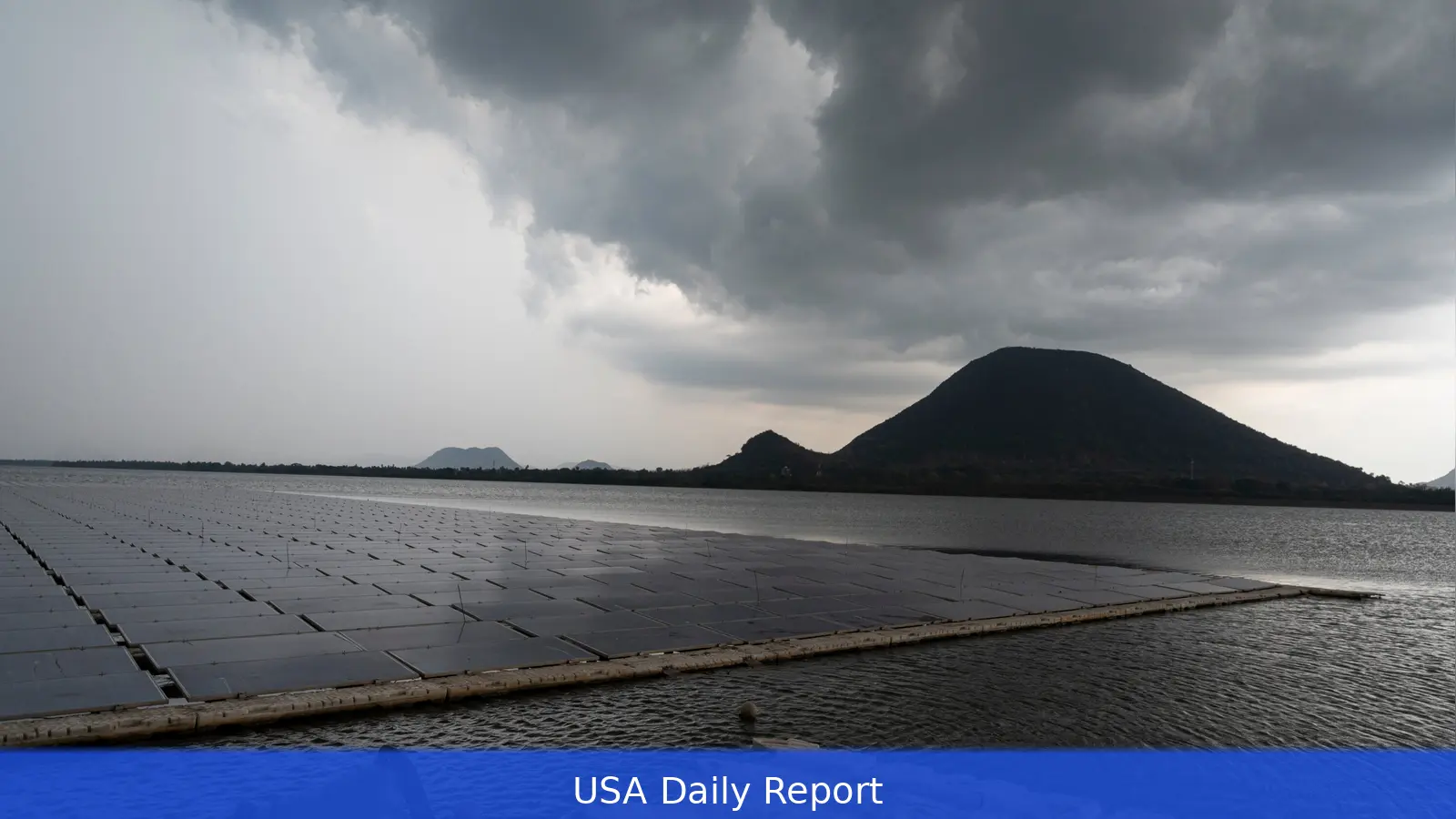
India's power grid showed strain as the West Asia war tightened fuel supplies. That strain has exposed a growing gap between the country's renewable-generation claims and its ability to deliver power. Now policymakers face a test: can new solar and wind plants actually keep homes and factories running?
Generation vs. Delivery
India celebrated a milestone last year when officials said the country could generate more than half its electricity from renewable sources. But Alex Travelli and Suhasini Raj, reporting for The New York Times, warned that "Getting that electricity to homes and businesses is a whole other challenge." Producing electricity and actually delivering it to people's meters are different challenges — generation is only half the job, and delivery needs its own fixes. The war in West Asia tightened access to fuels and left India leaning harder on its renewable fleet — and the stress revealed old weaknesses.
Renewable capacity has surged in recent years, but that surge hasn't solved every reliability problem. Solar parks and wind farms now dot many states. But capacity on paper doesn't automatically mean reliable service. Transmission bottlenecks, limited storage and an aging network mean much of that green power can’t always reach users when they need it most.
Horizon Investing described the situation as a creaking grid that's lagging behind the clean-energy push. The description captures why outages, shortfalls and price swings can show up even as overall renewable output rises. Panels and turbines matter — but the grid that links them to homes and factories matters just as much, and it often gets less attention.
Why the grid is the choke point
India's grid grew up around big, steady thermal plants and steady demand; it wasn't designed for lots of patchy, intermittent generators. It wasn't designed for an influx of distributed, intermittent sources that send variable electricity into the system. When clouds move in or the wind drops, supply can wobble.
We don't yet have the storage or flexible backups to smooth big drops or spikes in renewable output, so the system can struggle when conditions change fast.
Grid operators also face a technical challenge: moving large blocks of power from coastal or desert regions where renewable plants are sited to big population and industrial centers. That requires new high-voltage transmission lines, upgraded substations and smarter control systems. Investments in these areas lagged behind the rush to add generation capacity.
And the problem isn't just technical. Institutional issues — from pricing rules to coordination between states — make it harder to absorb rapid changes on the supply side. Market rules designed for conventional plants sometimes leave renewable producers with curbs on output or payments that don't reflect their value to the system. So the grid ends up underused at times, and overloaded at others.
Economic fallout and global ripple effects
When the grid can't deliver, industry feels it. Factories slow down. Small businesses lose revenue. Consumers face brownouts or need to rely on diesel generators — expensive and polluting backups. That undercuts some of the economic gains clean energy was supposed to support.

So what does this mean beyond India? For the global economy, the immediate concern is fuels. The West Asia war tightened supplies of oil and liquefied natural gas that India had been using as stopgaps, forcing New Delhi to scramble for alternatives. If India can't marshal its renewable fleet to fill the gap, the country may have to turn back to imports of fossil fuels.
Higher Indian demand for global fuels would add pressure to international markets. Energy-price moves ripple into inflation, trade balances and investor sentiment — effects felt in the United States and elsewhere. U.S. Companies with supply chains tied to India could see higher input costs; global markets could register increased volatility as demand patterns shift.
Political stakes at home
The government has staked political capital on a fast transition to clean power. Officials have touted capacity additions as proof that India is moving toward a greener grid. But voters experience electricity as a service — power that comes when they flip a switch. When the system falters, political confidence can erode quickly.
Alex Travelli and Suhasini Raj's reporting suggested the mismatch between claims about renewable generation and the lived reality of consumers is becoming a political headache. That gap could reshape debates ahead of elections, force policy shifts and redirect spending toward grid upgrades rather than new generation alone.
It's simpler to announce new solar and wind projects than to rewire decades of transmission lines and rewrite messy market rules — and those harder fixes are what actually keep the lights on. Policymakers now face choices about where to put scarce funds: more generation capacity, grid strengthening, or storage projects that can smooth intermittent output.
What India can do — and the limits
Options exist that don't require flipping a switch overnight. Faster approvals for transmission corridors, clearer market incentives for flexible resources and accelerated deployment of battery storage can help. Better forecasting and grid management tools can smooth how variable resources integrate. And regional cooperation among states on dispatch and pricing can reduce bottlenecks.
Still, upgrades take time, money and coordination across states and agencies — there are no quick fixes. Upgrades to high-voltage lines, large-scale batteries and control centers are complex projects that can't be completed in weeks. Meanwhile, industry and households still need reliable power. That tension explains why the West Asia war exposed problems so quickly: it didn't create weaknesses, it revealed them under stress.
International partners and investors will watch how India responds. There's appetite for financing grid modernization, and private capital can help — but investors want clarity on returns, regulatory stability and technical risk. How Delhi frames its policies will matter when banks and private funds decide whether to commit capital to long-duration storage, transmission projects or grid-scale upgrades.
What this means for U.S. Interests
The U.S. Has multiple touchpoints with India's energy transition. American firms are active in components supply, software for grid management, battery technology and financing. If India pivots resources toward grid strengthening, that could open markets for U.S. Companies.
At the same time, interruptions in India’s energy supply — and any resultant increase in global fuel demand — can affect U.S. Consumers and markets through higher energy prices and tighter global supply chains. Policymakers in Washington watch these dynamics because they can influence inflation trends and geopolitical calculations tied to energy security.
Finally, energy transitions are a diplomatic arena. Coordination on technology, standards and financing between the U.S. And India could smooth implementation and reduce the chance that shortfalls push either country back toward higher-emitting sources. Collaboration on long-duration storage, grid resilience and transparent market design is the sort of practical cooperation that helps both sides.
But fixing the problem will take more than pledges. It will take sustained investment, regulatory clarity and real projects on the ground. For now, the war in West Asia has simply made that need more visible, and more urgent.
Related Articles
"Getting that electricity to homes and businesses is a whole other challenge," Alex Travelli and Suhasini Raj wrote.
This article was created with AI assistance.


