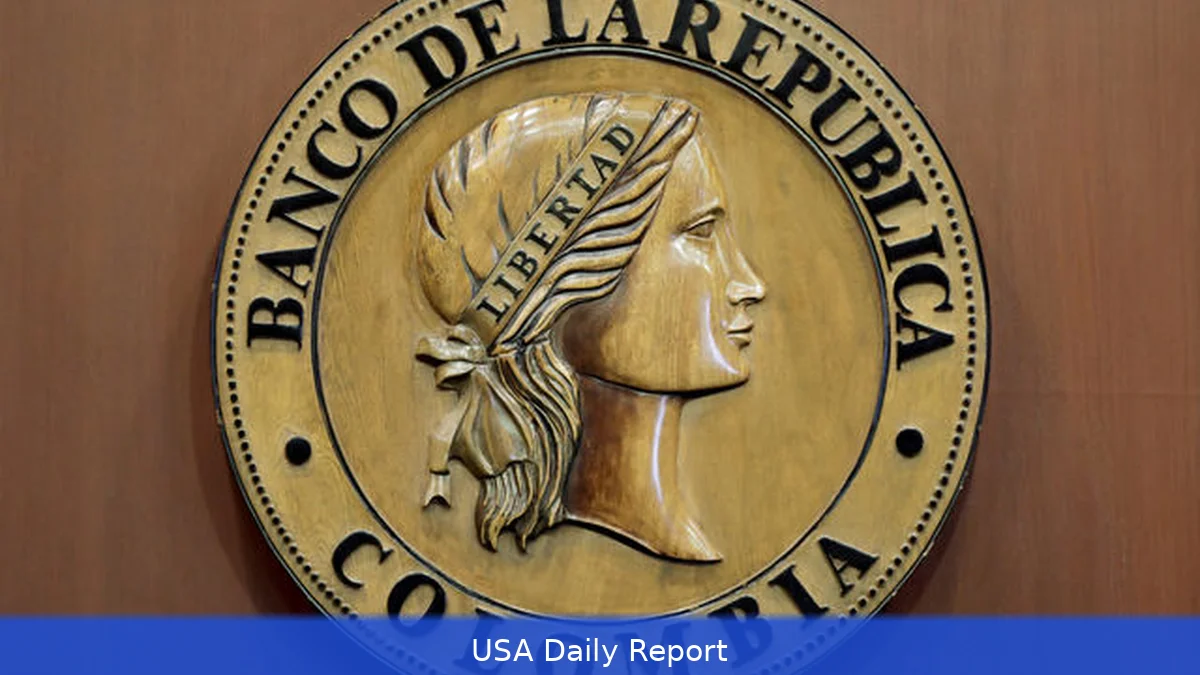
Diego Guevara resigned just three months after taking office as Colombia’s finance minister, which rattled the markets and raised questions about the central bank’s upcoming rate decision. The peso plunged, and investors scrambled to reassess the country’s economic trajectory.
Market Jitters After Minister’s Departure
Diego Guevara’s unexpected resignation sent shockwaves through Colombia’s financial markets. Seen as a champion of fiscal discipline, Guevara's departure unsettled investors who had been banking on his cautious approach. The peso tumbled to its weakest point since January, while swap rates surged, signaling heightened uncertainty.
Before Guevara stepped down, the market widely expected Colombia’s central bank to resume easing its monetary policy. Analysts had been anticipating a quarter-point cut to bring the benchmark interest rate down to 9.25% during the upcoming meeting. Since December 2023, the central bank had already trimmed borrowing costs by 3.75 percentage points, aiming to stimulate growth amid sluggish economic conditions.
But Guevara’s exit has shifted the narrative. Camilo Perez, economic research director at Banco de Bogota, said the chances of a rate cut have dropped significantly. "Our probability of a cut was 60%. Now, the likelihood of a hold is larger," Perez explained. The uncertainty around Colombia’s fiscal path, especially with an election year looming, has investors wary about how the new finance leadership will handle spending.
Split Views on Monetary Policy
The central bank's board is now more divided than ever. Some members want to push for deeper cuts to support the economy. Others favor caution, worried that too much easing could fuel inflation or weaken the currency further.
The recent decision to slow the pace of rate cuts to just 25 basis points, instead of the expected 50, was a clear sign of this split.
Finance Minister Guevara had advocated for faster easing to help the economy recover. Yet, many board members pointed to risks tied to Colombia’s public finances, especially with inflation still lingering above target and the peso down 12% against the dollar this year. The central bank’s statement mentioned that inflation would fall more slowly than previously thought, largely due to currency weakness pushing up domestic prices.
Guevara’s replacement, German Ávila, a close ally of President Gustavo Petro, takes office amid these tensions. Ávila’s appointment suggests a possible shift toward looser fiscal policies. Petro himself has criticized calls for spending cuts and debt repayments to private companies, signaling that the government might prioritize boosting spending over fiscal restraint.
Fiscal Concerns Cloud Economic Outlook
President Petro’s handling of the budget has sparked worries among investors and analysts alike. Bancolombia recently revised its forecasts, now expecting the benchmark rate to end the year at 7.5%, a full percentage point higher than its earlier projection. Sticky inflation and fiscal uncertainty have forced a rethink of the monetary path ahead.
Andres Pardo from XP Investments highlighted how Guevara’s exit increased fiscal risks, changing the outlook for the central bank’s next move. He now expects rates to remain steady, instead of the previously anticipated cut. The market’s confidence in monetary easing has taken a hit, as the new finance leadership might be less inclined to tighten the fiscal belt in an election year.
Latin America is also grappling with similar issues. Brazil’s recent fiscal troubles and currency volatility have made regional investors cautious. Colombia appears to be facing a parallel challenge: balancing the need to support growth while maintaining confidence in public finances.
Looking Ahead: What’s Next for Colombia’s Economy?
We’ll find out at the next central bank meeting if policymakers decide to keep rates steady or start cutting again. The board is divided, facing pressure from the government to ease policy while some members worry about inflation and the peso’s weakness.
With the peso already under pressure, another surprise move could further roil markets. The new finance minister’s approach to spending and debt management will be crucial. If fiscal risks rise, the central bank may have little choice but to pause its easing cycle for longer than expected.
With elections coming up and inflation stubbornly high, investors are keeping a close eye on how Colombia handles these issues. The next rate decision could set the tone for the country’s economic path well into 2024.
Guevara’s unexpected exit has changed what people expect from Colombia’s monetary policy going forward. No matter if the central bank holds rates or cuts them, the big question is whether Colombia can manage growth and fiscal discipline during this uncertain time.


