
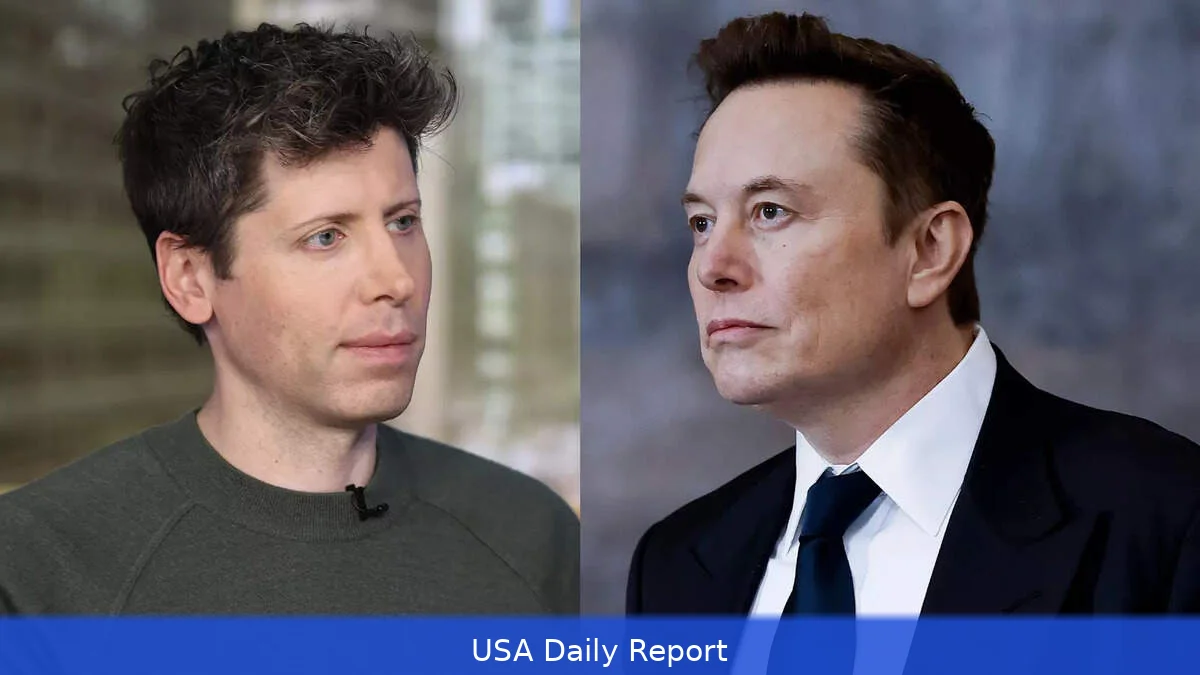
Elon Musk isn’t looking to pocket any money from his ongoing legal battle with OpenAI. Instead, the billionaire wants any financial damages awarded in the case to go directly to OpenAI’s nonprofit foundation, signaling a fight that’s about more than just cash.
Battle Over OpenAI’s Shift to For-Profit Status
In a recent court filing, Elon Musk laid out his demands as his lawsuit against OpenAI heads toward trial. Musk is pressing for the removal of OpenAI CEO Sam Altman and President Greg Brockman from their leadership roles, alongside a call for the company to reverse its for-profit restructuring. The suit revolves around claims that OpenAI, originally founded as a nonprofit research lab, abandoned its mission when it transitioned to a for-profit model, which Musk argues defrauded him as an early donor.
Back in 2015, Musk helped start OpenAI with a vision to build artificial intelligence in a transparent, nonprofit setting. The company promised to keep its research open and accessible. But in 2019, OpenAI created a for-profit arm to attract outside investment, including billions from Microsoft, which Musk contends turned it into a “closed-source de facto subsidiary.” That shift is at the heart of Musk’s accusations that he was misled when donating $38 million to the nonprofit entity.
Damages to Benefit OpenAI’s Nonprofit Foundation
Musk's approach is unusual because he wants any damages awarded to go to OpenAI's nonprofit side instead of to himself. Reports suggest Musk is seeking as much as $150 billion in damages — a staggering figure that underlines the scale of the dispute. But Musk insists the money should restore and support the original nonprofit mission, as opposed to enriching himself.
His legal team says the remedies aim to stop OpenAI’s charitable mission from being overshadowed by private profit interests. That includes a court order to restore the company’s nonprofit status and to remove Altman and Brockman from their roles in both the nonprofit board and the for-profit company.
The nonprofit, which holds a 26% stake in OpenAI’s for-profit arm, was created to oversee the company’s mission and ensure some measure of control over its commercial operations. Musk’s lawsuit argues that this arrangement was undermined when OpenAI took on outside investment and restructured.
Clashing Narratives and Rising Tensions
OpenAI fired back swiftly, labeling Musk’s lawsuit as a “harassment campaign” driven by ego and a desire to slow down a competitor.

The company points out that Musk left its board in 2018 after unsuccessfully pushing to merge OpenAI with Tesla, his electric vehicle firm.
Since then, Musk has launched xAI, an AI company that directly competes with OpenAI. Just last year, SpaceX — Musk’s space exploration company — acquired xAI, which also owns platform X (formerly Twitter), in a deal valuing the combined entity at $1.25 trillion. That move positioned Musk as a major player in the AI race, ramping up the rivalry with OpenAI.
OpenAI’s chief strategy officer, Jason Kwon, recently asked California and Delaware attorneys general to investigate Musk for alleged anti-competitive behavior. The complaint alleges Musk has coordinated attacks to undermine OpenAI ahead of the trial, which kicks off with jury selection later this month in Oakland, California.
Legal Stakes and Broader Implications
The case has major implications for the future of AI development and corporate governance of hybrid nonprofit-for-profit structures.
OpenAI’s transformation was meant to allow it to raise capital while maintaining its founding mission. But Musk’s lawsuit challenges whether that balance can be maintained when investors like Microsoft hold significant stakes.
Legal experts say Musk’s demand to restore nonprofit status is unusual, considering how big and influential OpenAI’s commercial side has become. The trial will probably scrutinize how much control the nonprofit arm truly holds and whether the company misled donors about its intentions.
Musk insists damages should go to the nonprofit side, not him, which suggests he wants to defend the original vision instead of seeking personal gain. That could resonate with investors and regulators watching the AI sector closely.
OpenAI’s restructuring and fundraising have paved the way for a potential IPO, which could be one of the tech industry’s biggest offerings. But the lawsuit threatens to cast a shadow over those plans, raising questions about governance and mission drift.
Elon Musk’s lawsuit is more than a billionaire clash; it’s about who controls AI’s future and how its benefits get shared. Musk’s lawsuit, which also targets Microsoft for its role in OpenAI’s evolution, aims to unwind years of corporate decisions, potentially reshaping the company’s path forward.
The trial’s outcome could impact the whole AI industry, influencing how startups organize and balance innovation with public good. The stakes couldn’t be higher.
Related Articles
- Customers Bank CEO lets AI run 30-minute earnings call
- Fed signals patience, projects one cut in 2026
- UAE Leaves OPEC — Saudi Arabia Picks Up the Slack
Jury selection for the trial is set to begin April 27 in Oakland, with all eyes on how the court will handle this sprawling dispute between two titans of technology and their visions for AI’s future.
This article was created with AI assistance.


