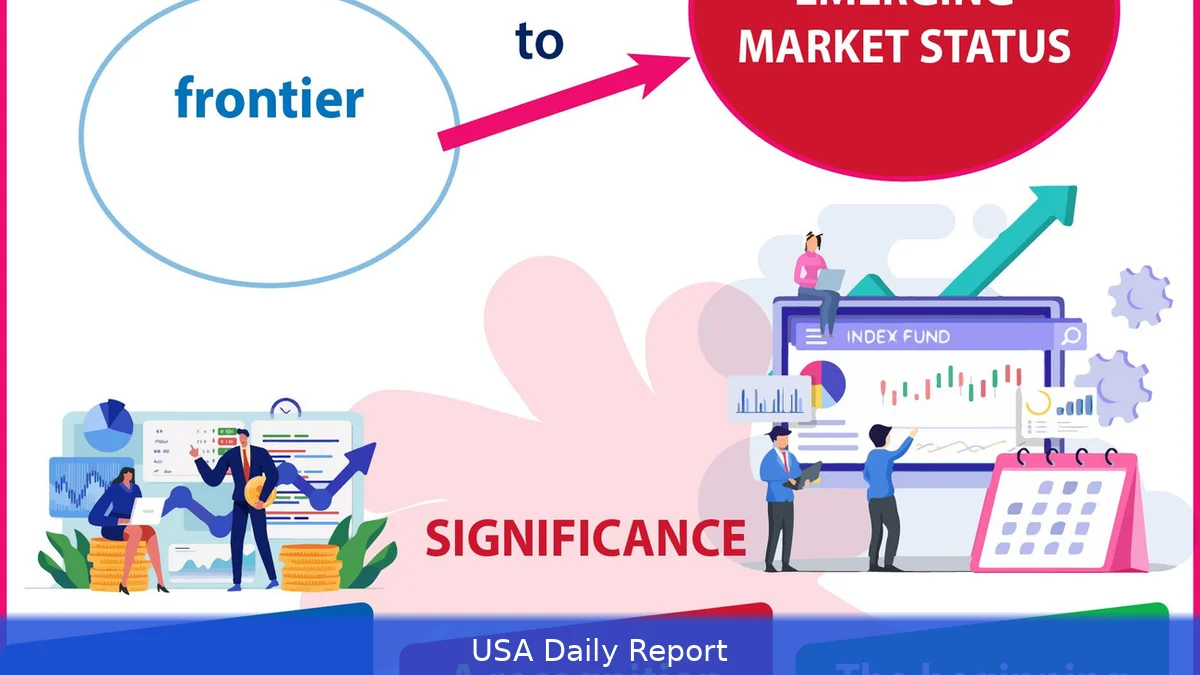
Vietnam will officially become an emerging market this September, a big step after years of reforms and growing investor interest. The FTSE Russell index provider’s decision could trigger billions in new capital inflows, reshaping how global investors view Southeast Asia’s fastest-growing economy.
Vietnam’s Journey from Frontier to Emerging Market
FTSE Russell announced on Tuesday that Vietnam will officially transition from frontier market to emerging market status by September 2026. This change isn’t just a new label; it shows how Vietnam has worked hard to improve its financial systems and make it easier for foreign investors to participate. The upgrade comes after Vietnam met key criteria, including improved access for global brokers and regulatory reforms designed to make trading easier and more transparent.
One of the biggest hurdles was the ability of foreign institutional investors to operate through global brokers. Vietnam tackled this by removing pre-funding requirements that had previously discouraged outside money. They also implemented a formal procedure to handle failed trades, which adds much-needed clarity and confidence to the market. FTSE Russell viewed these steps as enough progress to grant the upgrade, setting the stage for a broader influx of international capital.
Vietnam’s share in the FTSE All-World Index is still very small—around 0.02%—but the impact could be significant. Passive funds alone are expected to pour around $6 billion into Vietnamese equities as a result of the new classification. That’s a big boost for a market that’s still relatively small by global standards but growing fast.
Why Emerging Market Status Matters
Getting emerging market status really changes the game. It’s a signal to the world that the market is mature enough to handle larger, more sophisticated investments. Investors often allocate bigger chunks of their portfolios to emerging markets because they offer a blend of growth potential and improving corporate governance.
Vietnam’s upgrade means it will join a club that includes countries like Brazil, South Korea, and South Africa — places that attract billions in foreign investment every year.
The timing is actually perfect. Global investors have been seeking diversification outside the U.S. As inflation and geopolitical tensions weigh on traditional markets. Many international markets, including Brazil and Japan, have outperformed the S&P 500 over the past year. Vietnam’s move to emerging market status could encourage even more investors to shift money into Southeast Asia, chasing growth and portfolio balance.
At the same time, this upgrade offers proof that Vietnam’s economic reforms are working. The country has steadily opened up its markets, improved regulatory frameworks, and enhanced transparency. For investors, these changes reduce risks and increase the attractiveness of Vietnam as a destination for capital.
Parallel Moves in Global Markets
Vietnam’s elevation comes alongside another notable FTSE Russell reclassification — Greece’s planned return to developed market status this September. Greece has spent a decade as an emerging market since the debt crisis but has now met all 22 of FTSE’s admission criteria. These include market capitalization, GDP per capita, and an investment-grade credit rating from the big three agencies.
Greece’s upgrade will add companies like Eurobank, National Bank of Greece, and Titan Cement to the FTSE Developed Markets Index. The parallel timing of these upgrades highlights shifts in the global index landscape, reflecting both economic recoveries and structural reforms worldwide.
Vietnam’s upgrade is especially important because it could bring in a lot of new investment. Passive funds tracking FTSE indices will need to adjust, which means buying Vietnamese stocks in line with their new weightings. That translates to billions in fresh demand, a powerful incentive for Vietnam’s equity markets to grow and mature.
What Investors Should Watch
So, what should investors do? Buy now or wait? The answer depends on risk appetite and strategy. The upgrade is factored into prices to some extent, but the actual capital flows won’t kick in until the implementation date in September. That said, many funds are already positioning themselves ahead of the change.
Vietnam’s market remains volatile and less liquid than more developed peers. Foreign investors still face challenges such as regulatory uncertainties and geopolitical risks tied to the region. But the upgrade reduces some barriers and signals longer-term stability. It opens doors for more institutional money, which can bring steadier capital and better market practices.
Investors in broad emerging market ETFs, like the Vanguard FTSE All-World UCITS ETF USD Accumulation, will see Vietnam’s weighting increase, albeit modestly. The bigger impact may come from standalone Vietnam funds or regional Asia funds that can leverage the upgrade to attract new inflows and improve liquidity.
Keep an eye on how Vietnam’s government and regulators continue to implement reforms. The 2026 upgrade wasn’t handed out lightly — it’s proof that Vietnam passed a thorough review. But maintaining emerging market status requires ongoing improvements, including better corporate governance, transparent accounting standards, and more open capital markets.
Also, keep an eye on outside factors. The global economy is in a tense spot.
Inflation fears, geopolitical tensions in the Middle East, and trade uncertainties remain. These could create bumps for emerging markets overall, including Vietnam, even as the long-term story stays positive.
Vietnam’s upgrade to emerging market status by FTSE Russell is a milestone that could reshape capital flows into Southeast Asia. Coming in September 2026, it confirms the country’s rise as a more accessible and attractive investment destination. For global investors, it adds a new chapter in the story of diversification and growth beyond established markets.


