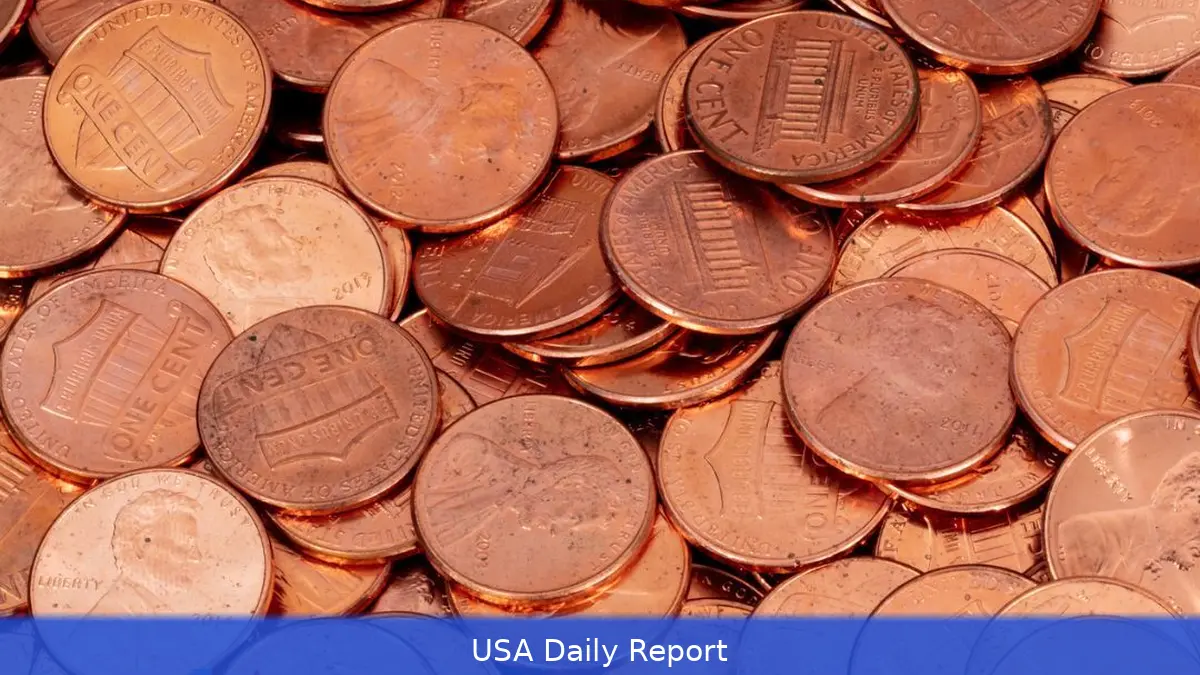
Last week, the Philadelphia Mint struck the very last U.S. Penny. It’s a quiet end to a long chapter in American currency. But the penny’s disappearance isn’t just about coins — it’s shaking up businesses, consumers, and how we handle cash.
The Costly Life of a Penny
For decades, the penny has been a staple of American wallets and coin jars. Yet, producing this tiny coin has become a losing game. Each penny costs about 3.69 cents to make, more than triple its face value. That discrepancy pushed the U.S. Government to act.
Back in February, President Donald Trump ordered the Treasury Department to halt penny production. The move followed a recommendation from the Department of Government Efficiency, which highlighted that minting billions of pennies was costing taxpayers more than $179 million in fiscal year 2023 alone. The decision wasn’t just about saving money; it was a response to shifting consumer habits and economic practicality.
It’s not just pennies that are problematic. Nickels also cost more to produce than their worth, adding to the strain on the mint and taxpayers. Yet, pennies have always been the bigger headache due to their low value and sheer volume in circulation.
Disappearing Pennies and Everyday Transactions
Some businesses have already noticed the penny shortage firsthand. Stores across the country report running low on pennies, forcing them to round cash transactions to the nearest five cents.
This rounding either rounds up or down, depending on the establishment — a small change with big consequences.
At some fast-food chains like McDonald’s, cashiers have had to adopt rounding policies to cope with the coin scarcity. Customers paying with cash sometimes volunteer to round up their bills to avoid needing pennies, often donating the extra cents to charity. Other locations simply round down for all customers, regardless of payment method.
But the patchwork of rounding rules is causing headaches. At least 10 states and several localities have laws barring transactions from being rounded to the nearest nickel. This leaves retailers caught between complying with state laws and managing practical cash handling challenges.
Honestly, austen Jensen from the Retail Industry Leaders Association emphasized the confusion: "Thousands of retailers can’t get pennies, leaving them scrambling to manage transactions and stay within legal boundaries." Congressional lawmakers are reportedly aware of the issue and may act once government activity resumes.
Rounding and Its Ripple Effects on Business
The rounding issue goes beyond simple customer payments. It complicates how businesses calculate sales tax and manage point-of-sale systems. PwC warned in a recent report that inconsistent methods could expose companies to sales tax audit risks, especially those operating in multiple states with differing rules.
That means retailers must rethink their cash registers and accounting software to handle new rounding rules — or risk compliance problems. It’s a costly and complex adjustment for companies, especially smaller businesses without sophisticated systems.
Why Pennies Won’t Vanish Overnight
That said, even though the minting of pennies has stopped, these coins won’t disappear from wallets anytime soon.
There are roughly 250 billion pennies still circulating, according to the American Banking Association. Sure, the supply of new pennies has dried up, the existing ones will linger for years, slowly moving through commerce.
Still, the flow of pennies is slowing. Many Federal Reserve coin distribution centers have stopped accepting pennies, and fewer pennies are entering daily circulation. Over time, this will reduce their presence in the economy.
Changing Attitudes Toward Coins
For many Americans, coins have become a nuisance. Most people rarely use pennies or nickels, with cash payments making up only 16% of transactions in 2023. A 2022 Pew survey found that 40% of consumers never use cash at all. That means coins often sit neglected in jars or get tossed out, effectively wasting millions of dollars every year.
Kevin McColly, CEO of Coinstar, encourages Americans to see their coins differently. Instead of clutter, coins are valuable currency and recyclable metal. His company converts about $3 billion in coins to cash annually, helping people reclaim the buying power trapped in their coin jars. On average, a coin jar contains about $58 in coins, but people usually underestimate its worth by half.
McColly urges consumers to bring their coins to banks or credit unions, which often accept coins for free. He argues that if more Americans recycled their coins into the system, the Mint wouldn’t need to produce as many new ones, easing the burden on natural resources.
The Emotional and Cultural Role of the Penny
Beyond its monetary value, the penny holds a sentimental place in American culture. For many, it’s a symbol of luck or a keepsake tied to personal memories. Some traditions, like carrying a penny for good luck or finding heads-up pennies as small signs, continue to thrive despite the coin’s declining practical use.
David Ulin, a writer and editor, recalls how pennies helped him navigate childhood challenges — literally and emotionally. His story shows that the penny’s role wasn’t always financial but often psychological, offering hope and comfort in difficult times.
Though production has ended, pennies will remain a part of America’s cultural fabric for years to come. They’re more than just coins; they’re little pieces of history, memory, and superstition.
While the penny may no longer be minted, its impact on commerce, culture, and daily life is far from over. Businesses are adjusting to new rounding rules, consumers are rethinking how they use coins, and the country is slowly moving away from its smallest denomination. The question now is how smoothly this transition will unfold and what new habits Americans will develop as the penny fades into history.


