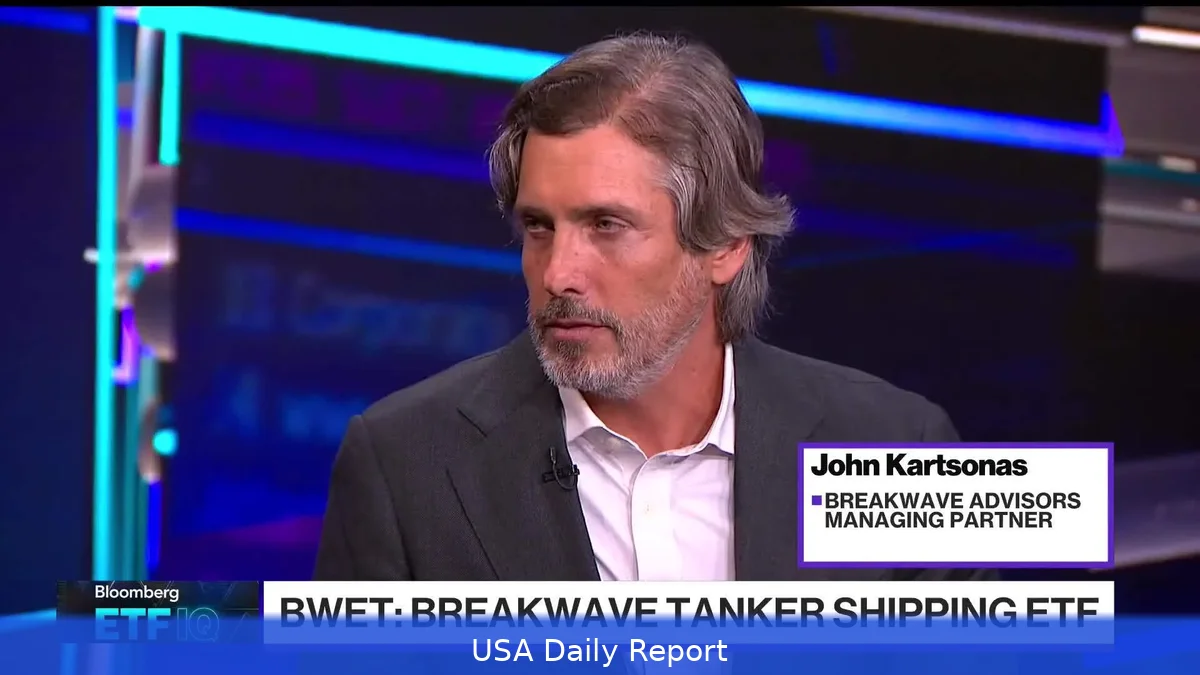
One ETF led the returns in 2026, and its manager has become a key figure for investors. Here, we break down who manages the fund, why it performed so well, the impact of fees and structure, and which other managers are worth watching. It's a quick read with practical info and actionable numbers.
Quick-reference summary
- Top manager (2026): Vanguard (manager of the Vanguard Energy ETF, VDE) — VDE reported a 26.8% year-to-date return in 2026 and carries a 0.09% expense ratio.
- Close contender: BlackRock (iShares) — its Expanded Tech Sector ETF (IGM) holds 280 stocks; top 10 make up 56.9% of the fund. BlackRock manages about $12.5 trillion in client assets and roughly $3.3 trillion in ETFs.
- Other managers to watch: Invesco (QQQ), State Street (SPY), Vanguard (VTI/VGT), Fidelity, ARK Invest (ARKK), Charles Schwab, VanEck, Franklin Templeton, J.P. Morgan Asset Management.
How this list is structured
Each entry shows the manager, highlights their top ETF for 2026, outlines key features, pros and cons, who should invest, and typical fees. The list ranks the manager of the top ETF first, followed by nine other top active and passive managers, based on assets, product quality, and 2026 performance.
Ranked list of managers (1–10)
1. Vanguard — manager of the best-performing ETF of 2026
Key features: Vanguard is the institutional manager behind the Vanguard Energy ETF (VDE), which led performance in 2026 with a 26.8% year-to-date return. VDE holds about 106 energy-related stocks and targets large U.S. Energy companies, exploration & production firms, and service names. Expense ratio: 0.09% (about $0.90 per $1,000 annually).
Pros: Low cost, index-based exposure to the U.S. Energy sector; transparent holdings and high liquidity; strong track record in index replication. VDE’s concentrated exposure to majors and large E&Ps helped produce the 26.8% YTD gain in 2026.
Cons: Sector concentration — if energy reverses, VDE will fall hard; top holdings carry oversized influence (E&Ps make up roughly 21.9% of the fund’s weight). Not for investors seeking broad diversification.
Best for: Investors betting on commodity-driven upside or building a sector sleeve within a diversified portfolio.
Pricing: Expense ratio 0.09% — $0.90 per $1,000 invested per year. Trading costs vary with brokerage; bid-ask spreads are generally narrow for VDE.
2. BlackRock (iShares)
Key features: BlackRock is the world’s largest asset manager, overseeing roughly $12.5 trillion in client assets and about $3.3 trillion in ETFs. One iShares ETF that dominated tech exposure in 2026 was the iShares Expanded Tech Sector ETF (IGM). IGM holds ~280 tech and tech-adjacent stocks and has delivered strong multi-year outperformance relative to the S&P 500 since it launched in 2001.
Pros: Massive scale and liquidity, deep product suite, strong index replication and trading infrastructure. IGM’s top-10 holdings represented 56.9% of assets — leverage to market leaders like Apple (9.13%), Nvidia (8.56%), and Microsoft (8.42%).
Cons: Size can mean slow product changes; some iShares sector ETFs are concentrated and can behave like single-sector bets. Fees vary across iShares line-up — not all iShares ETFs are ultra-cheap.
Best for: Investors wanting scalable ETF exposure, institutional traders, and those seeking tech-heavy portfolios.
Pricing: Expense ratios differ by fund; flagship iShares broad-market funds run very low (Vanguard and BlackRock often comparable). Check individual fund pages for exact fees.
3. Invesco
Key features: Invesco operates the Invesco QQQ Trust (QQQ) — the go-to ETF for NASDAQ-100 exposure. QQQ often ranks among the top performers in years when large-cap growth and tech lead.
Pros: High liquidity and tight spreads; strong historical performance during growth cycles; lots of trading-friendly product wrappers (leveraged and enhanced ETFs available).
Cons: Concentration in large-cap growth; higher expense for some specialty products (QQQ historically around 0.20%).
Best for: Traders and investors targeting big-cap growth and tech names.
Pricing: QQQ expense ratio near 0.20% — about $2.00 per $1,000 yearly.
4. State Street Global Advisors
Key features: Manager of SPDR ETFs, including SPY (SPDR S&P 500 ETF Trust) — one of the oldest and most traded ETFs. SPY is often used as the benchmark and liquidity anchor across markets.
Pros: Deep liquidity, institutional adoption, wide product set including sector and fixed-income ETFs.
Cons: Some SPDR funds are slightly more expensive than close peers; SPY’s expense ratio historically near 0.0945%.
Best for: Traders needing ultra-liquid S&P 500 exposure and institutions needing ETF-based cash management.
Pricing: SPY expense ratio historically near 0.0945% — about $0.95 per $1,000 per year.
5. Fidelity
Key features: Fidelity’s ETF lineup blends active and passive offerings with competitive fees. Fidelity is also notable for low-cost index products and some zero-fee funds historically.
Pros: Low fees, strong active managers in specialized strategies, integrated execution for retail clients using Fidelity brokerage.
Cons: Active ETFs carry manager risk; not every Fidelity ETF is the cheapest option in its category.
Best for: Fidelity brokerage clients and investors seeking low-cost, home-broker integration.
Pricing: Many Fidelity ETFs fall in the 0.03%–0.20% range depending on strategy; check the specific fund page for exact fees.
6. ARK Invest
Key features: Active, innovation-focused ETFs led by Cathie Wood. ARK ETFs concentrate in thematic names tied to AI, genomics, fintech and autonomy.
Pros: High conviction, potential for oversized returns when innovation stocks rally; clear thematic positioning.
Cons: High volatility and wide drawdowns in down markets; higher expense ratios (ARKK historically ~0.75%).
Best for: Investors with high risk tolerance and a multi-year time horizon seeking active equity exposure to disruptive themes.
Pricing: ARK Innovation (ARKK) expense ratio historically near 0.75% — $7.50 per $1,000 annually.
7. Charles Schwab
Key features: Schwab ETFs are known for very low fees — Schwab U.S. Broad Market ETF (SCHB) and others provide low-cost building blocks.
Pros: Very low expense ratios (often 0.03%–0.06%), investor-focused pricing and easy access via Schwab brokerage.
Cons: Smaller product library than Vanguard/BlackRock; some niche exposure gaps remain.
Best for: Cost-conscious retail investors and buy-and-hold portfolios.
Pricing: SCHB and core Schwab ETFs often around 0.03% expense ratio.
8. VanEck
Key features: Specialist in commodities, niche ETFs, and emerging markets. VanEck plays in gold miners, frontier markets, and thematic strategies.
Pros: Access to niche exposures not easily replicated elsewhere; deep experience in commodity and resource strategies.
Cons: Niche funds can be volatile and less liquid; fees vary widely.
Best for: Tactical allocations to commodities, natural resources, and country-specific bets.
Pricing: Expense ratios vary by fund — from low teens of basis points to higher for niche strategies.
9. Franklin Templeton
Key features: Global active manager with a growing ETF presence. Strength in fixed income, multi-asset and global equity strategies.
Pros: Deep active management capabilities, global reach, resources for bond and multi-asset ETFs.
Cons: Active fees higher than index ETFs; some offerings less liquid than big-brand peers.
Best for: Investors wanting active global equity or fixed-income ETF exposure.
Pricing: Varies by strategy — check specific ETF pages for up-to-date expense ratios.
10. J.P. Morgan Asset Management
Key features: Institutional-scale manager offering low-cost and active ETFs across equities and fixed income. Strong institutional execution and research support.
Pros: Institutional-grade trading liquidity and access to active management in ETF wrappers.
Cons: Some ETFs have limited retail visibility; fees vary.
That said, best for: Investors seeking bank-grade research in ETF format and institutions seeking multi-asset ETF solutions.
Pricing: Expense ratios vary by fund; many J.P. Morgan ETFs target competitive fees in the 0.05%–0.30% range.
How we chose these managers
We ranked managers by a mix of objective factors: the manager behind the top-performing ETF of 2026 sits at #1, then we considered assets under management, product liquidity, breadth of ETF line-up, and evidence of performance or asset flows through 2026. We also weighed fees, transparency, and whether a manager offers both passive and active choices across market cycles — factors that matter to both retail and institutional investors.
Numbers cited: Vanguard Energy ETF (VDE) returned 26.8% YTD in 2026 and charges a 0.09% expense ratio. BlackRock manages roughly $12.5 trillion in client assets and about $3.3 trillion in ETFs. The iShares Expanded Tech Sector ETF (IGM) holds ~280 stocks with top-10 concentration of 56.9% and large positions in Apple (9.13%), Nvidia (8.56%) and Microsoft (8.42%). Those facts drove the top rankings for Vanguard and BlackRock.
Step-by-step: How to evaluate the manager behind an ETF
1) Identify the manager and the specific ETF ticker. Look up the fund’s prospectus and fact sheet — find expense ratio, holdings, and inception date.
2) Check scale and liquidity: assets under management and average daily volume. Larger AUM and tight spreads mean easier trading and lower market impact.
3) Inspect holdings and concentration. Top-10 concentrations tell how dependent the fund is on a few names. IGM’s top-10 at 56.9% is a good example of concentrated risk.
4) Compare fees to peers. Ten basis points (0.10%) equals $1 per $1,000 per year — that’s a quick way to see if a fund is cheap or expensive. VDE’s 0.09% is a low-cost sector option; ARKK’s ~0.75% shows active management costs.
5) Look at benchmark fit and tracking error for index funds; for active ETFs check manager tenure, team experience, and historical alpha under similar market conditions.
Costs, eligibility and common mistakes
Costs: Expense ratio is ongoing. Trading costs include bid-ask spread and any brokerage commissions. Tax efficiency varies — ETFs are generally tax-efficient but sector or specialty ETFs can distribute larger capital gains in volatile years.
Eligibility: Anyone with a U.S. Brokerage account can buy ETFs.
Some institutional share classes require minimums. ETFs trade intraday like stocks, so standard margin or options rules apply based on brokerage.
Common mistakes to avoid:
- Chasing last year’s winner without checking concentration and fees.
- Ignoring the difference between fund manager (firm) and the index or strategy behind a fund.
- Overlooking tax consequences of sector ETFs or frequent trading.
- Assuming low fee equals best fit — strategy and exposure matter more than a few basis points sometimes.
Alternatives and comparisons
If a sector ETF like VDE led in 2026, consider alternatives depending on the goal: a broad commodity or energy mutual fund for active management; an international energy ETF for non-U.S. Producers; or an energy infrastructure ETF for yield and midstream exposure. For tech exposure like IGM, alternatives include Invesco QQQ for NASDAQ-100 concentration, Vanguard Information Technology ETF (VGT) for lower fees, or thematic active funds for targeted bets on AI or semiconductors.
Related Articles
- Self employment tax meaning: What it is, how it’s calculated, and how to pay it in 2026
- The best Zoom alternatives in 2026: Expert tested and reviewed
- Best Jobs in the US 2026 — Highest Paying and Most In-Demand
Final verdict: The firm behind the top 2026 ETF was Vanguard — its Vanguard Energy ETF (VDE) returned roughly 26.8% YTD and carried a 0.09% expense ratio. But the manager is only one piece of the puzzle — fees, concentration, liquidity and fit with portfolio goals matter more than headlines. Check the ticker, read the prospectus, and match strategy to time horizon before allocating real capital.


