
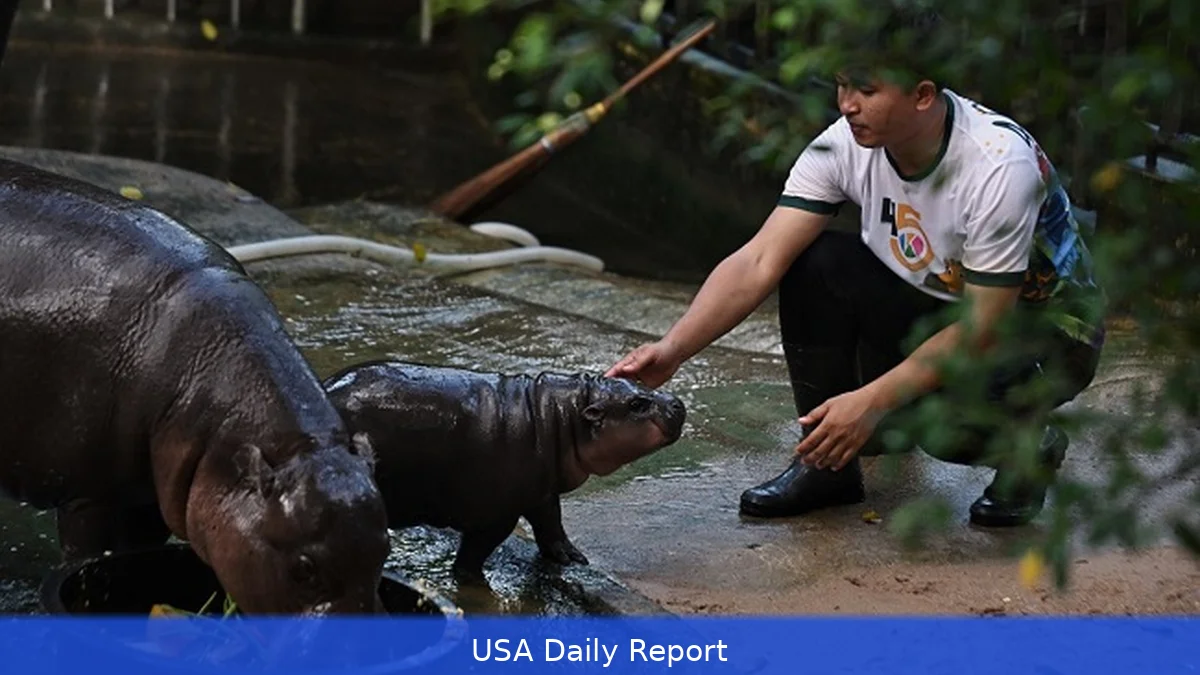
A man caught on camera breaking into the enclosure of Moo Deng, a baby pygmy hippo who became an internet sensation, has been fined $300 by a Thai court. The incident at Khao Kheow Open Zoo makes people wonder about animal safety and visitor conduct in wildlife parks.
Unexpected Intrusion into a Viral Star's Space
On a quiet evening last month, a man entered the enclosure of Moo Deng, a pygmy hippo whose charm has made her a global social media phenomenon. The zoo was nearly empty, and the keeper was momentarily away when the man climbed into the pen holding the endangered hippo and her mother, Jona. Security footage captured him holding a tablet, seemingly recording the animals up close.
Zoo officials quickly responded, and the man didn't attempt to flee when confronted. Police were called, and he was arrested for trespassing. After investigation, a Thai court fined him 10,000 baht, roughly $300. The man was released on bail, but the case sent ripples through the zoo community and animal welfare advocates.
Moo Deng: From Baby Hippo to Internet Sensation
Moo Deng’s story began when she was born at Khao Kheow Open Zoo in July 2024. The zoo shared adorable photos and videos of the baby pygmy hippo, whose playful antics and charming appearance quickly went viral. Memes spread across social media platforms, drawing attention not only from Thailand but from animal lovers worldwide.
Visitor numbers to the zoo surged, with thousands flocking to see Moo Deng in person every weekend. The zoo capitalized on her popularity by producing merchandise themed around Moo Deng, including clothing and souvenirs. The little hippo became more than just an animal exhibit; she turned into a cultural icon and a symbol of wildlife conservation efforts.
Security Gaps and Zoo Response
The breach exposed gaps in the zoo’s security protocols. Narongwit Chodchoy, the zoo’s director, acknowledged the need to rethink staff training.
"We train staff on what to do if any animals escape, but from now on, we will have to train them on what to do if there are any intruders," he said.
The zoo now plans to increase security patrols and tighten visitor supervision to prevent similar incidents. Both Moo Deng and her mother appeared unharmed but were reportedly startled by the encounter.
Veterinarians continue to monitor their wellbeing closely.

Implications for Wildlife Parks and Animal Protection
This incident shows how social media can turn animal enclosures into popular spots, sometimes causing problems. The demand for close-up experiences with charismatic animals like Moo Deng can sometimes lead visitors to cross boundaries, putting both themselves and the animals at risk.
Experts warn that even small intrusions can stress endangered animals. Pygmy hippos are endangered, and their safety in captivity is vital for conservation efforts. Zoos worldwide face similar challenges balancing public engagement with animal welfare.
Fines like this one send a clear message. The zoo’s director stressed the court’s decision sends a message that animal rights are protected, whether in the wild or in captivity. Though the fine is small, it shows Thailand is serious about protecting wildlife.
What Does This Mean for the U.S. And Global Zoo Practices?
Even though this took place in Thailand, zoos worldwide, including in the U.S., face similar challenges. How visitors behave and how zoos handle security are concerns everywhere. Americans who travel to see exotic animals or visit domestically managed zoos can face similar risks if regulations aren’t enforced.
U.S. Zoos hosting endangered species often implement strict guidelines to protect animals and visitors alike. But high-profile cases like this remind authorities that no system is foolproof. Balancing offering engaging wildlife experiences and ensuring safety is delicate.
Social media can boost an animal’s fame and bring in visitors, but it can also encourage risky actions. Zoos might need to up their game, investing in technology and staff training to prevent unauthorized access.
Viral animals like Moo Deng help bring in tourists and sell merchandise, which supports conservation. But trespassing incidents can hurt public trust and raise security and legal costs.
Broader Conservation and Ethical Questions
Conservation depends a lot on public support. Viral sensations can help raise awareness and funds, which are vital for endangered species. But the question remains — at what cost?
When visitors break rules or invade enclosures, they disrupt the animals’ environment and can cause lasting harm. The pygmy hippo’s case is a cautionary tale about respecting wildlife and the spaces they occupy.
Right now, zoos must weigh how to maintain accessibility without compromising animal welfare. This may require revisiting visitor policies, increasing educational outreach, and adopting new technologies for surveillance and crowd control.
People’s excitement about animals like Moo Deng shows how much they want to connect with nature. The challenge is channeling that enthusiasm responsibly.
Related Articles
- Maldives raid: Editors travel-banned, devices seized
- Falcon Heavy to launch ViaSat‑3 F3; Central Florida could hear sonic booms
- How to Watch Law & Order: SVU — All 26 Seasons
Moo Deng’s incident at Khao Kheow Open Zoo sheds light on the delicate balance between wildlife attraction and animal safety. As viral animals continue to draw crowds worldwide, zoos must adapt quickly to protect their stars and preserve the trust of visitors.
This article was created with AI assistance.


