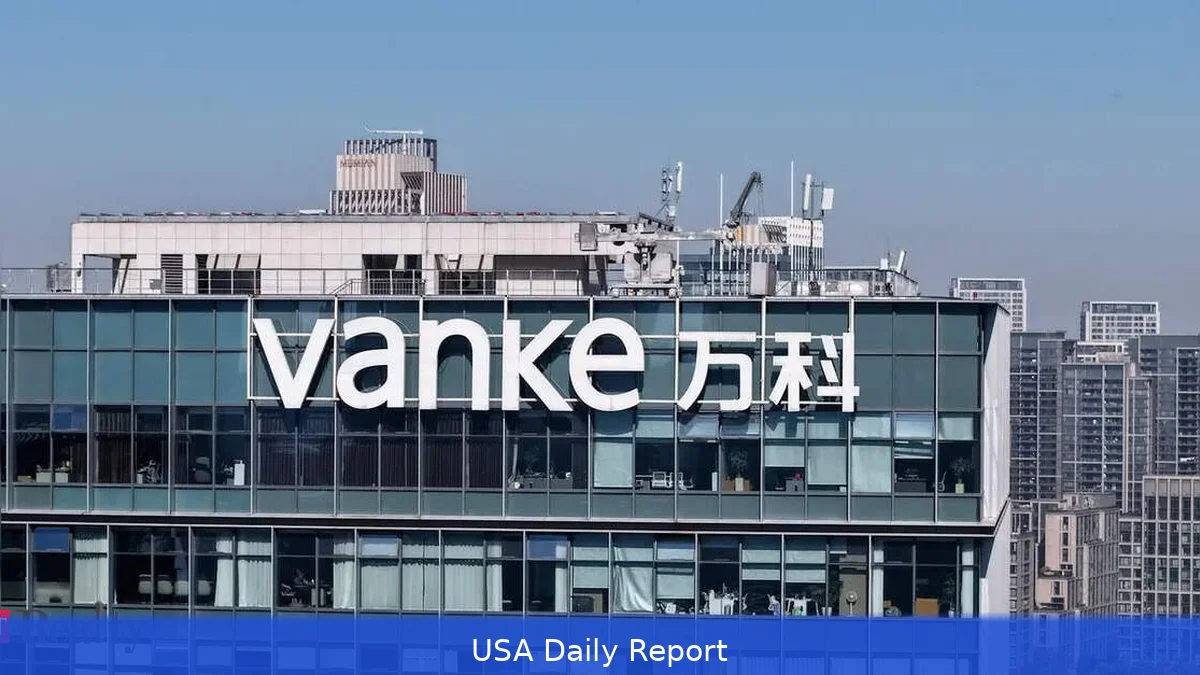
China Vanke, once a pillar of China's property market, is now scrambling to avoid default by pushing for another delay on its bond repayments. The developer’s recent move to extend payment deadlines has rattled investors and raised fresh concerns about the sector’s ability to stabilize.
Vanke’s Struggle to Meet Bond Payments
China Vanke surprised the market last month when it sought to delay repayment on a 2 billion yuan ($284 million) bond originally due December 15. The company asked for a one-year extension, despite receiving a hefty 22 billion yuan loan from its major shareholder, Shenzhen Metro, earlier this year. That loan, provided by a government-owned entity, was meant to shore up Vanke’s liquidity, but it hasn’t resolved the developer’s underlying cash crunch.
Bondholders weren’t impressed. They rejected a proposal that sweetened the deal by offering overdue interest payments and added credit protections aimed at postponing principal repayments. The rejection rate was high — 78.3% opposed the proposal, signaling strong disappointment over the lack of upfront cash and meaningful principal paydown.
Vanke narrowly avoided outright default this time. Bondholders approved a plan to extend the grace period for repayment from five trading days to 30. The vote passed with just over the 90% threshold needed, at 90.7%, granting Vanke some breathing room but not a long-term fix.
More Delays Loom
But the relief is temporary. Vanke is now pushing for similar terms on another 3.7 billion yuan onshore bond due December 28. The plan seeks to delay both principal and interest payments by a year and again extend the grace period to 30 trading days.
Voting on this proposal began December 18 and will probably conclude soon.
Credit analysts warn that Vanke is likely to keep requesting short-term extensions until it's forced into a full debt restructuring. Zerlina Zeng, head of Asia credit strategy at CreditSights, says the risk of execution failure is high, underscoring the precariousness of Vanke’s position.
Investors who have already sold off their Vanke bonds expect a default sooner or later. One Shanghai-based bondholder compared the situation to Sunac, another Chinese developer that used credit enhancements and multiple extensions before undergoing a severe debt restructuring involving debt-to-equity swaps and steep haircuts.
Sector Pressure Points and Market Reaction
Vanke’s troubles triggered immediate fallout in the market. Its 2027 dollar bond plummeted to about 23 cents on the dollar, dropping roughly 60% over the week. The speed and scale of this repricing alarmed traders and added to the sense that the sector’s credit stress is deepening.
Vanke’s yuan notes also experienced wild swings, briefly trading near 40 yuan before bouncing back to around 90 yuan in over-the-counter markets not subject to exchange halts. Such volatility is a headache for investors trying to gauge risks amid an uncertain environment.
Other developers felt the ripple effects as well. Longfor Group’s 2028 dollar bond dropped 4 cents, marking the biggest daily fall in over two years. Meanwhile, Vanke’s Hong Kong-listed shares fell as much as 8.5% to a record low before recovering slightly, ending down about 4%. The stock is now down more than a third from its September peak.
The Bigger Picture: China’s Property Market and Debt Crisis
The property sector has struggled for some time, and Vanke’s case shows that even stable giants face refinancing risks now. The developer faces a daunting debt load, with roughly 13.4 billion yuan in onshore bonds maturing or callable by June next year. Its contracted sales for the first ten months of 2023 totaled about 100 billion yuan — only half of last year’s pace.
Cash on hand stands around 60 billion yuan, but short-term debt obligations reach about 152 billion yuan. That gap shows why investors are recalibrating expectations on how quickly Vanke can stabilize its finances.
For policymakers, Vanke’s situation matters deeply. The government has already provided some support, including loans from Shenzhen Metro, which is Vanke’s largest shareholder. But Shenzhen Metro has signaled it will tighten borrowing terms after extending about 30 billion yuan in loans, suggesting limits to further backing.
Authorities have discussed measures like subsidizing mortgage interest costs to help revive the housing market. But earlier easing moves have lost steam following a brief recovery. Meanwhile, global banks remain cautious, with UBS and others skeptical about a sustained housing price rebound.
Potential Consequences of a Default
If Vanke defaults, the implications could ripple far beyond the company. Analysts say it might be seen as a signal that government support for the property sector is weakening. That perception could make it harder for other developers to issue refinancing bonds — a vital lifeline amid ongoing liquidity strains.
China’s property market has been under pressure since 2021, with many developers facing liquidity crises and struggling to meet offshore bond payments. But onshore bonds, which are politically sensitive, have usually seen repeated extensions rather than defaults. Vanke’s moves may test whether this pattern holds.
Sunac’s landmark restructuring last year involved multiple bond extensions before a major debt-to-equity swap slashed its debt by more than half. Vanke could be heading down a similar path, but with execution risks looming large.
Investors and regulators are watching closely as Vanke’s bondholder votes wrap up and its financial situation changes. The stakes are high — not just for Vanke, but for the broader effort to stabilize China’s troubled property sector.
Vanke’s attempt to delay bond payments adds a new twist to China's ongoing property crisis. Whether The strategy buys enough time or just postpones the inevitable we'll have to wait and see.


