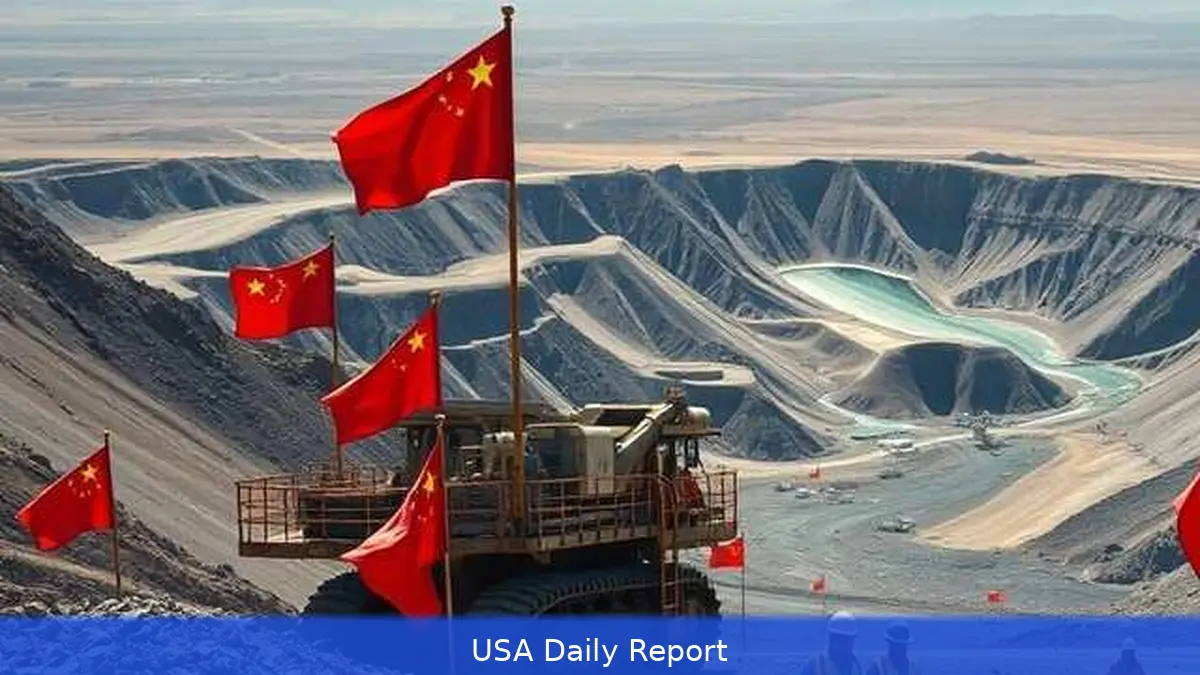
China is increasing its role in the global mining sector and trying to change the $190 billion rare earth minerals market, which Western companies have mostly led. The move could reshape supply chains and stir geopolitical tensions around these critical materials.
China's Growing Clout in Rare Earth Mining
For years, China has held a commanding position in rare earth mineral production, supplying much of the world's demand for these essential components in electronics, defense systems, and electric vehicles. Now, the country is aggressively pushing to expand its footprint beyond extraction, targeting the broader mining industry that has been traditionally led by Western corporations.
Using its large natural reserves and government support, China wants to take control of a market worth about $190 billion. This sector includes essential elements like neodymium and dysprosium, vital for manufacturing magnets used in electric motors and wind turbines.
The Stakes Are High for Global Supply Chains
Rare earth minerals have become a strategic asset amid growing competition between the U.S. And China. The Pentagon’s recent $400 million investment in MP Materials, a rare earth mining company, shows Washington's drive to secure domestic supply chains. Meanwhile, China’s efforts to dominate mining threaten to tighten its grip on these critical materials, potentially limiting availability for Western industries.
At the same time, Chinese manufacturers are making cheaper electric vehicles, enticing buyers globally. For example, Canada has started allowing Chinese-made EVs into its market at reduced tariffs, which might be a preview of how China's mining influence could ripple across industries worldwide.
Geopolitical and Economic Implications
The scramble for rare earth minerals isn't just about economics—it’s a geopolitical chess game. Controlling the supply means influence over industries crucial to national security and emerging technologies.
China’s expansion challenges not only mining giants but also the balance of power in technology and defense sectors.
Western governments are reacting with urgency. The U.S.
Department of Defense is fast-tracking contracts to domestic mineral producers and tech startups, aiming to cut reliance on foreign sources. But China’s head start and state-backed resources give it a strong advantage.
The rare earth market is quite volatile. Prices have jumped around because of supply problems and export limits. China’s moves could further destabilize the market or force competitors to innovate faster to keep up.
Looking Ahead: What Comes Next?
As China continues to assert itself in mining, the global industry faces a turning point. Western companies must adapt or risk losing ground. Governments are likely to increase investment in domestic mining and processing capabilities, seeking to build resilience against supply shocks.
But the broader question remains: Can the world balance economic competition with cooperation to ensure stable access to these critical materials? The rare earth sector could become a flashpoint, with consequences for everything from consumer electronics to military hardware.
China’s move into mining isn’t just business growth; it’s a strategic move that could have big effects. How the $190 billion rare earth market evolves will shape the future of technology and security for years to come.


