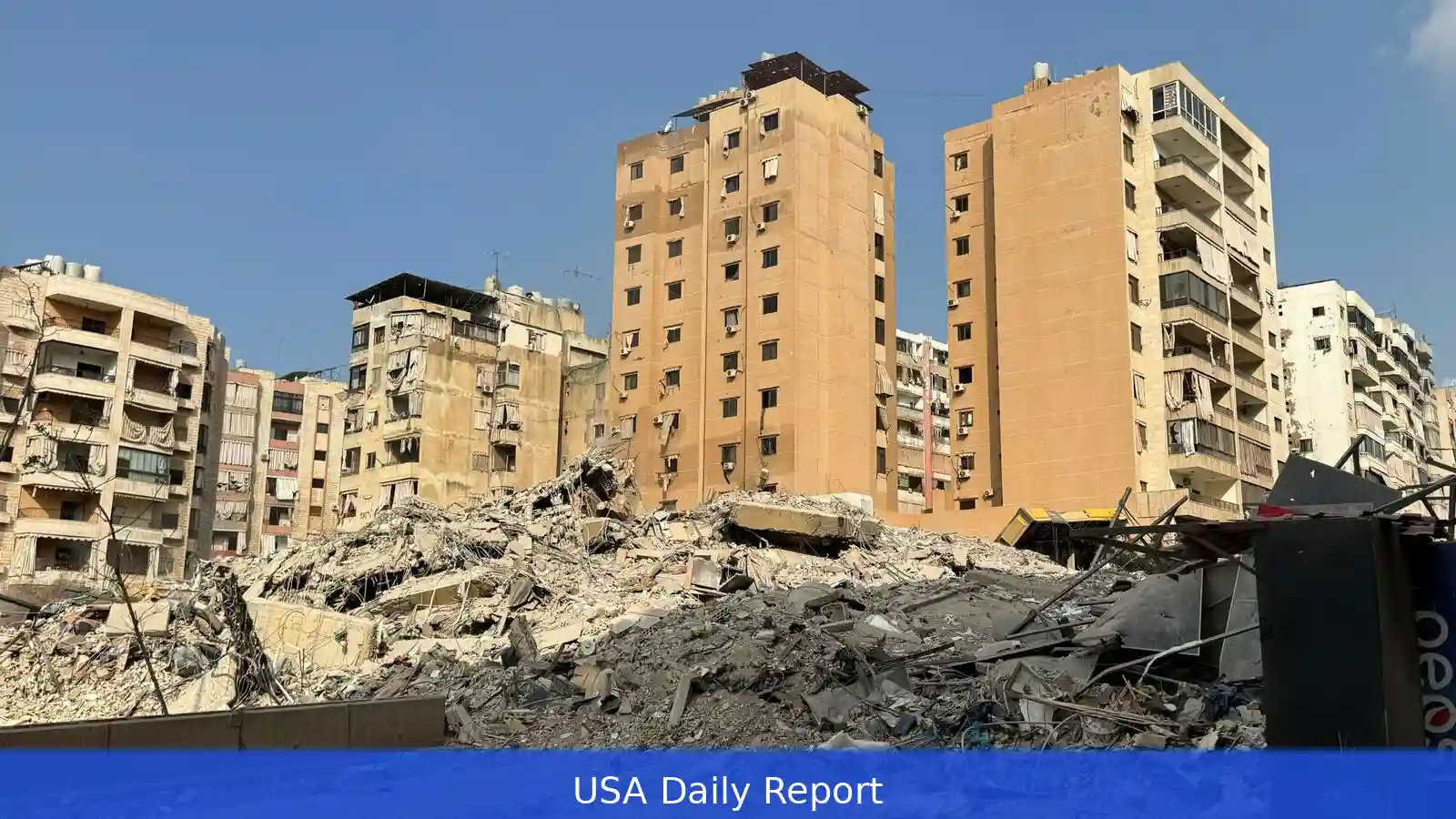
Many Beirut residents say they don't trust talks with Israel.
Beirut skepticism on display
Street-level skepticism was plain in Beirut this week as people reacted to reports that the Lebanese government had entered direct negotiations with Israel. Citizens interviewed by reporters expressed doubt about the purpose and impact of the discussions, and some said the talks didn't reflect the reality on the ground.
Look, a number of residents told journalists they see a gulf between the official negotiations and the armed actors who actually control events along the border. The sentiment was blunt: residents don't feel represented by the formal talks, and that breeds mistrust.
People have been mistrustful for a while. But with clashes still happening and a shaky ceasefire, folks are paying more attention now. People on the streets worry that a diplomatic track that excludes armed groups won't change security conditions where they live.
One clear sticking point for many was representation: interviewees noted that Hezbollah, which Lebanese civilians and observers identify as the main combatant in recent cross-border exchanges, isn't participating in the government-to-government talks. That gap, residents said, makes any agreement feel incomplete.
Why the talks leave locals cold
The view from Beirut is shaped by concrete daily experiences: damaged infrastructure, restricted movement near the border, and the visible presence of armed groups in some neighborhoods. Those realities shape how people evaluate any diplomatic initiative.
Thing is, when negotiations appear to be a dialogue between state actors only, civilians ask who will enforce or honor the terms. If the armed groups that carry out most of the fighting aren't seated at the table, residents worry the agreements will be hollow or short-lived.
That worry has a practical edge. Locals point to past ceasefires that collapsed after sporadic incidents escalated into broader clashes. They're not asking for dramatic policy statements; they're asking whether any agreement will reduce the daily disruptions in their lives — power cuts, damaged roads, and uncertainty about safety.
Those concerns translate into political pressure at home. Lebanese leaders who pursue talks with Israel face a tricky calculation: pushing forward risks domestic backlash if outcomes don't improve security, but refusing to engage could leave practical issues unresolved. For many Beirut residents, the government appears to be making that choice without a clear path to implementation on the ground.
Regional and political context
Lebanon and Israel have a history of fighting, shaky ceasefires, and occasional talks. Even when governments negotiate, armed groups often control what happens locally. That's part of why residents in Beirut reacted skeptically: they see a layered power structure in which a state-level conversation may not be enough to halt fighting.
Still, both sides have reasons to try some kind of deal, even if it’s a small one. Border incidents disrupt commerce, threaten energy and shipping routes in the eastern Mediterranean and raise the risk of broader escalation involving other regional powers. Governments prefer predictability.
But predictability depends on buy-in from those who wield force locally. Where that buy-in isn't present, agreements can be fragile. Beirut residents' distrust reflects not only immediate grievances but a longer history of deals that didn't deliver noticeable improvements to daily life.
Economic implications
Fighting near the Lebanon-Israel border affects more than just the nearby towns. They can slow shipping and trade in the eastern Mediterranean, raise insurance costs for vessels, and deter investment in a region that already struggles with economic instability.
For Lebanon specifically, a fragile security situation compounds deep economic strains that have unfolded over recent years. Uncertainty discourages foreign investment and tourism, two sectors that Lebanon has relied on to generate jobs and dollars. The perception that talks won't curb fighting undermines any hope that diplomacy might boost investor confidence.
International aid and reconstruction plans are harder to mobilize when donors doubt whether agreements will hold. And when local residents perceive talks as disconnected from battlefield realities, patience for rebuilding initiatives can evaporate — making the economic rebound that Lebanon needs even harder.
How U.S. Interests tie in
The U.S. cares about the eastern Mediterranean for several reasons: keeping shipping routes clear, stopping conflicts from spreading, and backing its allies. Even absent direct U.S. Involvement in the Lebanon-Israel talks, what happens at the border matters to American policymakers.
One practical concern for the U.S. Is escalation risk. A flare-up that draws in additional actors would complicate American diplomatic and military planning across the region. It could also force Washington to make difficult choices about whether to increase its presence or step up support for partners — moves that carry political costs at home.
Trade and energy are other channels of exposure. Disruption to Mediterranean shipping can raise freight costs and insurance premiums, which in turn can feed into higher prices for goods.
While the U.S. Economy is large and diversified, prolonged instability in key maritime routes tends to add a premium to global trade.
There's also the humanitarian angle. If hostilities intensify or staggered ceasefires fail, displacement pressures could grow. The United States often plays a role in humanitarian responses, and increased needs would mean more diplomatic and budgetary attention from Washington.
Political signaling and alliances
For Washington, how Lebanon navigates negotiations with Israel is also a measure of regional alignments. The presence and influence of armed groups like Hezbollah complicate both Lebanese sovereignty claims and the security calculus of neighboring states. When civilians in Beirut doubt that negotiations include the real levers of power, it makes the task of regional diplomacy harder.
Diplomats will be watching whether Lebanese leaders can produce concrete, verifiable arrangements that reduce cross-border incidents. If they can't, U.S. Partners in the region may press Washington for contingency plans to reassure their own populations. That could increase pressure on American policymakers to articulate a clearer strategy for stability in the eastern Mediterranean.
Local politics and public sentiment
The domestic political fallout matters. Lebanese officials who pursue state-level talks with Israel may face protests and criticism if constituents view the moves as futile or as concessions without guarantees. Public distrust could feed into electoral politics and the maneuvering of Lebanon's factionalized parties.
Residents' skepticism might also nudge political leaders to seek broader consultations at home. If the government wants domestic legitimacy for any agreement, it will need to bridge the gap between diplomacy and the groups that exercise coercive power on the ground — a difficult and delicate task.
Point is: a deal that's negotiated without grassroots legitimacy is unlikely to deliver lasting calm.
Related Articles
- 200+ Iranian Sailors Evacuated After U.S. Sinks Frigate
- Iran national held in France returns home
- War Exposes Gaps in India's Clean-Energy Push
An interviewee said Hezbollah is the group involved in the actual fighting and isn't represented at the talks.


