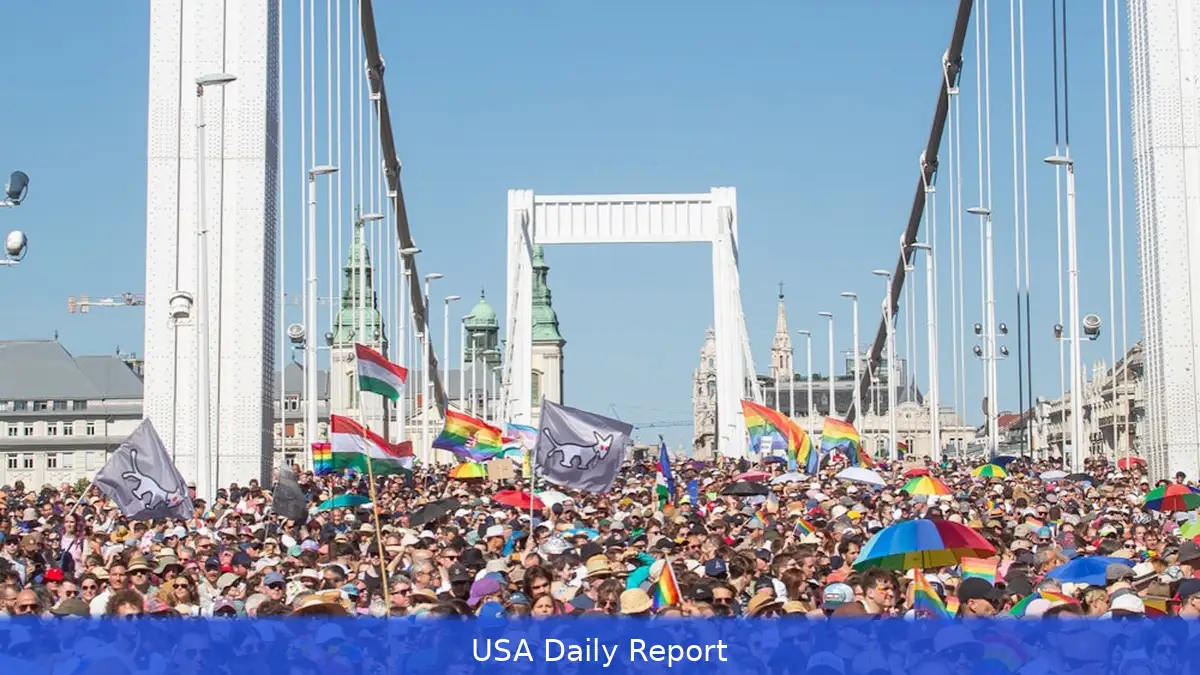
Budapest erupted after a stunning electoral upset.
What happened in Hungary
Voters turned out in unusually large numbers and delivered a decisive defeat to Hungary's dominant party. The long-ruling Fidesz movement, led by Viktor Orbán, was overwhelmingly beaten at the ballot box despite years of reforms and a tight hold on state media. The scale of the upset was clear on the streets of the capital: joyous scenes, celebratory crowds and the sense that something fundamental had shifted.
Look, the vote wasn't just another election. Turnout hit record levels, and that mattered. High participation amplified the effect of voters who had been mobilized against the ruling party. And those numbers came even after changes to the electoral rules that had been introduced to favor Fidesz. The result left Hungary's political map altered.
How it happened — the tools and the backlash
For more than a decade, Viktor Orbán and his allies reshaped Hungary's institutions, remaking public broadcasting and influencing judicial and administrative appointments in ways critics said advantaged the ruling party. His supporters described the model as an "illiberal democracy" — a phrase Orbán used to characterize the system he promoted.
Critics argued those institutional shifts, plus the close ties between government and business and the influence of friends and family of senior officials, had tilted the playing field. Still, voters pushed back. The campaign season saw opposition forces coordinate, and large numbers of Hungarians chose to take part rather than stay home.
The record turnout undercut the changes meant to entrench incumbency.
Point is, the vote exposed a mismatch between institutional advantage and public sentiment. When enough people show up, even rigs and gerrymanders can be overwhelmed. That dynamic plays out differently in every country — but in Budapest this time, it broke against the governing party.
What this means for Europe
This result matters beyond Hungary. Capitals across Europe kept a close eye on the campaign. For years, Brussels and EU governments have struggled with how to handle a member state whose leaders often clash with them over rule-of-law, media freedom, and migration.
A shift in Budapest changes those conversations. If a new government follows through on promises to restore certain checks and open the media environment, the European Union could find it easier to coordinate on policy areas where Hungary had been an outlier. That could mean fewer vetoes against EU initiatives and a smoother path on common foreign policy measures — at least in the short term.
Changing institutions isn’t quick. Years of laws and appointments won’t just vanish. The new leaders will hit real limits trying to undo what gave Fidesz its edge. Courts, contracts, and bureaucracy will make the process tricky.
Why Moscow stayed silent
The outcome left Moscow largely indifferent. Russia and Hungary had cultivated a closer relationship under Orbán's leadership, with cooperation in areas including energy and diplomatic latitude on some sanctions. But the lack of an enthusiastic reaction from Moscow suggests that either the Kremlin expected the possibility of a loss, or that its interests don't hinge on a single leader remaining in power.
Foreign ministries and diplomats in the region often respond carefully to rapid political change. In this case, the muted tone from Moscow contrasts sharply with the jubilation seen in Budapest. That difference in mood underlines the geopolitical tightrope Hungary has walked — balancing ties with the West and engagement with Moscow — and how a sudden political shift can recalibrate those alignments.
Implications for the United States
Washington watches Hungary closely for many reasons, like NATO unity, defense ties, and investments. Since Hungary’s in NATO, U.S. defense officials track leadership changes because they can impact how allies share responsibilities and support joint actions.
Economically, investors watch political stability and rule-of-law markers closely. A government perceived as strengthening democratic checks and opening media and institutions could reassure foreign investors.
This could calm worries among U.S. businesses and banks that keep an eye on regulatory risks and legal rules for international deals.
Transatlantic diplomacy matters too. U.S. officials have often been annoyed by EU countries blocking unified stances. If Budapest gets on board with EU views on sanctions, defense, and regional issues, U.S.-EU efforts could run smoother. But if the transition drags into political fights, cooperation might stall when the world needs quick teamwork.
What the new government must manage
Winning elections is one thing. Governing is another. The new leaders will confront entrenched networks, opaque contracts and state-owned or affiliated businesses that became prominent under the old administration. Dismantling or reforming those arrangements requires legal precision, public communication and sometimes political compromise.
Practical challenges include restoring trust in public institutions and ensuring that any reforms meet legal standards. That matters for domestic legitimacy and international relations alike. Washington and European capitals will watch for tangible signs: judicial appointments, changes at public broadcasters and moves to ensure fair competition in public contracting.
There will also be economic questions. Hungary's economy is integrated with the EU and global markets. Investors want predictability. Quick, transparent reforms could boost confidence. Abrupt, chaotic changes could unsettle markets and make foreign companies wary. The new government will need to balance political promises with steady policy execution.
Political fallout and regional ripple effects
Politicians elsewhere will study what happened in Hungary. Opposition movements in other countries that have faced dominant incumbents will look for lessons on coalition-building and mobilizing turnout. Ruling parties in the region, meanwhile, will parse the result for warnings about complacency.
That said, european institutions might find it easier to pursue joint measures if Budapest moves closer to the EU mainstream. That could affect policy areas from migration to judicial cooperation. It could also reshape debates inside NATO about burden-sharing and mutual support.
Katya Adler, who reported from Budapest, captured the mood on the streets and the broader sense of history unfolding. Her dispatch emphasized how a mix of high turnout and coordinated opposition campaigning combined to defeat a party that had dominated Hungarian politics for years.
Related Articles
- Orbán Concedes After 16 Years as Hungarian Opposition Secures Landslide
- Hungarians Vote in Pivotal Election That Could Unseat Viktor Orban
- Orban's economic overhaul reshaped Hungary — and left big liabilities
"illiberal democracy" — the phrase Viktor Orbán used to describe the system he helped build.


