Pope Leo XIV landed in Algeria this week. His pilgrimage to St. Augustine's ruins was meant to be personal — but politics followed him.
Pilgrimage with a political shadow
Pope Leo XIV arrived in Annaba, Algeria, marking the first time a sitting pontiff has visited the country. The stop was intended as a spiritual return: Leo is a member of the Order of St. Augustine and has called himself a "son of St. Augustine," tracing his religious formation to the fifth-century thinker who taught in what was once the Roman city of Hippo.
The visit included a prayer at the ruins where St. Still augustine preached, the planting of an olive tree and the release of white doves — gestures packed with symbolism for a pope who has made reconciliation a theme of his papacy. The scenes were deliberately calm: the pontiff arrived during rain and prayed under a tent while security personnel stood nearby.
Honestly, look, the imagery was chosen. It was meant to show continuity with the past and devotion in the present. And yet the timing has turned the trip into something more than a private return to roots.
Words that won't stay local
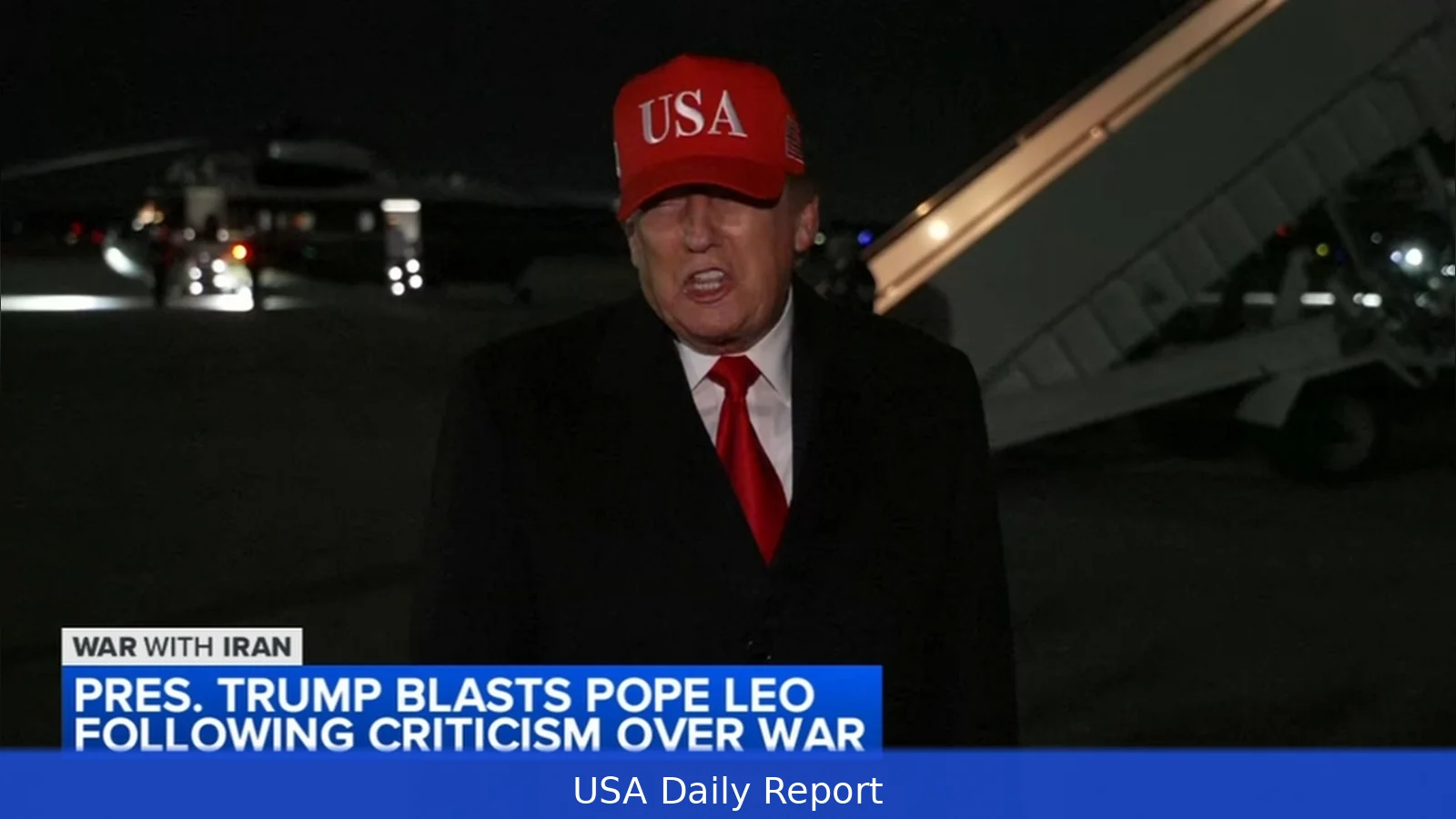
Pope Leo's remarks in Algeria — including a line that "God's heart is torn apart by wars, violence, injustice and lies" — have been read through the lens of his public quarrel with U.S. President Donald Trump over the pope's criticism of the war in Iran. That dispute has made otherwise pastoral comments suddenly political in Washington and beyond.
His stop in Annaba was brief but symbolic.
His pilgrimage route continues: after Algeria the pope flew to Cameroon, then planned visits to Angola and Equatorial Guinea. In Cameroon, separatists announced a temporary pause in violence to allow the pontiff safe passage to a "peace meeting," a rare operational concession in a region where unrest has been persistent.
Point is, the trip was never just spiritual. It's also a diplomatic test — and those two planes sometimes collide.
What the feud looks like
The NBC dispatch framed the visit as being overshadowed by an "escalating feud" between Pope Leo XIV and President Donald Trump, centered on the pontiff's public criticism of the Iran war. The pope's comments haven't named the president directly, but they have landed in a highly charged political environment in the United States where religious leaders' remarks can be amplified by partisan media and by the White House itself.
That dynamic makes people wonder about where moral leadership ends and political conflict begins. For a pope who's also America's first pontiff, every public line is double-marked: spiritual message for the global church, and political signal back home in the U.S.
He has a particular tie to Annaba: as a leader of the Augustinian order before his election at the Vatican conclave last May, Leo visited Hippo twice. The stop was therefore personal, rooted in a lifetime of religious formation. But the optics — a U.S.-born pope planting an olive tree while tensions with a U.S. President escalate — made the homecoming a story about diplomacy as much as devotion.
Diplomatic and political implications
The clash between a pope and an American president can have several ripple effects. Diplomatically, it can complicate channels of communication between the Vatican and the White House on issues where the Holy See often plays a quiet, mediating role — migration, interfaith dialogue and conflict resolution in hotspots like Africa and the Middle East.
For U.S. Foreign policy, an open spat with the pontiff narrows options for informal back-channel interventions that religious leaders sometimes provide. The Vatican has historically acted as a discreet broker in conflicts; antagonism makes that softer power harder to deploy.
Economically, the immediate impact is limited. There are no direct market shocks from a rhetorical row between a pope and a president. Still, diplomatic frictions can spill into policy areas that touch markets over time: trade relationships, humanitarian funding and collaborative public-health efforts often rely on steady diplomatic ties. If relations cool, projects that depend on Vatican goodwill or on coordinated international assistance could face delays.
And domestically, the feud feeds into partisan narratives. Pope Leo is the first American pope, and his comments about war and the moral costs of conflict resonate with many Catholic voters — while also provoking pushback from conservatives aligned with the president.
That split could shape messaging in the 2026 election cycle, energizing both devout Catholics who see voice-of-conscience leadership and critics who view the papal remarks as partisan interference.
Local context in Africa
The Algerian leg showd local risks and hopes. In Cameroon, the pope's visit prompted a three-day cease-fire by separatists to let him attend a planned meeting on peace. That pause shows the pope still wields influence in fragile zones; leaders on all sides often seize such moments for attention and possible negotiation.
At the same time, the pope's presence in communities hit by violence highlights the Church's pastoral work: visits to care homes, such as the Little Sisters of the Poor in Annaba, and prayers at historic sites draw attention to people who rarely make headlines. Those scenes can redirect global attention and aid flows to troubled regions, at least temporarily.
Why Washington cares
U.S. Officials watch this closely because religious messaging can affect public opinion and foreign policy space. When a high-profile moral voice like Pope Leo criticizes a conflict, it can shift the media frame and push lawmakers to weigh humanitarian concerns more heavily in their decisions. That's particularly true in Congress, where appeals tied to conscience and human suffering sometimes produce bipartisan pressure for restraint or oversight.
So while the feud might look like personality politics, it has practical effects. Advocacy groups that already lobby on Iran and Middle East policy will use the pope's words to press lawmakers. Church leaders in the U.S. Will either lean into the pope's posture or distance themselves, depending on their constituencies. That creates ripple effects in fund-raising, voter mobilization and local parish politics.
Still, policy shifts require more than rhetoric. Concrete changes in U.S. Strategy would need votes in Congress or executive action from the White House. The pope's influence is moral and persuasive, not legislative. But moral pressure can be a catalyst when other political forces align.
How the trip may shape the pope's image
For Pope Leo, the Algeria pilgrimage is part of a larger effort to define his papacy. By tying himself publicly to St. Augustine's teachings on just war — the idea that war might only be justified to defend the innocent — he is staking out a theological rationale that carries immediate political resonance.
That posture strengthens his standing among Catholics who want an engaged, morally outspoken pope. It also hardens opposition among political figures who see his comments as meddling. Both reactions are predictable. Both will matter in different arenas.
Thing is — the pope wanted a quiet, meaningful return to the sites that shaped his faith. Instead he left with global attention, and with his moral views amplified in corridors of power from Rome to Washington.
Related Articles
- Trump Orders Hormuz Blockade, Tanker Traffic Halts
- Magyar meets Hungary's president as Trump praises next PM
- Cameroon separatists say they'll pause fighting for Pope Leo's visit
On Tuesday in Annaba, Pope Leo XIV said, "God’s heart is torn apart by wars, violence, injustice and lies."


