
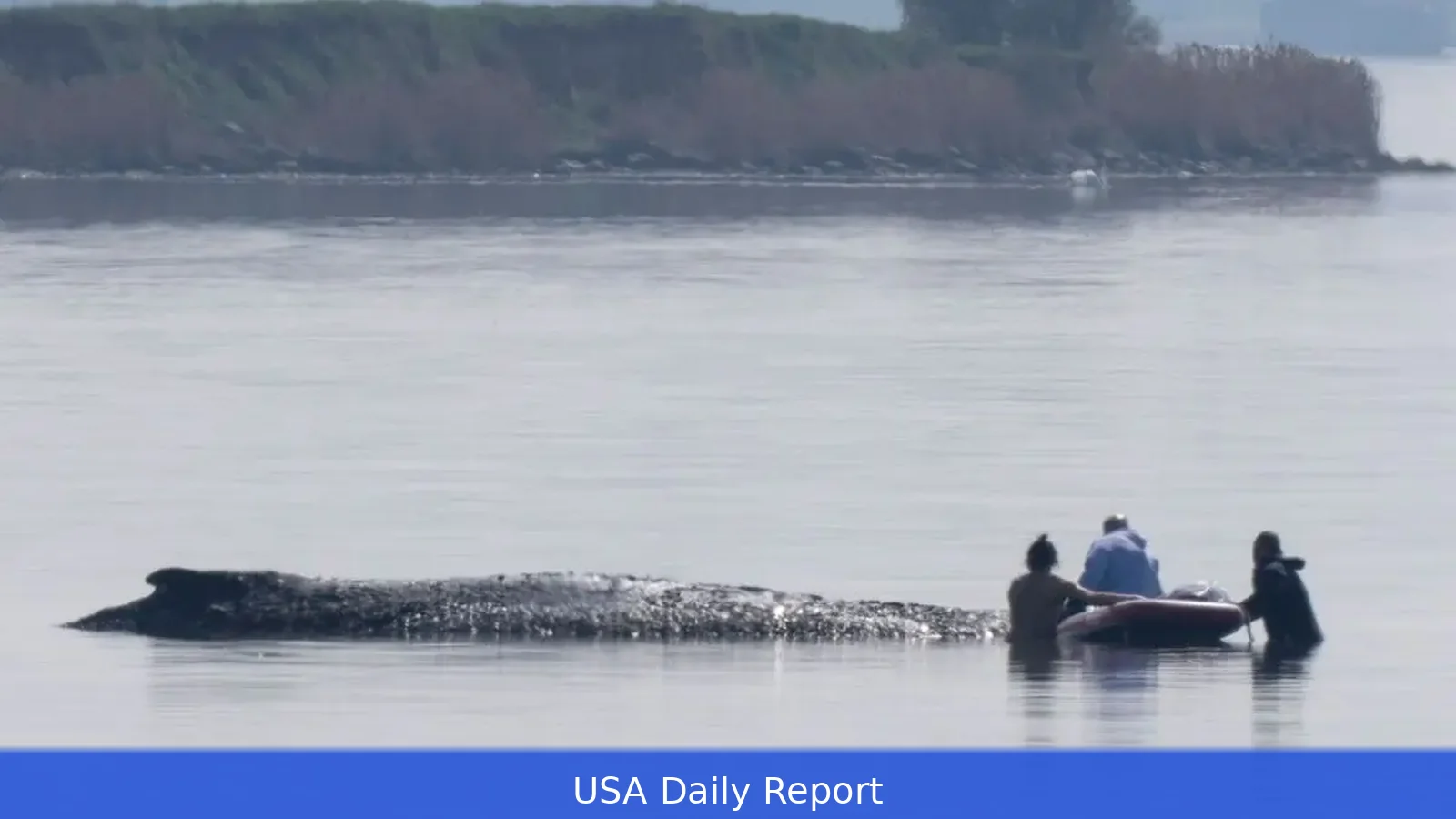
Crews plan to put inflatable cushions under the stranded whale to try to float it free. The animal, nicknamed Timmy by local media, has been stuck off the island of Poel since early March.
Where the whale is and when it was first seen
The animal was first observed in the Baltic Sea at the beginning of March and is now lodged in shallow water off the island of Poel, local reports say. The shore near Poel shoals fast, so teams only get short windows to move a large animal.
Authorities and volunteers on site have monitored the animal’s position for days. The whale’s presence in this part of the Baltic is out of the ordinary — it’s far from the environment where large whales usually roam — and that raised alarm among local responders almost immediately.
What rescuers plan to do
In the latest phase of their operation, rescuers intend to deploy inflatable air cushions beneath the whale to help lift and stabilize it for a refloat attempt. Teams fit inflatable cushions under the whale from small boats, then use the rising tide to help float it toward deeper water.
Timing matters — tides, weather and the whale's health usually decide whether a refloat will work.
Crews must line up boats, safety gear and vets during the brief windows when the water's deep enough.
Shallow shelves keep boats back, so teams work without crowding the animal and risking extra stress. That means a methodical approach: position the cushions, wait for a suitable tide, and then attempt to move the whale without forcing it into injury or panic.
Operational difficulties and animal welfare
Rescue teams face competing priorities: the animal’s immediate welfare, the safety of people on the water, and the technical limits of equipment. A large whale trapped in shallow water can suffer from pressure on internal organs, dehydration and exhaustion. At the same time, a rescue attempt itself can inflict harm if it’s rushed or poorly executed.
Vets usually check stranded whales for injuries, infection and the animal's ability to swim before any refloat. If the animal is too weak, rescuers sometimes shift to a stabilizing-and-wait strategy: shelter, monitor and try again when conditions improve.

Teams working in coastal rescues often rely on local knowledge. Fishermen, coastal volunteers and municipal services know tidal patterns, boat routes and safe working zones — information that proves critical during a narrow rescue window. That local expertise is being used in the current operation off Poel.
Environmental and regional context
Researchers have noticed more whales showing up in odd spots around the Baltic in recent years. Changes in prey distribution, shipping patterns and marine noise can all push marine animals into atypical areas. When a large animal appears in shallow, enclosed waters, it becomes a rescue and conservation issue at once.
Incidents like this also trigger conversations about human impacts on marine life. Fisheries managers, shipping operators and conservation groups pay attention because stranding events can reveal risks — from discarded fishing gear to ship strikes — that affect both protected species and coastal economies.
Coordination and resources
Rescues of this type draw on a mix of public and private resources. Local emergency services provide on-the-water coordination and safety oversight. Volunteers and nonprofit rescue groups often bring specialized equipment and experience. Together they form the immediate response network when a large marine animal is in distress.
Funding and equipment availability shape how quickly teams can act. Inflatable air cushions and the boats that carry them aren’t always on site; they may need to be transported from regional centers. That logistics tail influences whether an operation is launched quickly or staged over several days.
Why the case matters beyond the shoreline
Stranding and rescue efforts are more than isolated wildlife stories. They test the readiness and cooperation of coastal institutions — from local government to conservation groups — and they force a look at how human activity interacts with marine ecosystems.
For the Baltic nations, each incident becomes a short-term emergency and a longer-term data point. Authorities collect health information from stranded animals, note water conditions, and catalog human activity in the area. Those records feed into regional monitoring programs that track marine mammal health and movement patterns.
How it connects to the United States
U.S. rescue groups and scientists exchange techniques with their European counterparts on marine mammal rescue. U.S. Marine scientists and rescue organizations study strandings and share methods globally. Lessons learned in Europe can inform best practices elsewhere — and vice versa.
There are also economic threads. Shipping routes that cross international waters link economies; a high-profile stranding can lead to calls for changes in traffic management or enforcement of fishing regulations, which affect commercial operators that serve transatlantic trade. Coastal tourism, another shared interest, can be affected by how authorities handle conservation and safety incidents.
Finally, the case can prompt policy discussions in international forums where U.S. Agencies and partners take part. Data and operational experience from a rescue like this feed into broader conversations about marine protection, emergency response and the allocation of research funding.
What comes next
Rescuers will wait for the next favorable tide window to place the air cushions and attempt a refloat. If the initial effort fails, teams will regroup and reassess, shifting between active attempts and monitoring to keep the animal stable.
Authorities will continue to balance the urgency of freeing the whale with the need to protect both the animal and the people involved in the rescue. The coming hours and days will determine whether the intervention succeeds or if longer-term care measures become necessary.
Related Articles
- IMF, World Bank Resume Relations With Venezuela
- Hegseth Quotes Pulp Fiction at Pentagon Service
- Justin Fairfax Kills Wife, Then Himself
The whale was first spotted in the Baltic Sea at the beginning of March and remains stuck in a shallow coastal area off the island of Poel.
This article was created with AI assistance.


