
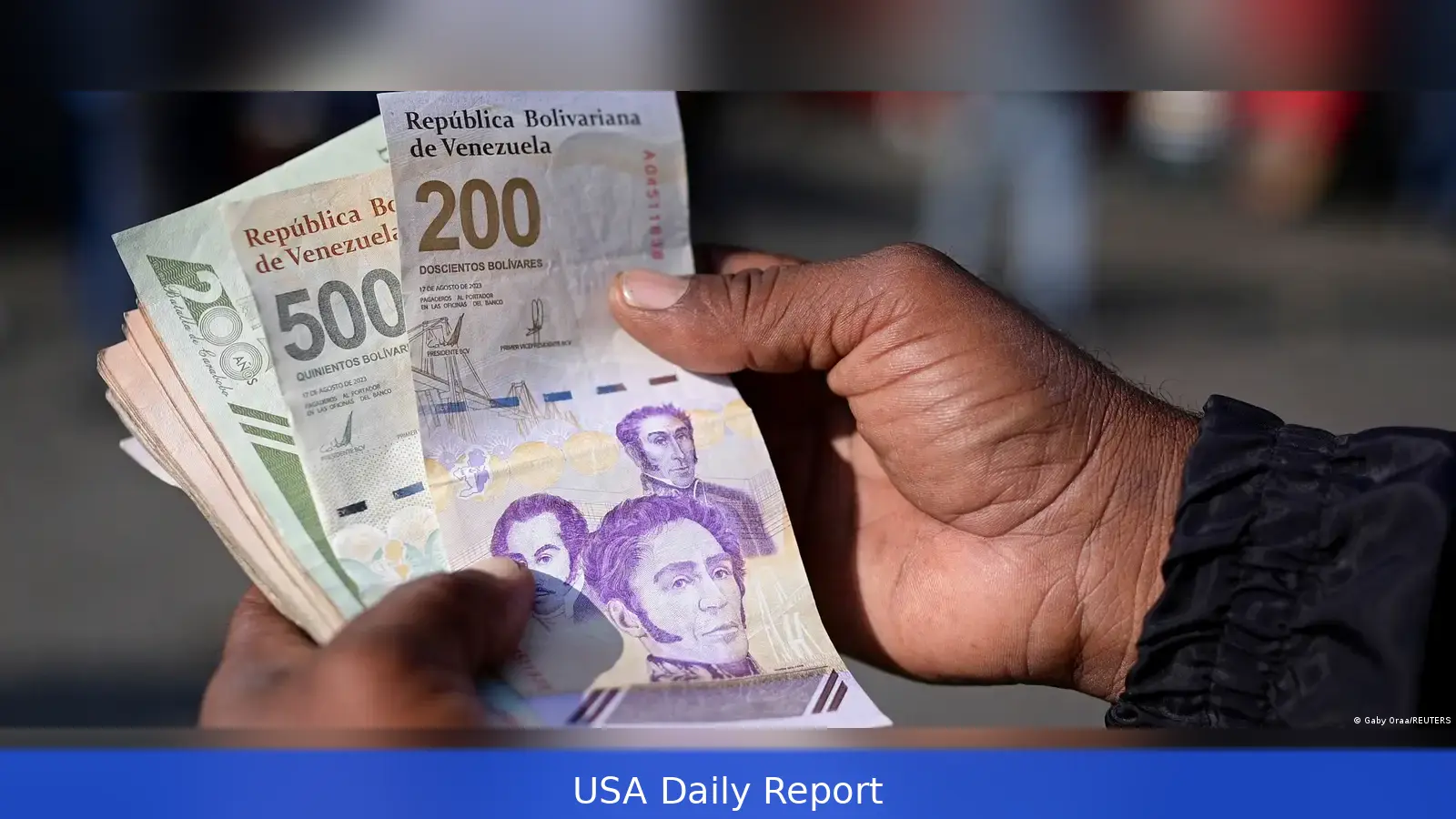
IMF and World Bank have restored formal ties with Venezuela.
Quick restart after years of isolation
The International Monetary Fund said Thursday it had resumed engagement with Venezuela under the government led by acting President Delcy Rodriguez. Kristalina Georgieva, IMF Managing Director, framed the move as a step that "allows the Fund to re‑engage in a way that can ultimately benefit the Venezuelan people."
Shortly after the IMF announcement, the World Bank said it would follow the IMF’s decision and re-establish relations with Caracas. The bank noted it last issued a loan to Venezuela in 2005.
Why ties were cut and what changed
Relations between Washington-based multilateral lenders and Caracas frayed in 2019, when many countries split over whether to back President Nicolas Maduro or opposition leader Juan Guaidó as Venezuela’s legitimate head of state. At that time both the IMF and the World Bank scaled back engagement with Venezuela, citing the lack of a clear international consensus on who represented the country.
In recent weeks the U.S. Government lifted sanctions on Delcy Rodriguez, and that move played a role in the lenders' decisions. The IMF and World Bank said their actions were guided by the views of their membership and by the IMF’s decision-making process. Rodriguez, who took power in January, welcomed the announcements on state television and called the re-engagement "a great achievement of Venezuelan diplomacy."
What re-engagement allows Caracas to do
The immediate practical effect is procedural: Venezuela can now formally ask the IMF and the World Bank for financial assistance and technical support if Caracas decides it needs help.
The institutions said the path to re-engagement clears the way for requests aimed at stabilizing the country’s finances.
Venezuela faces a heavy external debt burden. Total external liabilities are estimated at more than $150 billion, a figure the IMF and other international actors have cited when discussing Caracas’ financial stress. In 2020 the IMF turned down a $5 billion emergency loan request from Venezuela amid the political dispute over who led the country. With ties now restored, that avenue for assistance is open again, at least technically.
Economic and political implications
Rebuilding formal relations with the IMF and the World Bank is both economic and political. Access to those institutions can give a government formal channels to request loans, restructure debt, and obtain policy advice. It also provides a form of international legitimacy: engagement implies that a majority of member countries accept the practical reality of dealing with the current authorities in Caracas.

That legitimacy matters in several ways. For creditors and private investors, ties to the IMF or World Bank can be a green light to consider arranging finance or reopening negotiations on outstanding obligations. For humanitarian and development partners, re-engagement can speed coordination on programs addressing shortages of medicine, weakened public services, and migration pressures.
At the same time, ties don't automatically mean new loans. Any program with the IMF would require agreement on policy steps and oversight mechanisms. Georgieva’s statement stressed member guidance rather than laying out a specific lending plan. The World Bank likewise said it would follow the IMF’s lead without announcing a financing package.
How Washington factors in
The U.S. Decision to lift sanctions on Delcy Rodriguez was a proximate factor cited in coverage and by officials. That move from Washington has the practical effect of reducing barriers for international institutions that interact with governments and central banks. It also signals to other countries and lenders that the current Venezuelan leadership is, for now, an acceptable negotiation partner.
For U.S. Policymakers and markets, the shift makes people wonder about leverage and objectives. Re-engagement could be used to press for economic reforms or to set conditions tied to governance and transparency. It could also prompt debates in Washington about diplomatic strategy, migration policy, and bilateral sanctions that remain on individuals or entities connected to past abuses.
Regional ripple effects
Latin American governments that had pressed for Venezuela’s return to international credit lines hailed the announcements. Some capitals see re-engagement as a way to stabilize migration flows and regional trade ties. Others worry that quick financial access without robust oversight might prop up an unpopular government without addressing the root causes of Venezuela’s crisis.
Caracas’ energy sector and oil receipts remain central to any financial turnaround. How the government manages oil revenues, debt service and domestic spending will shape whether IMF or World Bank help can translate into measurable relief for Venezuelans on the ground.
Domestic political stakes
Inside Venezuela, the move will be read through the lens of political legitimacy. Rodriguez hailed the decision as vindication for her government’s diplomacy. Opponents are likely to argue that international engagement should be conditioned on political openings, accountability, and free elections.
Nicolas Maduro, the leader who lost recognition from many governments in 2019, remains a central figure in national politics. Juan Guaidó and other opposition figures who once claimed the presidency still figure in the broader political dispute over who represents Venezuela. The return of the IMF and World Bank to the scene adds a third-party institutional layer to that contest—one that could influence negotiations, aid flows, and international mediation efforts.
Practical next steps and uncertainties
Technically, Venezuela must make formal requests for assistance. From there, staff-level talks would assess the country's macroeconomic data, fiscal accounts, and policy intentions. The IMF and World Bank will likely consult their membership and weigh the political context as they shape any engagement.
Key uncertainties remain: whether Caracas will seek large-scale financing, what conditionality might be attached, how quickly any programs could move from discussion to disbursement, and how other creditors will react. Private bondholders, bilateral creditors, and regional lenders will watch closely as the lenders map out possible technical support or lending frameworks.
The immediate takeaway is simple: after years of limited contact, multilateral finance institutions have reopened formal channels with Venezuela. That doesn't guarantee rapid fixes. But it does put international economic tools back on the table for a country that has suffered a decade-long collapse in output and public services.
Related Articles
- IMF warns against broad fuel subsidies
- Hegseth Quotes Pulp Fiction at Pentagon Service
- Justin Fairfax Kills Wife, Then Himself
Kristalina Georgieva, IMF Managing Director, said the re-engagement "allows the Fund to re‑engage in a way that can ultimately benefit the Venezuelan people."
This article was created with AI assistance.


