
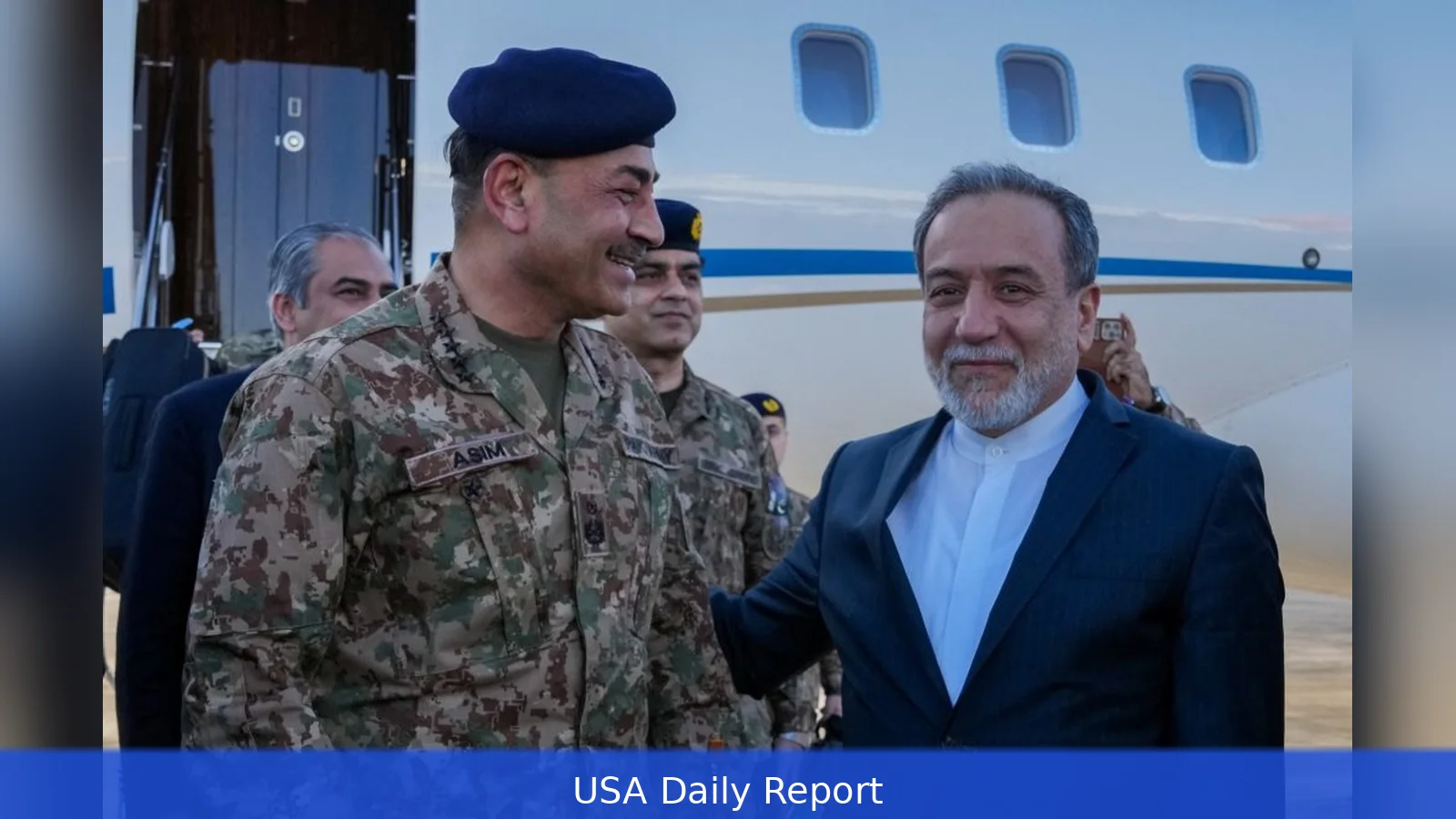
Mediators raced to keep a fragile U.S.-Iran truce alive. Pakistan envoys flew to Tehran as the two-week ceasefire neared its April 22 deadline.
Diplomats hurry to salvage the pause
Pakistan's senior military and diplomatic figures arrived in Tehran this week to press for another round of negotiations between Washington and Tehran, officials said. The visit by Pakistan army chief Asim Munir was framed as an effort to secure a second meeting before the ceasefire lapses on April 22, 2026. Everyone in the region is watching the April 22 deadline closely; it will shape whether talks continue.
There isn't much time left before the ceasefire lapses.
Pakistan has positioned itself as the principal intermediary between the United States and Iran, a role the White House has publicly acknowledged. Karoline Leavitt, White House press secretary, said Washington sees the Pakistanis "as the only mediator in this negotiation" and that the administration wants talks routed through Islamabad to keep the process streamlined. The Pakistani foreign ministry also emphasized that any durable deal will have to include stability in Lebanon: "Peace in Lebanon is essential for peace talks," Tahir Andrabi, spokesperson for Pakistan's foreign ministry, told Reuters.
What each side is demanding
The negotiating positions remain far apart. U.S. Negotiators, led by Vice President JD Vance, are insisting on an explicit Iranian commitment not to pursue a nuclear weapon. "The simple fact is that we need to see an affirmative commitment that they won't seek a nuclear weapon, and they won't seek the tools that would enable them to quickly achieve a nuclear weapon," Vance said, laying out Washington's red line.
Iran has its own conditions. Tehran's 10-point plan presented during earlier talks included demands such as an end to Israeli strikes against Hezbollah, the release of roughly $6 billion in frozen assets, guarantees for its civilian nuclear program, and the right to charge vessels transiting the Strait of Hormuz. Those items reflect Iran's mix of security and economic priorities—and the leverage it seeks to win from any long-term deal.
Wild part? Israel and Lebanon make the arithmetic. Israeli operations in southern Lebanon continued even as mediators shuttled, and an Israeli official said Prime Minister Benjamin Netanyahu planned to speak with Lebanon's President Joseph Aoun to try to prevent broader escalation. President Trump said late Wednesday that efforts were underway "to get a little breathing room" between Israel and Lebanon.
Why the U.S. Is invested
Washington has multiple stakes in whether a ceasefire holds or a broader accord emerges. Strategically, the U.S. wants to prevent the war from spreading and to shield American forces and regional partners from harm. Diplomatically, securing any agreement that limits Iran's nuclear options would be a major foreign-policy win for the administration.
Releasing the frozen funds would change Iran's financial reach and could shift how its proxies are funded. The demand to unfreeze $6 billion matters not only politically but economically: such funds, if released, would alter Iran's capacity to finance proxies and domestic programs. Conversely, keeping assets frozen keeps pressure on Tehran but can harden its negotiating stance.

Shipping through the Strait of Hormuz is another economic flashpoint. Iran's proposal to reclaim the right to charge ships could threaten global energy markets if implemented or if threats around the waterway escalate. For American businesses and markets already sensitive to supply disruptions, any renewed hostilities or persistent threats to shipping lanes would likely drive up oil and shipping insurance costs.
Regional fighting complicates diplomacy
Efforts to expand the truce will have to contend with active operations on the ground. Even as mediators sought another round of talks, strikes in southern Lebanon continued, including actions that damaged key infrastructure. Those operations make it harder to sell a ceasefire extension to domestic audiences in Israel and Lebanon, and they give hard-liners on all sides political cover to oppose concessions.
Asim Munir's presence in Tehran signals Pakistan's willingness to press hard for progress. Pakistani officials say they have strong ties with both Washington and Tehran and can shuttle between capitals. Mediators must do two things: find common ground on security demands and make sure local combatants in places like southern Lebanon actually stop fighting.
Domestic politics and the U.S. Posture
Back home, American political considerations shape the negotiating room. The administration's public insistence on a no-nuclear-weapons commitment reflects a message both to international partners and to domestic critics that it won't tolerate an emergent Iranian bomb. Vice President Vance's comments are a clear signal that the U.S. Sees nonproliferation as an uncompromising baseline.
And of course, public statements by President Trump and other top officials are calibrated for audiences in Israel and among U.S. Voters who prioritize strong stances on Iran. That dynamic limits Washington's flexibility; concessions seen as too soft could provoke political blowback at home, while an overly rigid posture risks collapsing talks.
What a deal — or its failure — could mean
If talks are extended and both sides compromise, the short-term effect would likely be a lower risk of the war spreading to new fronts. Diplomatically, a deal that freezes or rolls back Iran's nuclear capabilities while addressing Tehran's regional concerns would reshape security calculations across the Middle East.
But failure to agree could push the region into wider conflict. More fighting would raise the human toll, of course, but also damage trade flows, press energy prices, and increase costs for U.S. Military commitments. Sustained escalation would raise oil prices and insurance costs for shipping, hitting global markets hard.t higher oil prices and higher costs for insurers and shippers that cover Gulf transit.
On the other hand, even a temporary extension bought by Pakistani mediation would give negotiators more time to inch toward terms that address both nuclear worries and Iranian economic demands. That would be a slow, politically costly process. It would also require active management of battlefield behavior in Lebanon and de-escalation steps from Israel.
Next steps and the immediate clock
Diplomatic activity now centers on arranging a second formal session between U.S. And Iranian negotiators before April 22. Pakistan's diplomatic team and top military officer will try to build trust and narrow the list of items that must be resolved in a direct U.S.-Iran meeting. Karoline Leavitt's public endorsement of Pakistan's role shows how Washington wants to keep mediation focused and contained.
How negotiators handle the nuclear issue will be decisive. JD Vance's demand for a clear, affirmative Iranian renunciation of nuclear weapons—and of the means to build them quickly—sets the threshold for U.S. Agreement. Iran's list of demands, including the release of frozen assets and security guarantees, will be hard to reconcile with that threshold without careful trade-offs.
For now, the region and Washington wait to see whether Pakistan's shuttle diplomacy can convert a fragile pause into a longer, enforceable settlement.
Related Articles
The two-week ceasefire is due to expire on April 22, 2026.
This article was created with AI assistance.


