Airports across Europe could run short of jet fuel within three weeks. A regional industry group says supply disruption tied to the Strait of Hormuz is the cause.
How a shipping chokepoint became an airline problem
Look, the detail that set alarm bells ringing came from ACI Europe, the association that represents airports across the continent. The group warned that if shipping through the Strait of Hormuz doesn’t resume in any meaningful, lasting way within three weeks, a systemic jet-fuel shortage could become reality.
That’s a short countdown.
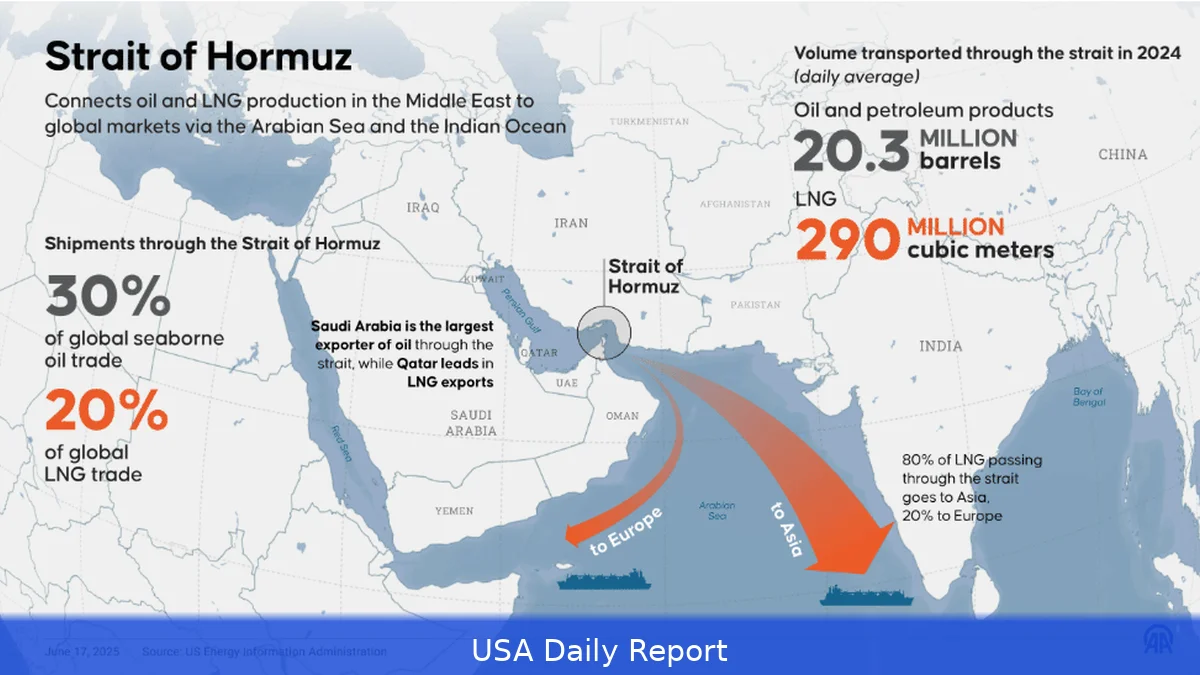
Thing is, the Strait of Hormuz is a major artery for oil and refined products. The Sun report cited by industry sources said roughly 140 vessels normally transit the channel, but traffic had fallen to as few as seven ships on the day of the report. With fewer ships passing through the strait, deliveries of refined product to refineries and storage tanks slow — and that can delay fuel reaching airport storage.
That squeeze is already showing up at some airports.
Local shortages and operational steps
Italian regional airports reported immediate strains. Brindisi-Casale Airport temporarily ran out of Jet A1 — the standard kerosene-based fuel used by most commercial jets — prompting the operator to limit refueling to state aircraft and medical flights. Pilots were told to top up at earlier stops to ensure they could complete return legs without relying on local filling.
Other airports in Italy, including Milan Linate, Venice and Bologna, put temporary restrictions in place, according to local reports aggregated by the original story. So far, there haven't been widespread cancellations reported. But they did force airlines and flight crews to change refueling plans and carry extra fuel on some sectors — an operational and cost headache.
Antonio Maria Vasile, president of Aeroporti di Puglia, pushed back against panic. He told local media that fuel supplies were continuing to arrive and that there was no immediate danger of a broad, imminent shortfall at his facilities.
His comment highlights a messy reality: some airports are managing, others are cutting back, and the situation can change fast.
Wider signals — and a warning from Australia
Beyond Italy, the report said the Australian government had warned that the country had roughly 30 days of jet fuel in reserve. That’s a separate note but a similar signal — national and regional fuel stocks can be thin when global logistics get choked.
So what does this mean for airlines and travelers? Airlines told industry observers that fuel shortfalls could force flight cancellations and push fares higher as carriers reshuffle capacity and add fuel stops. Initially airlines respond operationally — diverting planes, carrying extra fuel and changing flight plans — but those moves hit costs quickly. Fuel-related route changes increase flying time and crew costs; those expenses don't vanish.
Right now, the public-facing indicators are limited: some airports reporting restrictions, a lobby group issuing a short-window warning, and national calls about limited reserves. The full picture of stockpiles and delivery schedules sits with refiners, storage operators and shipping companies — stakeholders not named in the report.
Why airlines care beyond the pump price
Airlines run on very thin margins. Carrying extra fuel to avoid potential shortages reduces payload capacity because weight limits and balance rules matter. That means fewer seats available or less cargo capacity on affected flights — and airlines may choose to add fuel stops, which raises costs and lengthens schedule times.
Fares can react in two ways: ticket prices may rise on high-demand holiday routes if capacity is cut, and ancillary fees can increase as carriers try to protect margins. Those are the mechanisms airline finance teams watch closely. ACI Europe flagged the holiday season as a pressure point — the original story noted concerns about school half-term travel — because demand spikes make any supply crunch more visible and disruptive.
Flights canceled for fuel reasons also create knock-on costs. Rebooking and accommodation for displaced passengers, compensation where rules apply, and aircraft repositioning add near-term cash outflows. Carriers may pass some of that on to consumers through higher fares or fuel surcharges, or they may eat the cost and see margins erode.
What governments and airports can do
Airports and regulators have a limited set of tools. Priority refueling for emergency services — as seen in Brindisi — is one immediate step. Governments can release strategic fuel reserves where they have them, and they can fast-track shipments when maritime routes re-open. Airlines can tap their own fuel hedges or draw more heavily on credit lines to pay premiums for scarce product.
None of those fixes comes without headaches. Hedging reduces exposure to price swings but doesn’t solve a physical delivery shortfall. And releasing national stocks helps supply but takes time to move product to the right airports. That's partly why industry bodies like ACI Europe issue early warnings: the logistics chain needs lead time to rebalance flows once shipping resumes.
Market signals and the risk premium
Markets usually react fast to supply disruptions. When a chokepoint curtails deliveries, traders tend to bid spot refined-product prices higher — a risk premium for scarce cargoes and for the insurance and security costs of shipping through contested waters. The original article suggested rising prices for consumers and travelers; that outcome follows logically when supply tightens against steady or rising demand.
Investors in airlines and airports watch two things: duration of the disruption, and whether carriers can reroute supply chains or absorb costs. Short-lived disruptions usually cause short-term operational headaches rather than lasting change.ise and some margin pressure. Multi-week or structural supply constraints hit cash flow and may force capacity cuts that change seasonal revenue forecasts.
Bottom line: this is a supply-shock story with an immediate time test — weeks, not months.
What to watch next
Watch shipping through the Strait of Hormuz and statements from refiners and storage operators. Watch whether airports beyond Italy report restrictions. And watch airline scheduling updates for more reroutes or cancellations.
For now, the concrete public pieces are the Italian airport notices, the alert from ACI Europe, and national-level cautions such as the Australian observation on stock levels. Those are the facts on the table.
Related Articles
- Consumer engine losing steam: incomes, borrowing and spending all show strain
- Nvidia’s Jensen Huang Tells People to ‘Move to California’ as Proposed Billionaire Tax Looms
- PopUp Bagels Opens in Philadelphia as It Rolls Out 30 Mid‑Atlantic Shops with Seeded Capital Help
ACI Europe warned that if passage through the Strait of Hormuz doesn't resume in any meaningful and stable way within three weeks, a systemic jet-fuel shortage could become a reality.


