
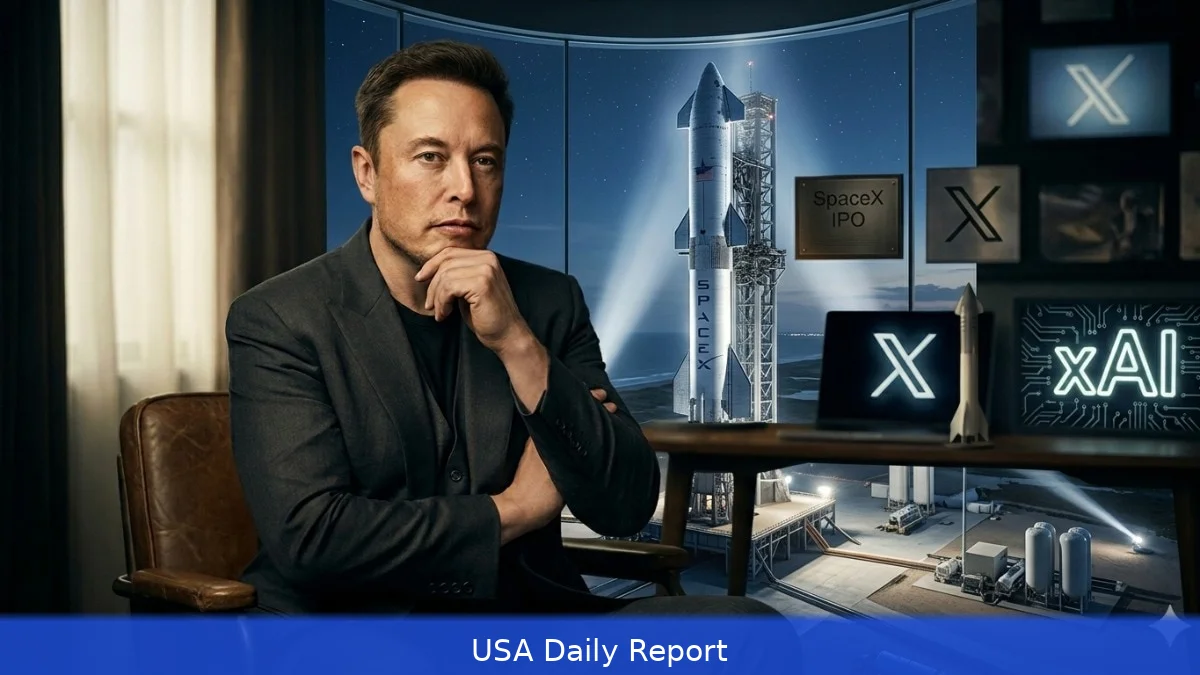
SpaceX is gearing up for what could be the largest initial public offering in history, aiming to raise $75 billion and hit a staggering $2 trillion valuation. But here's the twist: the rocket company plans to hand a big chunk of shares—up to 30%—to everyday investors, a move that breaks the mold of typical IPOs.
Rare Retail Focus in IPO Plans
SpaceX is changing how companies usually go public. Traditionally, IPOs favor institutional investors, with retail investors getting a small slice, if any. Yet SpaceX’s upcoming stock market debut plans to flip that script. The company is setting aside a sizable share—potentially as much as 30%—for retail investors, far exceeding the usual 5% to 10% retail allocation seen in most IPOs.
This move is risky because it relies heavily on Elon Musk's loyal followers to support the IPO. Bret Johnsen, SpaceX’s chief financial officer, made it clear during a private meeting with the company’s bankers that retail investors aren’t an afterthought. “Retail is going to be a critical part of this and a bigger part than any IPO in history,” he said, according to sources familiar with the discussion. Johnsen emphasized the company’s desire to reward supporters who have stuck with Musk and SpaceX for years.
The company has scheduled a large event in June to court 1,500 retail investors, marking a rare occasion where everyday buyers get a direct look at a private company preparing to go public. The exact venue remains under wraps, but it’s set to follow a roadshow beginning June 7, where SpaceX executives and bankers will pitch the offering to financial analysts from 21 banks working on the deal.
Global Access for Retail Investors
SpaceX isn’t limiting this retail opportunity to the United States.
Investors in the UK, European Union, Australia, Canada, Japan, and South Korea will also have a chance to buy shares. That’s a pretty broad reach for retail participation, signaling SpaceX’s intent to build a diverse shareholder base worldwide.
Experts believe retail investor interest might be bigger than anything Wall Street has experienced. One lead underwriter reportedly told the syndicate of banks that retail demand and allocation will be something “never seen before.” The details on the final retail allocation and deal structure will be locked in closer to the IPO, expected later this year.
Valuation and Market Context
SpaceX’s valuation has seen rapid growth recently. When it merged with Musk’s artificial intelligence startup xAI in February, the combined entity was valued at roughly $1.25 trillion.
Since then, estimates have climbed to $1.75 trillion, and latest reports suggest the figure could hit $2 trillion by the time of the IPO.

That’s a huge leap, especially considering SpaceX’s reported revenues. Last year, the company earned between $15 billion and $16 billion, mostly from its satellite internet service, Starlink. The AI division, xAI, is still a small piece, contributing about $1 billion in revenue this year according to analyst forecasts.
George Ferguson from Bloomberg Intelligence cautioned that valuing SpaceX is tricky because detailed profit figures aren’t public. He noted that a big chunk of the valuation hinges on the AI side, which currently lags behind competitors. Still, the spaceflight and satellite operations remain the core revenue drivers.
Behind the Scenes: The IPO Roadshow
SpaceX is assembling an all-star team to lead the IPO. Morgan Stanley, Bank of America, Citigroup, JPMorgan, and Goldman Sachs are the main underwriters, supported by 16 other banks covering institutional, retail, and international channels. The roadshow is set to start in early June, with executives briefing roughly 125 financial analysts from the select banks the day before the retail investor event.
By involving bankers, analysts, and retail investors early, SpaceX aims to build wide excitement and trust in the IPO. The timing also means more details will likely surface when the company releases its IPO prospectus toward the end of May.
How Retail Investors Can Get In
SpaceX’s decision to open the door to retail investors is a rare chance for individuals to buy into a company that has been private for over two decades. For many, this will be their first shot at owning a piece of Musk’s space empire.
But the story doesn’t end there. Investors looking to gain exposure to SpaceX before the IPO have a few options. Alphabet, which invested in SpaceX back in 2015, owns an estimated 7% to 8% stake worth potentially over $100 billion. Buying Alphabet shares gives indirect exposure, though it’s a small part of a much bigger tech giant.
Another path is through the ARK Venture Fund, which holds SpaceX as its largest position, representing about 18% of the fund. Investing in ARK offers access to SpaceX along with other high-profile startups, including AI firms like Anthropic and Databricks.
For the most direct exposure prior to the IPO, EchoStar is the place to watch. This struggling telecommunications company sold some spectrum rights to SpaceX last year in a deal involving cash and stock. EchoStar received about $11 billion in SpaceX shares then, and with SpaceX’s valuation soaring three to four times since, EchoStar’s stake could now be worth over $30 billion—making up the bulk of its market value.
That means EchoStar’s stock price might move in sync with SpaceX’s fortunes, giving retail investors a rough proxy for owning SpaceX stock before the IPO. Still, EchoStar’s own business challenges mean it’s not a perfect substitute.
Looking Ahead
People are comparing the buzz around SpaceX’s IPO to Google’s 2004 debut, a big moment in tech investing. Musk’s vision for space, combined with his AI ambitions through xAI, creates a unique growth story that many investors want in on.
But the question remains: will SpaceX’s gamble on retail investors pay off? Handing such a large chunk of shares to non-institutional buyers is uncharted territory at this scale. It could democratize access to one of the most coveted companies in the world, or it could complicate post-IPO trading dynamics.
SpaceX’s plan to raise $75 billion would dwarf all previous IPOs, making it a key moment for the markets. If Musk’s star power and the company’s rocket science can deliver, retail investors might just be along for one of the most thrilling rides on Wall Street.
Related Articles
- How Retail Investors Can Access SpaceX Before It Goes Public
- Seaport Files $212.4M IPO Ahead of Phase 2 Readout
- Fed signals patience, projects one cut in 2026
SpaceX’s IPO, set to unfold this summer, promises to shake up the traditional public offering playbook. By putting retail investors front and center, Elon Musk’s company is betting on wide enthusiasm to fuel a record-shattering launch. The market will soon see if this bold strategy rockets SpaceX to new heights or stumbles under its own ambition.
This article was created with AI assistance.


