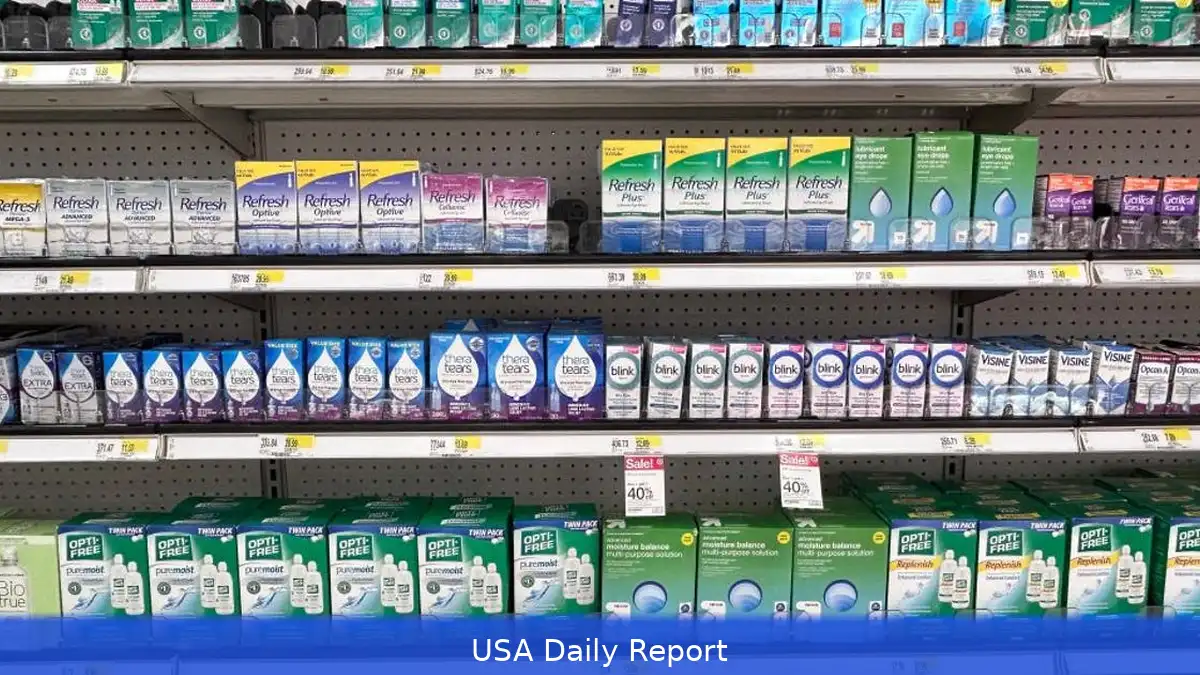
More than three million bottles of over-the-counter eye drops have been pulled from shelves across the U.S. The recall affects products sold at CVS, Walgreens, Kroger, and other leading pharmacies and supermarkets.
Massive Recall Targets Popular Store Brands
K.C. Pharmaceuticals, based in Pomona, California, voluntarily recalled over 3.1 million bottles of eye drops after the Food and Drug Administration raised alarms about a "lack of assurance of sterility." The affected products, which include Artificial Tears, Advanced Relief, Dry Eye Relief, and Redness Lubricant drops, were sold under various store brand names such as Kroger, H-E-B, CVS, Rite Aid, Walgreens, and others.
While the recall doesn't confirm contamination, the manufacturer can't guarantee the products are free from bacteria, fungi, or other infectious agents. That uncertainty prompted the FDA to classify the recall as Class II, indicating a potential risk for temporary or medically reversible health issues.
Scope and Details of the Recall
The recall covers eight different eye drop formulations, all sold in 0.5 fluid ounce bottles with expiration dates from April 30 to July 31, 2026. Among the recalled products are Sterile Eye Drops AC, Ultra Lubricating Eye Drops, and Sterile Eye Drops Soothing Tears. Consumers can identify affected products through Universal Product Codes or National Drug Codes.
Major retailers have likely removed these items from their shelves since the recall began in early March. However, shoppers should remain vigilant and cross-check labels to avoid purchasing potentially unsafe eye drops, especially when buying generic or store brand products.
Consumer Response and Financial Implications
Consumers are advised to dispose of any recalled eye drops they possess or return them to the place of purchase for a refund. While there have been no reported infections or injuries linked to these products, the recall could dent consumer confidence in generic eye drops and store brands made by K.C.
Pharmaceuticals.
Retailers such as CVS, Walgreens, and Kroger could see a short-term drop in eye care sales because of this recall. With over three million units involved, the recall likely means significant financial losses from both sales and handling returns.
Eye care products generally represent a steady revenue stream for pharmacies and supermarkets. This recall could prompt these retailers to tighten quality control and reevaluate supplier relationships to prevent future risks. At the same time, K.C. Pharmaceuticals may suffer reputational harm and face costs tied to logistics, legal issues, and regulatory checks.
Health Risks Behind the Recall
The heart of the issue lies in the sterility of the eye drops. Eye medications must be free from contamination to avoid serious infections—some of which can threaten vision. Dr. Nicole Bajic, an ophthalmologist at the Cleveland Clinic, pointed out that bacterial contamination in eye drops could lead to sight-threatening infections.
Though no contamination has been detected yet, the possibility that these products could harbor bacteria or fungi justifies the recall. The FDA's Class II designation suggests the risk is real but not immediately life-threatening.
Consumers using these drops should monitor for symptoms like redness, pain, or vision changes and seek medical advice if needed. At the same time, the recall highlights the importance of rigorous manufacturing and quality assurance practices in pharmaceutical production.
Broader Impact on the Pharmaceutical Supply Chain
This incident raises questions about how well supply chains are monitored in generic drug production. K.C. Pharmaceuticals produces these products for multiple retailers, illustrating how a single supplier can affect a wide segment of the market.
Regulators and industry leaders might tighten standards or boost inspections to avoid future problems. Investors and market analysts see this recall as a warning about risks in pharmaceutical supply chains, particularly for low-cost generics.
Consumer trust in generics and store brands might drop, pushing more people to choose branded products they believe are safer. This change could alter competition in the $6 billion U.S. eye care market.
The recall of over three million eye drop bottles by K.C. Pharmaceuticals highlights the ongoing challenge of balancing cost and safety in drug manufacturing. It's still unclear if this recall will prompt stricter rules or change how consumers shop for eye care products.


