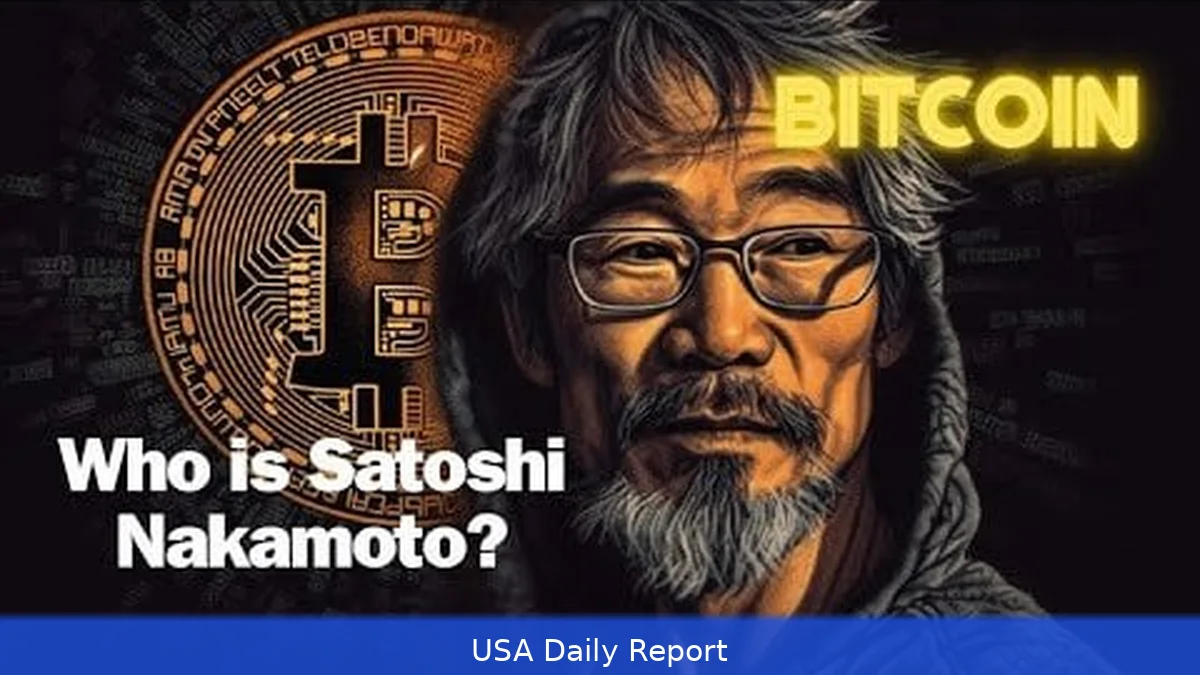
Back in 2008, a white paper introduced a new kind of money that started to change the financial world. Its creator, known only as Satoshi Nakamoto, vanished just a few years later, leaving behind a fortune and a mystery that’s still unsolved today.
The Birth of Bitcoin and Its Shadowy Founder
On Halloween 2008, an anonymous figure named Satoshi Nakamoto published a nine-page paper titled "Bitcoin: A Peer-to-Peer Electronic Cash System." It laid out a vision for a digital currency that operates without banks or governments. Instead, it used a public ledger — the blockchain — to prevent fraud and double spending.
Back then, Bitcoin was barely on anyone’s radar. Its value was less than a penny, attracting mostly cryptographers and programmers skeptical of traditional finance. But the idea struck a chord with those tired of centralized control over money.
Fast forward to today, Today, Bitcoin ranks as the ninth most valuable asset worldwide, with its market cap climbing into the hundreds of billions. One bitcoin alone has crossed the $90,000 mark at times, a staggering leap from its humble origins.
Who Is Satoshi? The Puzzle That Won’t Quit
Here’s where it gets wild: no one knows who Satoshi Nakamoto really is. The name could be a person. Or a group.
Their last known communication was in 2011, when Nakamoto effectively disappeared, leaving behind an untouched stash of about 1.1 million bitcoins — a fortune estimated at around $100 billion.
Despite the wealth and fame, Nakamoto has never stepped into the spotlight. Unlike other revolutionary inventors or entrepreneurs, Nakamoto declined any credit or recognition. That’s pretty unusual in science and technology.
“We don't know who Satoshi is,” billionaire investor Peter Thiel told the Bitcoin Conference in Miami in 2022. Over time, the mystery has only grown, making Nakamoto a legendary figure in the crypto community.
Attempts to Unmask the Creator
Over the years, countless theories and investigations have tried to shed light on Nakamoto’s identity. The suspects range from cryptographers and programmers to convicted criminals linked to the tech underground.
Recently, a Coinbase-backed documentary titled "Finding Satoshi," set to release in April 2024, promised to crack the case once and for all. Its trailer teases using blockchain data, online footprints, and interviews to point to a single individual.
The film takes another look at well-known suspects like Adam Back, Hal Finney, Nick Szabo, and Paul Le Roux. Each has some connection to early cryptography or Bitcoin’s development, but none has been definitively proven as Nakamoto.
Still, skepticism runs high. Past efforts, like the HBO documentary earlier this year, faced pushback from experts for relying on shaky evidence or making leaps too far.
The Wealth and Silence of Bitcoin’s Founder
One of the strangest aspects of Nakamoto’s story is the untouched fortune. The 1.1 million bitcoins mined in Bitcoin’s early days have never moved. That’s billions of dollars sitting idle.
Some analysts believe Nakamoto may have passed away or lost access to those coins. Others argue the founder is deliberately silent, choosing to let the technology speak for itself.
Bitcoin’s design never expires. It doesn’t penalize inactivity or reclaim coins even after years of dormancy. As long as Nakamoto holds the private keys, those bitcoins remain locked away — potentially for decades.
The implications are huge. If those coins ever move, the market could react violently. Conversely, if Nakamoto is gone, that wealth might be lost forever, making the effective supply smaller.
Why the Mystery Matters
Bitcoin’s ethos rests on decentralization and trustlessness — no central authority controls it. Not knowing who created it fits perfectly with Bitcoin’s decentralized philosophy. It means there’s no single person to influence or manipulate the network.
But it also fuels endless speculation and conspiracy theories. The search for Nakamoto has become almost a cultural phenomenon in crypto circles, with some obsessing over clues in code commits, typing styles, or forum posts.
Thing is, the mystery adds a layer of allure and intrigue to Bitcoin. It’s a story of a rebel coder who built a financial revolution and then vanished without a trace.
A lot of people wonder whether revealing Nakamoto’s identity would change how Bitcoin works. Would it become more centralized? Would the market react negatively? Or would it finally put to rest one of the biggest puzzles in modern finance?
For now, Satoshi Nakamoto remains a ghost in the machine — a symbol of innovation, secrecy, and the wild promise of decentralized money.


