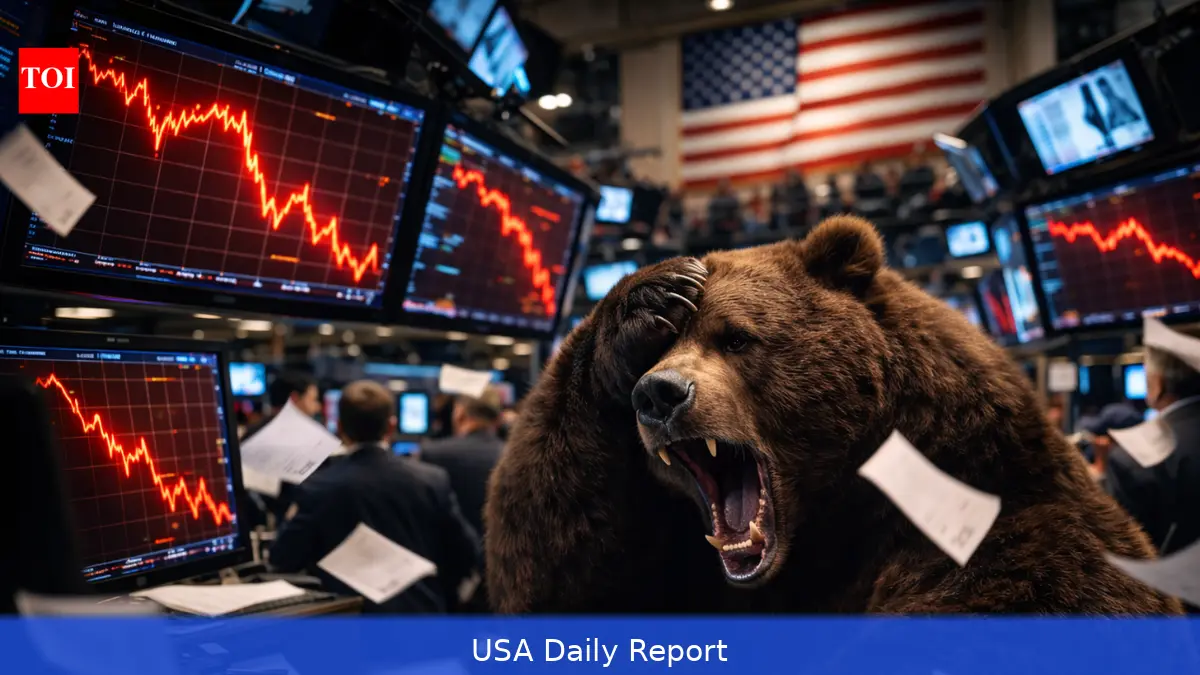
Trading volumes on Wall Street have surged to all-time highs as investors scramble to react to the rapidly changing situation in the Iran conflict. Stock trading, especially in major ETFs, has ramped up as investors grow more anxious about how the war might affect the markets.
Trading Frenzy Reflects Growing Market Jitters
You can tell investors are on edge. The daily turnover of the State Street SPDR S&P 500 ETF Trust recently soared past $60 billion, a level market analysts call a rare "freak out" signal. Bloomberg Intelligence’s Athanasios Psarofagis points out that this threshold has been crossed 29 times just this year — surpassing the 28 times it was hit throughout all of 2025.
Trading volumes jumped as investors reacted to volatile Middle East news and unpredictable remarks from President Trump. Markets are reacting sharply to every development, trying to price in the risks posed by the conflict.
On Tuesday, the S&P 500 Index plunged 1.2% after Trump intensified pressure on Iran over reopening the Strait of Hormuz, a critical global shipping lane. But the index recovered those losses by the close, ending the day slightly higher. Futures contracts on the S&P 500 jumped 2.2% following reports of a two-week ceasefire agreement between the US and Iran, offering some temporary relief from the ongoing turmoil.
Ceasefire Offers Hope, But Uncertainty Looms Large
While the ceasefire deal has brought a breath of fresh air to traders, many experts warn it’s too soon to relax.
Stuart Kaiser, Citigroup’s head of US equity trading strategy, noted that a pause in military actions and delayed attacks on Iranian civilian infrastructure would be a positive for risk assets—if it lasts.
But Kaiser also emphasized that the situation remains fragile. Both sides’ commitments hinge on each other’s behavior, and the details of the ceasefire remain vague. That leaves markets vulnerable to sudden shifts if hostilities resume or escalate.
Investors have been glued to every headline, trying to figure out how long the conflict might last and what fallout to expect. These quick shifts in sentiment have made the market a cautious place. That said, the stock market’s resilience over the past few years — despite shocks like the pandemic and inflation spikes — gives some traders hope.
Investor Behavior Shifts Amid Market Volatility
The ongoing turmoil in the Middle East is starting to wear down some investors. Retail investors — usually the market’s reliable buyers — are showing signs of hesitation. Meanwhile, hedge funds are pulling money out of global stocks at the fastest pace in over a decade, signaling growing risk aversion among big players.
Even the usual dip-buyers, who normally jump in during sell-offs, are holding back this time. Bloomberg Intelligence’s analysis of leveraged long ETF flows reveals a marked decline in aggressive buying when stocks dropped in March. That’s a departure from previous patterns where investors viewed dips as buying opportunities.
Psarofagis puts it simply: every bad news triggers a bigger freak out now, as investors just want to take their money and run. The quick exit mentality has added fuel to the trading frenzy, pushing volumes higher as investors race to avoid losses.
Underlying Market Strength and AI Optimism
But not all investors have given up. Some bullish traders argue that the US economy’s fundamentals remain solid. Despite geopolitical risks, economic data has shown resilience, and corporate earnings continue to hold up better than expected.
A big reason some remain optimistic is the progress in artificial intelligence. AI technologies are transforming multiple sectors, and investors see this as a catalyst for future growth. The potential for AI-driven productivity gains and innovation is giving long-term investors a reason to stay put, even amid short-term volatility.
Still, the market mood remains fragile. The recent record-breaking trading intensity is a clear sign that uncertainty is pressing down on investors. It’s a market on edge, ready to react sharply to the next twist in the Iran conflict.
Since tensions are still high and the ceasefire’s future is unclear, Wall Street’s frantic trading probably won’t calm down anytime soon. Investors will keep watching every development, weighing risk against opportunity in a market that’s never far from a sudden move.


