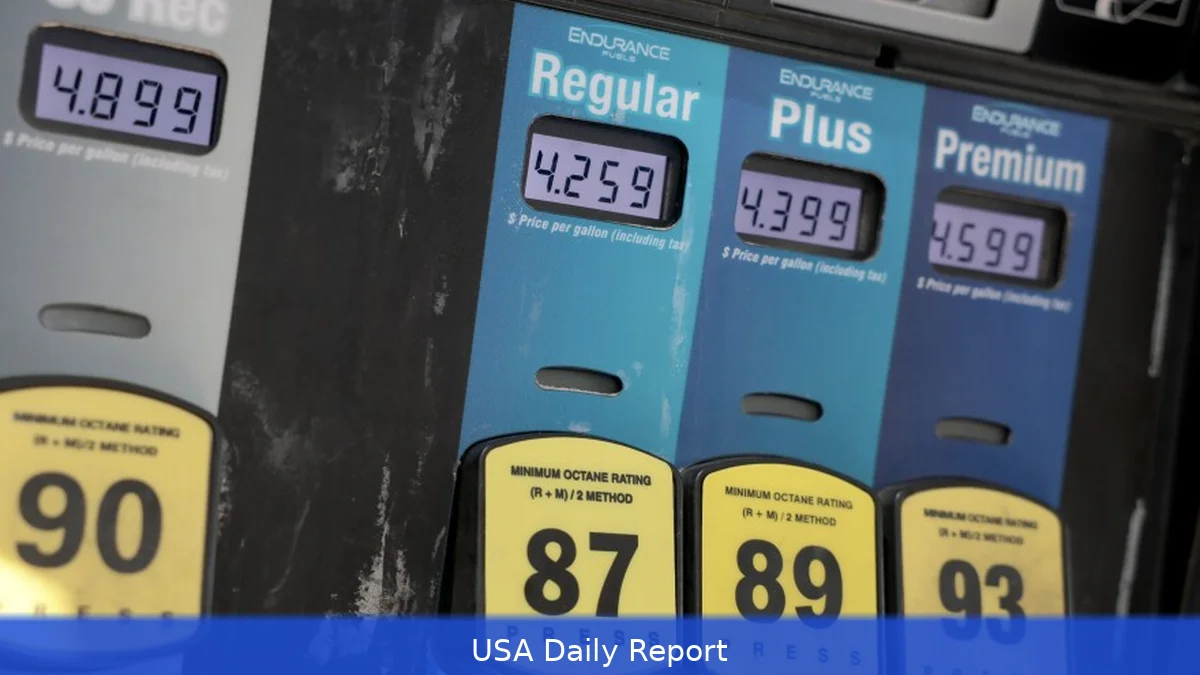
Gasoline prices leapt more than 20% in March. The Labor Department's consumer-price index showed a sharp monthly spike. The report handed President Trump his worst inflation reading this term.
Immediate numbers and where the jump came from
Look, the raw data are stark: the Bureau of Labor Statistics reported consumer prices rose 0.9% from February to March and 3.3% year over year.
Energy led the surge.
Energy costs climbed about 10.9% in March, and gasoline alone surged roughly 21.2% for the month — the biggest single-month jump on record for that index, according to the Labor Department. Fuel oil prices jumped 30.7% in the same month. Those moves pushed the monthly CPI gain to its largest since 2022 and lifted the annual rate noticeably from February's 2.4%.
The spike was concentrated. Food categories such as eggs and beef actually fell in March, and some services like sports tickets showed price drops, offering the administration some room to argue the increase isn't broad-based — at least not yet.
Thing is, energy isn't just one line on the report. It sits at the front of the supply chain. When crude and refined fuels jump, the effect ripples into transport and production costs for lots of goods and services.
Supply strains at a chokepoint
The surge tracks to disruptions tied to the Iran conflict and its effect on tanker traffic through the Strait of Hormuz. Ship-tracking firm Kpler reported only four tankers crossed the strait on Thursday, a dramatic slowdown compared with pre-conflict flows.
That bottleneck shows up fast in retail prices for fuel. Refineries have less feedstock and shipping costs climb. Diesel and gasoline prices rise first; then the higher fuel bills get embedded into shipping costs for groceries, retail goods and many industrial inputs.
So markets and economists are watching how long the choke holds. If tanker traffic stays thin, the supply squeeze can last longer than a single month — and then price rises tend to broaden.
Political fallout and official responses
The White House moved quickly to play down the report's political punch. Kevin Hassett, White House economic adviser, told Fox Business that the rise should be temporary because it was largely confined to energy and hadn't spilled over into broader categories.
"Once we get back to the normal pace, then we expect things to get back to normal," Hassett said, referencing the stoppage and restart of tanker traffic through the Strait of Hormuz.
White House spokesman Kush Desai framed the spike as short-lived and tied it to the administration's actions. "President Trump has always been clear about short-term disruptions as a result of Operation Epic Fury, disruptions that the Administration has been diligently working to mitigate," Desai said in a statement, adding that the administration's tax, deregulation and energy policies have put the economy on a solid trajectory.
Democrats seized the moment to attack. Senate Democratic leader Charles E. Schumer blamed the president's military actions. "Skyrocketing inflation, the highest in years, all because of Donald Trump’s unnecessary, ill-planned, reckless war of choice," Schumer said on social media, casting the spike as a direct political liability for the administration.
Markets and the Fed angle
Financial markets reacted unevenly. The Dow Jones Industrial Average and the S&P 500 slipped while the Nasdaq composite inched higher in the immediate aftermath, reflecting a mixed investor read on the implications for corporate profits and rates.
Still, other trading sessions this week pushed the S&P 500 and Nasdaq toward their best weekly gains in months, as investors balanced the inflation news with signs that the ceasefire in the Middle East might hold.
Traders stuck to bets that the Federal Reserve would hold off on cutting interest rates for now amid renewed price pressures. Higher energy costs make rate reductions politically and economically harder to justify; markets priced in a more cautious Fed stance as a result.
Global knock-on effects and fuel worries
International developments helped shape sentiment. Comments from Israeli Prime Minister Benjamin Netanyahu that he was seeking direct talks with Beirut gave some hope the ceasefire could persist, which helped calm markets briefly.
But analysts outside the United States warned about broader fuel strains. Airports Council International Europe told EU officials that a jet-fuel squeeze could hit within weeks if the Strait of Hormuz doesn't reopen fully, raising the risk of higher travel and freight costs in Europe as well.
Oil itself remains elevated compared with pre-conflict levels. Brent crude traded well above the roughly $70-per-barrel range seen before the flare-up, even after falling from wartime highs above $110 per barrel. On Friday, many benchmarks hovered around the mid-to-high $90s per barrel.
What households are actually feeling
Households are already seeing the effects at the pump and in home heating and transport budgets. The fuel surge accounted for nearly three-quarters of the monthly increase in the CPI, leaving other categories to explain the remainder.
Grocery prices fell slightly in March, down 0.2% for the month, which gave some offset to the headline rise. But economists warn grocery inflation could begin to climb again as higher transport costs feed through to store shelves.
For consumers, short-term volatility in pump prices is painful. For policymakers, the question is whether those spikes translate into sustained inflation that would push wage demands and broader price-setting higher.
How That could affect the autumn elections
Republicans expressed confidence the shock would have faded by the time many voters tune into midterm campaigns in the fall. Kush Desai argued the administration's measures would mitigate disruptions and that normal flows would restore price stability.
Democrats, for their part, plan to use the spike as evidence that foreign adventures have domestic costs — and to press the point that the president's promise to tame the cost of living is in trouble.
Right now, the political math hinges on whether energy prices retreat as tanker traffic normalizes and whether higher fuel prices bleed into wages and other goods. If they do, voters may feel the squeeze beyond the pump.
Short-term outlook
Analysts say the timing of any relief will track the Strait of Hormuz and how quickly crude supplies and refined products can flood back into global markets. Kpler's tally of just four tankers crossing on Thursday makes clear the recovery path isn't immediate.
Look, if crossings return to pre-conflict levels and tanker backlogs clear, energy inflation could cool quickly. If they don't, the higher costs will keep showing up across consumer bills in coming months.
Related Articles
- Fox Business Downplays Inflation Spike as Hosts and Trump Spar Over the Message
- ‘The plan is working,’ Trump's trade adviser tells Rust Belt amid rising inflation
- Panicked Hunt for Barrels Sends Physical Oil Prices Soaring
"Skyrocketing inflation, the highest in years, all because of Donald Trump’s unnecessary, ill-planned, reckless war of choice," said Charles E. Schumer, Senate Democratic leader.


