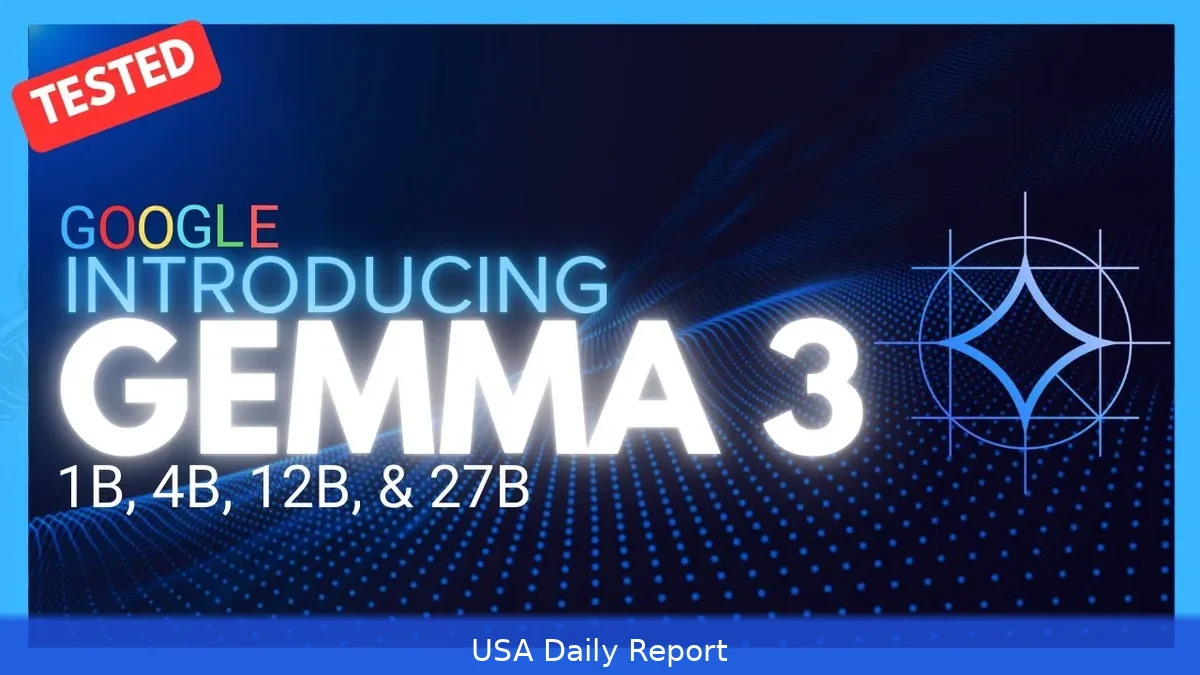
Google just dropped Gemma 4, a new open-source AI model designed to run on everything from powerful servers to everyday devices. Unlike most cutting-edge AI, Gemma 4 is fully open-source and can operate offline — no internet needed.
Open-Source AI Goes Big
Google's latest AI release, Gemma 4, marks a rare move in the AI world: a top-tier model made fully open-source under the Apache 2.0 license. That means developers, researchers, and businesses can download, modify, and deploy Gemma 4 freely without subscription fees or restrictive usage limits.
Most advanced AI models stay locked behind company walls, but Google’s approach gives users complete control over their data and infrastructure. They can run Gemma 4 on their own hardware, whether that’s cloud servers or a laptop. Google even says the model can run on billions of Android devices — a big deal for privacy and accessibility.
“This open-source license provides a foundation for complete developer flexibility and digital sovereignty,” Google wrote in its announcement. “It allows you to build freely and deploy securely across any environment, whether on-premises or in the cloud.”
Gemma 4 vs Gemini: What’s the Difference?
You’ve probably heard of Gemini, Google’s proprietary AI family powering Search, Gmail, and Docs.
Gemini models are subscription-based and tightly integrated into Google's ecosystem. Gemma 4, meanwhile, is a separate open-source line built on the same DeepMind research that shaped Gemini 3.
Gemma 4 lets users run an advanced language model locally without sharing data with Google or any third party. That makes it more private and secure, especially for sensitive applications. Anyone with the right hardware can download Gemma 4 and use it free of charge.
Plus, developers can integrate Gemma 4 into their apps without worrying about ongoing subscription costs. That could open doors for startups and researchers to experiment with AI on their own terms.
A Suite of Models for Different Needs
Gemma 4 isn’t just one model — it’s a family of four, each designed to suit different hardware and use cases. The biggest models, with 26 billion and 31 billion parameters, are built for powerful GPUs like Nvidia’s H100. The 26B version is tuned for faster response times by only activating part of its parameters during use. This 31B model unleashes its full power for maximum accuracy and reasoning.
On the smaller end, Google offers two compact variants with 2 billion and 4 billion parameters. These lightweight models can run on mobile devices, Internet of Things gear, and regular home computers. Even better, they work offline and respond instantly, thanks to partnerships with chipmakers like Qualcomm and MediaTek.
All versions support advanced reasoning tasks, including multi-step problem-solving and complex planning. They also handle agentic workflows — meaning they can autonomously use tools, APIs, or external systems to complete assigned tasks without human intervention.
Multimodal Inputs and Expanded Context
Gemma 4 models aren’t limited to just text. They process images, video, and audio inputs as well. For example, they can perform optical character recognition, analyze charts, and understand speech. This multimodal ability broadens the range of real-world applications, from document processing to interactive assistants.
Context windows have grown too, allowing Gemma 4 to consider up to 256,000 tokens in a single session. That’s a huge leap, enabling the model to understand longer conversations or documents without losing track.
By combining this with enhanced instruction-following and improved math skills, Google claims Gemma 4 pushes the boundaries of what open models can do today.
Why Gemma 4 Matters
Google’s move to open-source a model this capable challenges the AI status quo. Usually, only companies with massive compute power get to shape cutting-edge AI. Gemma 4 flips that script by making advanced AI accessible and modifiable by anyone.
That could accelerate innovation in AI-powered tools across industries — from healthcare to education — without locking users into expensive subscriptions or data-sharing agreements.
It also highlights a shift toward efficiency. Gemma 4 delivers strong performance on less computing power, which could lower the environmental impact of running AI and make it practical on smaller devices.
Still, the challenge will be adoption. Developers must weigh the benefits of open-source flexibility against the polished integrations and reliability of proprietary models like Gemini.
But Google’s gamble is clear: openness, efficiency, and versatility could be the keys to the next AI wave.
Gemma 4’s release opens the door for a new era of AI where power users control their models and data. It we'll have to wait and see how quickly developers and businesses will embrace this open-source alternative to the subscription AI giants.


