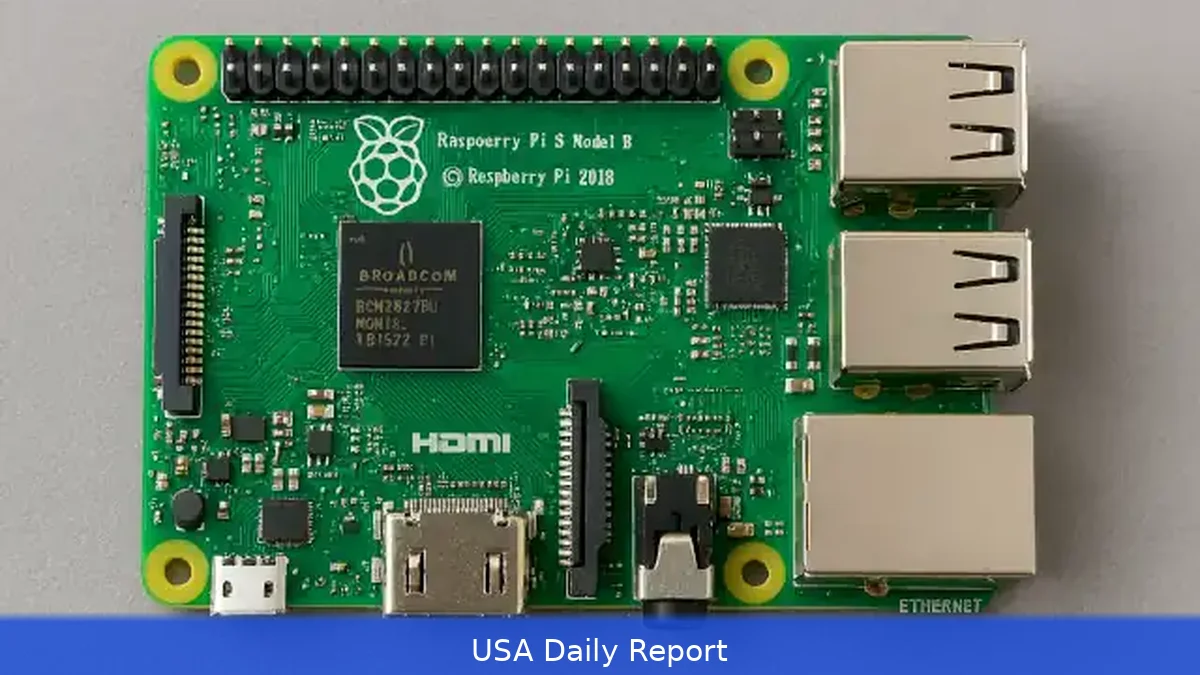
Two Raspberry Pi 5 boards with 16GB of RAM now set you back about $600, roughly the price of a mid-range laptop. Once a budget favorite among hobbyists, these tiny computers have seen their prices skyrocket. And the culprit? AI-driven demand is gobbling up memory chips, leaving Raspberry Pi makers and buyers in a tight spot.
Memory Crunch Hits Raspberry Pi Hard
Raspberry Pi boards rely heavily on RAM, especially the 4GB and 16GB models favored by developers and enthusiasts. But memory prices have exploded recently, forcing the Raspberry Pi Foundation to raise prices significantly. Eben Upton, Raspberry Pi’s founder, revealed that the cost of LPDDR4 DRAM—the type used in the Pi 4 and 5—has jumped sevenfold over the past year. That means each additional 4GB of RAM now carries an extra $25 to the board’s price tag.
To put it in perspective, the 16GB Raspberry Pi 5 cost $120 at launch. Today, that same board sells for $305. Two of those would set you back over $600. That's laptop territory. For many hobbyists who once bought Pis for under $50, this is a huge jump.
What’s driving this spike? The answer is AI. Data centers running AI models consume an enormous amount of memory. Big players like NVIDIA build racks loaded with terabytes of high-bandwidth memory—far more than what consumer devices need. One rack can have enough RAM for thousands of laptops. AI-focused data centers are being built with thousands of these racks. The demand is extremely high.
AI Data Centers Gobble Up RAM
Micron, one of the largest memory manufacturers, recently announced it’s shutting down its consumer memory business to focus solely on supplying AI data centers. That shows just how deep the shift has gone.
AI companies need so much RAM that it's making it harder for regular consumers to get affordable memory.
G.Skill, a leading RAM maker, called the AI demand "rare." It’s not just the latest DDR5 memory affected—older DDR4 chips have also seen price surges. Consumers and manufacturers sticking to DDR4 for cost reasons now face skyrocketing prices too.
That means makers of devices like the Raspberry Pi, which use LPDDR4 memory, are caught in the middle. They’re forced to pay more, and those costs get passed on to customers. It looks like affordable Raspberry Pis for hobbyists might not last much longer.
Raspberry Pi’s New AI-Ready Hardware Adds to Costs
Raspberry Pi hasn’t stood still amid these challenges. The company recently launched new products like the Pico 2 W microcontroller board for $7, designed for simple hardware projects. It also rolled out the AI HAT+ 2, an add-on for the Raspberry Pi 5 that brings 8GB of RAM and a specialized AI chip capable of running generative AI models locally.
The AI HAT+ 2 costs $130, more than double last year’s $70 version. It’s designed to offload AI workloads from the main CPU, running models like Llama 3.2 and Qwen. But even with this extra hardware, some testers found that the Pi 5 itself—with its 8GB RAM—performed better on AI tasks because it can draw more power, up to 10 watts, compared to the HAT’s 3 watts.
Still, the AI HAT+ 2 marks a big step toward bringing AI capabilities to affordable, compact devices. But it also means more expensive kits for enthusiasts and developers.
What This Means for the Raspberry Pi Community
Historically, Raspberry Pi boards were prized for their low cost and versatility, making them staples for learning, prototyping, and even some commercial uses. Now, with prices climbing sharply, some users may look for alternatives or rethink their projects.
At the same time, the rising costs reflect wider shifts in the tech world. AI is reshaping hardware markets, prioritizing memory and specialized chips over traditional consumer needs. The Raspberry Pi Foundation faces the tough task of balancing affordability with these market realities.
Right now, hobbyists need to plan on spending more for their Pi projects. We'll have to wait to see if people cut back or buy more powerful gear.
The Raspberry Pi's price increase clearly shows how AI's huge demand for memory is changing tech supply chains. As AI data centers continue to expand, affordable RAM will stay scarce, forcing devices like the Pi to carry heftier price tags.


